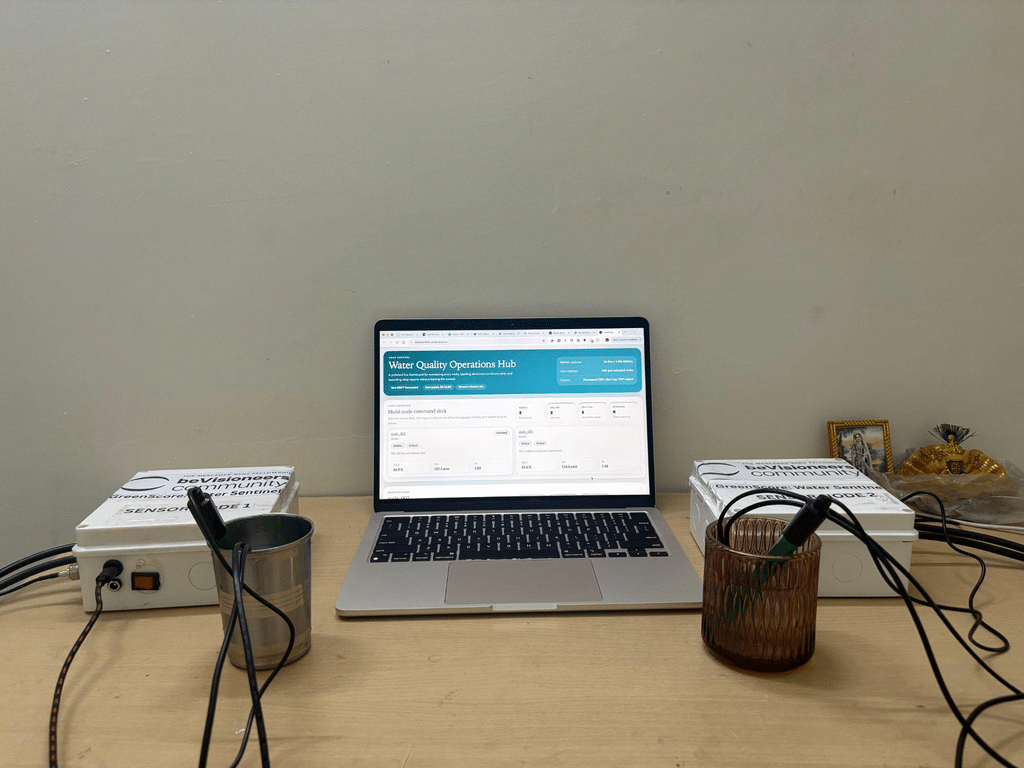
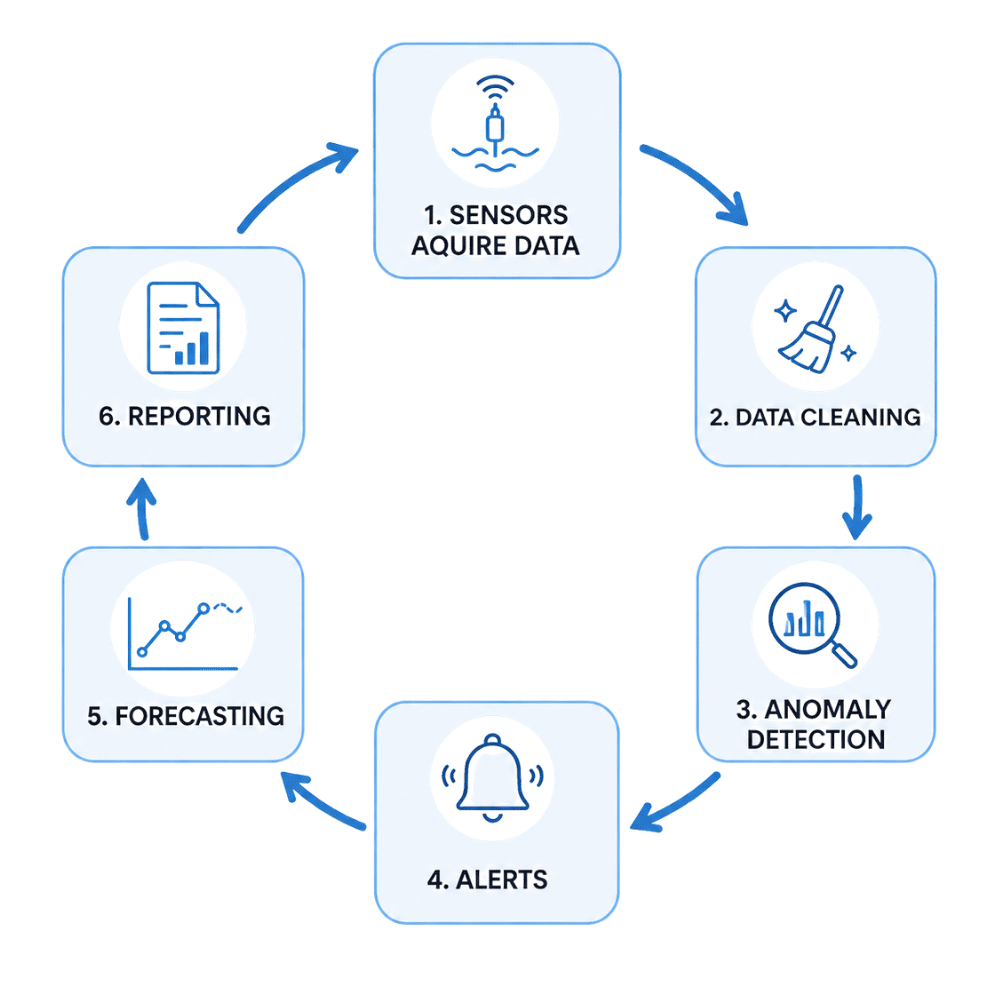
NirSentinel is an AIoT-based water quality monitoring system designed to provide continuous and intelligent monitoring of water resources. The system collects real-time water quality data using sensors for parameters such as pH, temperature, and total dissolved solids (TDS). The sensing node processes the measurements and transmits the data to the monitoring and analytics platform. The collected data passes through a processing pipeline that includes data cleaning, anomaly detection, forecasting, and alert generation. The system identifies unusual water quality conditions and provides early warnings to operators. Historical data can also be used to predict future water quality conditions and support preventive action. NirSentinel goes beyond conventional sensor monitoring by converting raw measurements into actionable information. The platform provides an AI-assisted operator interface that can explain abnormal conditions and support operational decision-making. The architecture can operate with wireless communication and can be adapted for both connected and offline environments. The system is designed as a retrofit solution for existing water infrastructure. Sensor nodes can be installed at selected locations in drinking-water systems, STPs, industrial treatment plants, and other water facilities without requiring complete replacement of existing infrastructure.
Component List
| ID | Name | Designator | Quantity |
| 1 | Arduino UNO / Arduino Q | MOD1 | 1 |
| 2 | DS18B20 Waterproof Temperature Sensor Probe | P1 | 1 |
| 5 | DFRobot Analog TDS Sensor Module | P2 | 1 |
| 6 | DFRobot Analog pH Sensor Module (SEN0161) | P3 | 1 |
| 7 | Pull-up Resistor | R 1 | 1 |
| 8 | Current Limiting Resistors | R 2 | 1 |
| 9 | Switch | ENC | 1 |
| 10 | Status LED | D1 | 1 |
| 11 | Battery | B1 | 2 |
Project Explanation Step By Step
NirSentinel is an AIoT-based water quality monitoring system designed to provide continuous and intelligent monitoring of water resources. The system collects real-time water quality data using sensors for parameters such as pH, temperature, and total dissolved solids (TDS). The sensing node processes the measurements and transmits the data to the monitoring and analytics platform. The collected data passes through a processing pipeline that includes data cleaning, anomaly detection, forecasting, and alert generation. The system identifies unusual water quality conditions and provides early warnings to operators. Historical data can also be used to predict future water quality conditions and support preventive action.
NirSentinel goes beyond conventional sensor monitoring by converting raw measurements into actionable information. The platform provides an AI-assisted operator interface that can explain abnormal conditions and support operational decision-making. The architecture can operate with wireless communication and can be adapted for both connected and offline environments. The system is designed as a retrofit solution for existing water infrastructure. Sensor nodes can be installed at selected locations in drinking-water systems, STPs, industrial treatment plants, and other water facilities without requiring complete replacement of existing infrastructure.
Coding Explanation and Configuration
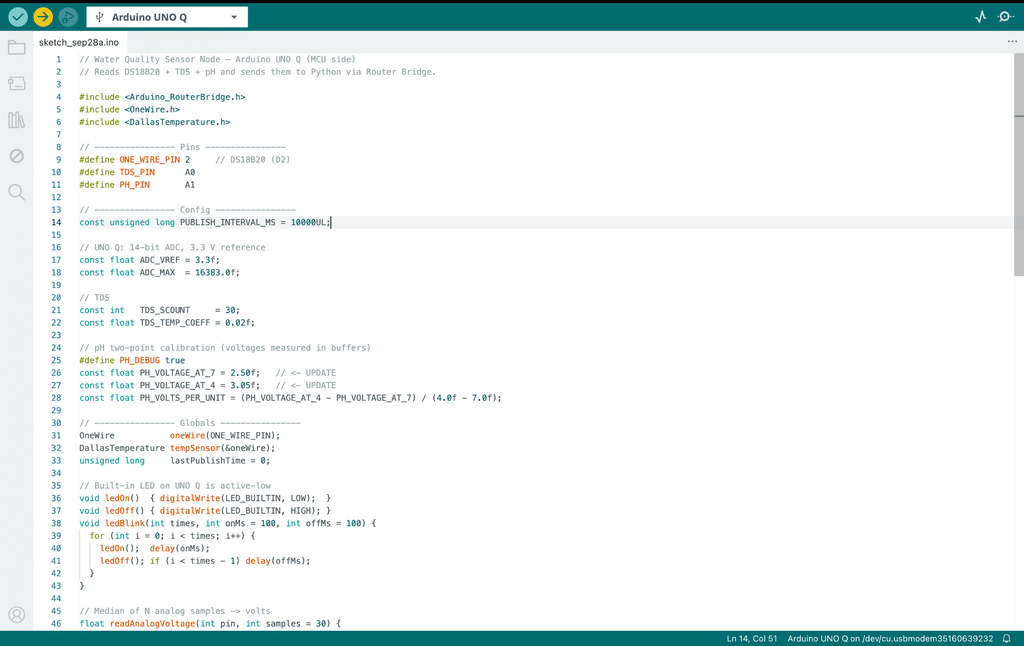
The sensing node is programmed using the Arduino development environment. The controller interfaces with the water quality sensors and collects measurements at defined time intervals. The temperature sensor uses the DS18B20 digital interface, while the pH and TDS sensors provide analog signals that are read by the controller. The software converts these signals into corresponding water quality measurements. Sensor readings are filtered and checked before transmission to reduce the effect of noise and invalid measurements. The processed data are then transferred to the monitoring platform through the configured communication interface. The software architecture is modular, allowing additional sensors such as turbidity, dissolved oxygen, conductivity, residual chlorine, flow, or other parameters to be integrated in future versions.
Monitoring Dashboard and AI Interface
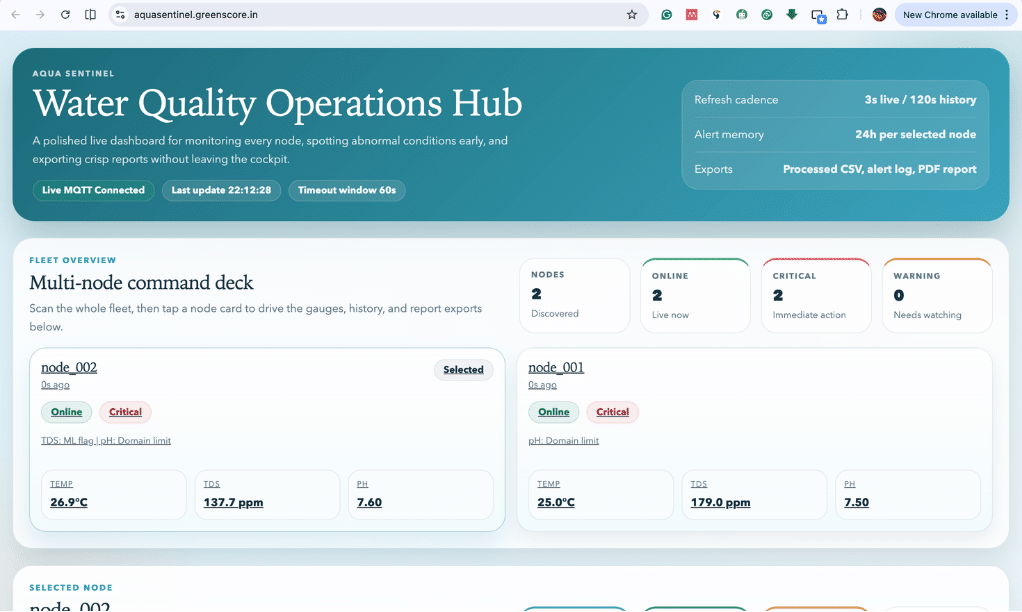
NirSentinel uses a digital monitoring dashboard to present real-time water quality information to operators and decision-makers. The dashboard displays measurements received from the sensing nodes and provides an overview of the operational status of connected monitoring points. The platform includes data visualization, historical trends, anomaly alerts, and forecasting. Users can select individual nodes and examine changes in water quality over time. The system also incorporates an AI-assisted Operator Copilot. The Copilot converts technical sensor information into understandable explanations and supports operators in identifying potential causes and appropriate next actions. This helps shift water quality management from reactive monitoring toward early detection and preventive decision-making.
Connection Explanation
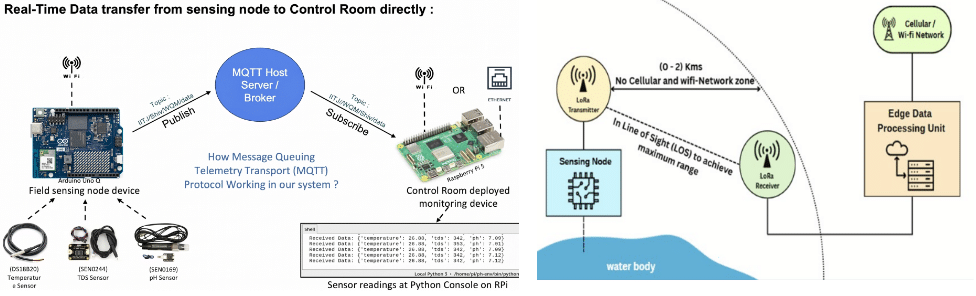
The sensing node consists of a microcontroller connected to the water quality sensors. The DS18B20 sensor is connected through its digital interface, while the pH and TDS modules are connected to the corresponding analog input channels. The controller reads the sensor measurements, performs basic processing, and prepares the data for transmission. Each sensing node can be assigned a unique node identifier so that measurements from multiple locations can be distinguished. Depending on the deployment environment, the system can use wireless communication such as Wi-Fi or LoRa. In a LoRa-based deployment, multiple sensing nodes can transmit data to a central receiving or edge-processing unit. The architecture allows NirSentinel to be deployed across multiple monitoring points in an existing water or wastewater facility. This makes it suitable for retrofit installation without replacing the existing treatment infrastructure.
Testing
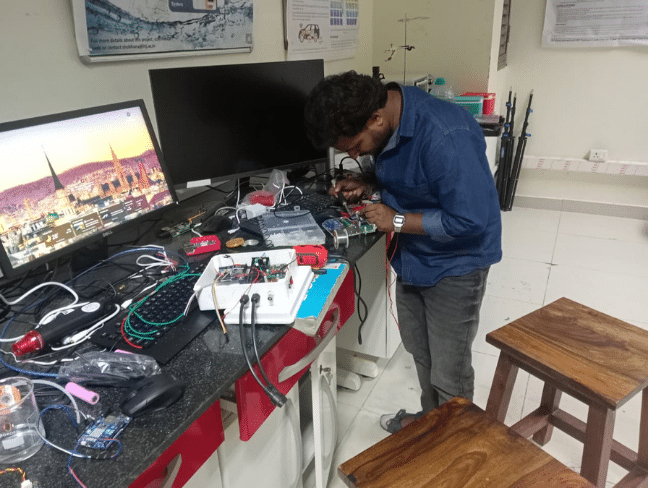
The prototype was tested by connecting the water quality sensors to the sensing node and observing the
measurements through the monitoring interface. Sensor readings were checked under different water conditions to verify data acquisition and transmission. The system was also evaluated using historical water quality data to develop and test the analytics pipeline. The data-processing framework includes cleaning, anomaly detection, forecasting, alerts, and reporting. Testing confirmed that the prototype can continuously acquire water quality measurements and transmit the data for further analysis. The modular design also allows additional sensing parameters and monitoring nodes to be added as required by the deployment site.