




A LiDAR sensor uses 20 channels to help robots detect obstacles, measure distances, avoid falls, and prevent collisions indoors and outdoors.
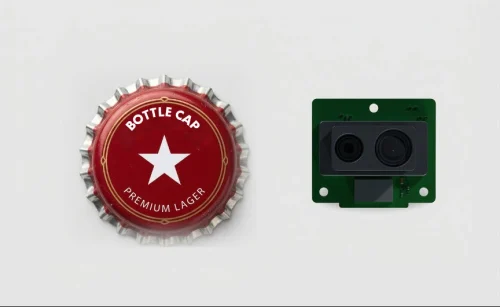
Benewake has introduced NOVA20, a solid-state light detection and ranging (LiDAR) sensor for detecting obstacles and covering blind spots in embodied artificial intelligence (AI) and mobile robots. It uses 20 detection channels across a 40-degree fan-shaped field of view to measure distances from 5 cm to 1 metre ahead. The sensor complements 360-degree rotating LiDAR systems, which scan longer distances but may leave areas close to the robot undetected.
NOVA20 measures distance independently of high-level AI models. The robot’s control system can use these readings to slow down, change direction, or stop before contacting an obstacle. This also reduces the computing resources needed for near-field distance checks.
The sensor has 20 detection channels distributed across a 40-degree field of view, covering angles from −20 to +20 degrees. It measures distances at a frame rate of 10 Hz and provides centimetre-level accuracy. Unlike a single-point sensor, it measures distances across an area, helping robots detect changes in ground level, step edges, and obstacles beside their path.
The device detects targets with 10% reflectivity at distances of up to 1 metre under ambient light levels of 100 kilolux. Its blind zone is no more than 5 cm, allowing it to measure distances across most of the range between the sensor and nearby objects.
To reduce interference between detection channels, NOVA20 uses time-division multiplexing and reads each channel individually. This helps prevent reflected signals from one channel from affecting neighbouring channels, reducing false obstacle detections that could cause unnecessary braking or changes in direction.
Its size and power consumption allow the sensor to be installed at different points on a robot, including its body, arms, and legs. Multiple units can cover areas that cameras or the main LiDAR system cannot monitor. Its power consumption also limits the additional load on the robot’s power and thermal systems.
NOVA20 outputs distance data rather than images, allowing the robot’s low-level control system to process measurements without additional image-processing tasks. It complements cameras and AI models, which handle visual recognition, scene understanding, and task planning. The sensor does not provide force control after physical contact.
The device supports a universal asynchronous receiver-transmitter (UART) interface and is compatible with Robot Operating System (ROS), Linux, and Windows. Robot manufacturers can install it at specific risk points and expand coverage according to the robot’s design and application.
Click here for the original announcement.

