




A snake-inspired robotic enteroscope can move through the hard-to-reach small intestine, making biopsies and drug delivery easier.
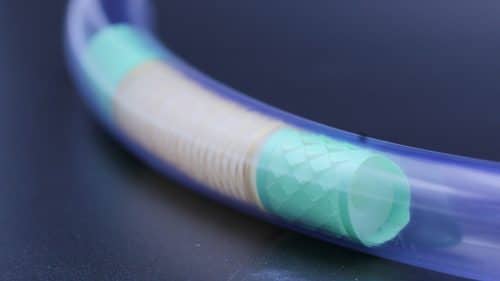
MIT engineers have built an enteroscope that can slide through the tight spaces of the small intestine. The robotic enteroscope can deliver medicine, take pictures and pull out polyps or tissue for a biopsy.
The robotic enteroscope is inspired by snakes. Snakes move because their scales grip surfaces. The robotic enteroscope has a special textured coat that keeps it glued to the lining as it moves. The process is very similar to endoscopy. The robot consists of several tools that can help detect and treat many abnormalities.
The most common problems occurring in the small intestine are bleeding, blockages and lesions. The only procedure currently used to diagnose these complications is double-balloon enteroscopy, which is a slow and laborious process. The tube-like robot consists of multifunctional actuators that control its movement. Each actuator has four chambers, which can be inflated in different combinations, prompting the tube to bend or extend in any direction.
The head and tail of the robot have additional expandable anchoring balloons, which help it move forward by inflating and deflating. The built-in electronics help the robot move through the body. A person can use a controller to guide the enteroscope through tight turns and narrow passages. The robot is connected to the controller through a cable. It is designed to enter the body through either the mouth or the rectum. It carries different tools, including a camera, a sprayer and clips, to perform medical procedures.
“We hope we can continue to move it forward to eventually develop systems that can help achieve more automated evaluation of the small intestine,” Giovanni Traverso, professor of mechanical engineering at MIT, says. The researchers are now working on improving the navigation systems and testing this approach for other applications in the small intestine.


