| Title | Multi-Button IR Remote Control | Bluetooth Low Energy Remote Control | Voice Remote Control | Infrared Remote | Smart Remote |
| Image | 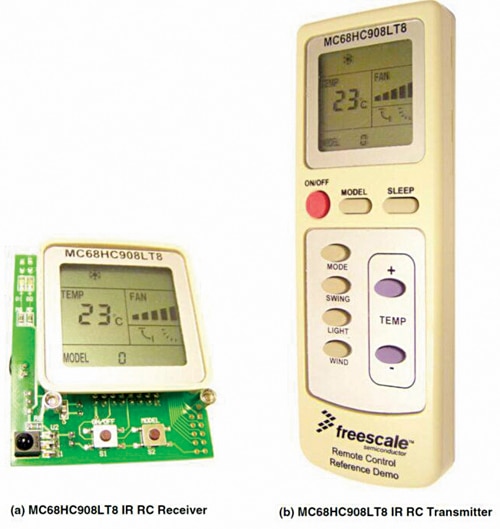 | 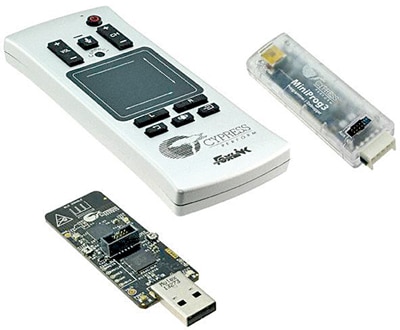 | 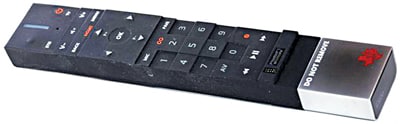 | 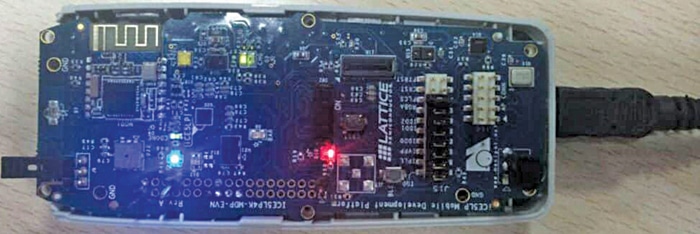 | 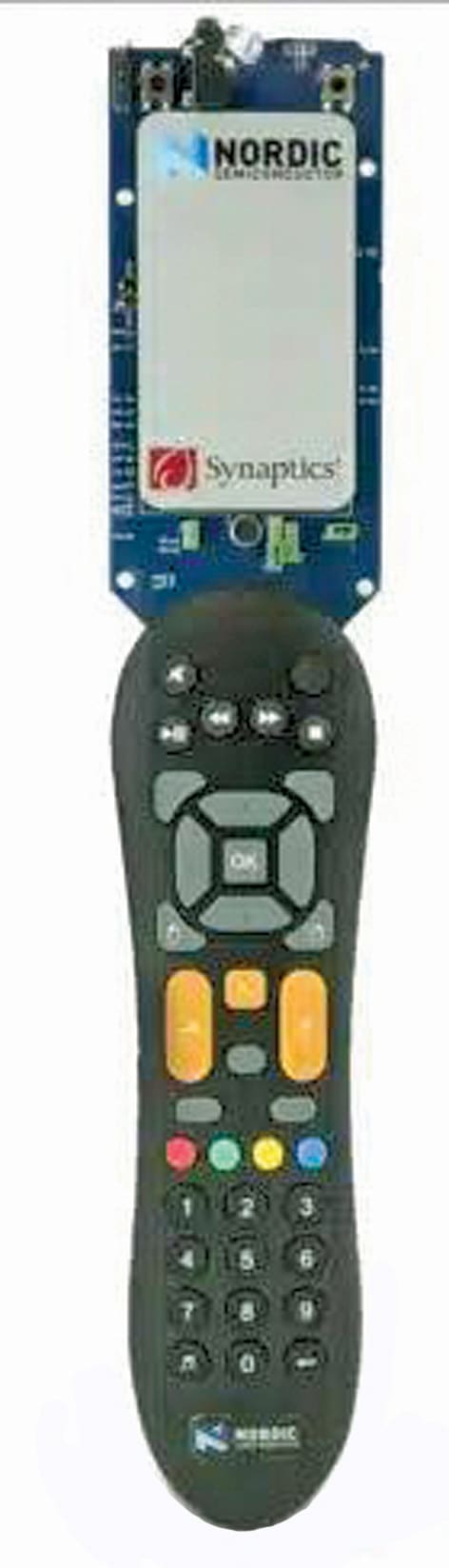 |
| Key Attractions | The reference design for a multi-button IR remote control comprises both the transmitter and receiver units. A 16-pin MON08 programming interface facilitates in-circuit flash programming and debugging capabilities for seamless integration within the remote control transmitter and receiver units. | The reference design for a programmable radio-on-a-chip (PRoC) BLE remote control offers versatile connectivity options, allowing it to connect to various host devices such as personal computers (PCs), smart televisions (TVs), tablets, and smartphones. The remote control design has IR-based wireless connectivity. | The reference design for a voice remote control is a comprehensive solution for developing voice-based remote controls supporting Bluetooth Low Energy (BLE), ZigBee, or multi-standard protocols. The remote control has 1MB external flash memory, enabling data and firmware storage. | The reference design for an IR remote Tx/Rx comes equipped with in-built hardware interfacing, handling all essential aspects for both IR receiving and transmitting. The design features configurable carrier frequency and unique self-learning capability. | The reference design for a smart remote with unparalleled voice input and power performance provides Bluetooth Low Energy (BLE) capability. The design prioritises ultra-low-power operation and incorporates efficient deep sleep behaviour, minimising power consumption during active usage and ensuring minimal power consumption during idle periods. |
| Highlights | The multi-button IR remote control reference design using MC68HC908LT8 microcontroller unit (MCU) from NXP Semiconductors includes transmitter and receiver units, with a significant feature being a 16-pin MON08 programming interface header. This interface allows easy in-circuit flash programming and debugging, ensuring smooth integration within the remote control units. The design meets specific performance specifications featuring low standby power consumption and varying maximum internal bus frequencies dependent on operating voltage, 4MHz at 5V and 2MHz at 3V. It houses a dual oscillator module, 8192 bytes of flash memory, and 128 bytes of RAM, tailored for air-conditioner remote controllers with functionalities like power control, temperature data transmission, and mode selection. The IR remote control transmitter, integrated into an optimised PCB layout, offers a user-friendly solution housed in a standard casing, equipped with essential features like a keypad, LCD display, and battery holder. The specially designed MCU, with dual clock drives, maintains low power usage in standby mode, essential for efficient remote control functionality. With nine buttons on the transmitter and two on the receiver, which draws power directly from the AC unit, there’s no need for power-saving or standby modes on the receiver end. | The CY5672, a reference design from Cypress Semiconductor, provides a fully functional implementation of a BLE or Bluetooth smart remote control, leveraging the programmable radio-on-a-chip (PRoC) BLE single-chip solution. This chip encompasses capacitive touch technology, a low-energy ARM Cortex-M0 CPU core, Bluetooth 4.1-compliant connectivity, and a built-in balun reducing the need for external parts. The versatile remote control connects easily to devices like PCs, smart TVs, tablets, and smartphones via Bluetooth Smart or USB. It features a trackpad allowing various gestures, including single or double finger taps for clicking and zooming, as well as edge swipes for scrolling. Additional features include volume and channel controls, AV input switching, and a power button, enhancing user interaction with smart TVs. Using infrared technology, the remote control offers functionalities like a power button to switch the TV on or off, volume adjustment keys, channel modification buttons for altering channels, a source key to transition between audio-video inputs, and a return key for back-navigation on a smart TV. Two AAA battery cells aligned in series power the remote control, generating a top output voltage of 3V. The entire circuitry of the remote control functions at this 2.1V voltage level. | The CC2650, a reference design from Texas Instruments (TI), offers an all-encompassing approach for crafting voice-operated remote controls that accommodate Bluetooth Low Energy (BLE), ZigBee, or multi-standard protocols. Employing individual components for the balun and filter, coupled with an inverted F printed circuit board (PCB) antenna, the design achieves nice RF performance at an affordable cost. Based on a multi-standard wireless MCU crafted for ultra-low-power usage, this design is geared for Bluetooth Smart, ZigBee, 6LoWPAN, and ZigBee remote controls. The 32-bit ARM Cortex M3 main processor operates at 48MHz, interfacing directly with low-voltage GPIO control signals. The compact layout features a low-resistance load switch with controlled on/off input phases. It integrates an 8-bit parallel-out shift register, compatible with 2V to 5.5V VCC, facilitating fast switching and high-speed operation with a low propagation delay. Moreover, its low-ground bounce optimises the performance of static outputs while enabling swift output switching. The remote control is equipped with 1MB auxiliary flash memory, facilitating data and firmware storage. The configuration encompasses 32 metal dome buttons, a bi-coloured LED, a nine-axis MEMS motion sensor, a digital microphone, an IR LED, 1MB supplemental flash, and a sound alert mechanism. | The IR remote Tx/Rx reference design from Lattice Semiconductor integrates remote control functions into mobile devices and consumer electronics. The design features integrated hardware interfaces, managing critical functions for both IR reception and transmission, including handling PWM timing and translating protocols to SPI or I2C bus for easy integration with application processors. This design, which supports various IR codes from brands like Sony and Philips, offers configurability and a unique self-learning feature for increased adaptability. It can be used as-is or customised for specific needs, boasting a 16-bit address and 8-bit data configuration setup, ensuring application flexibility and versatility. The design, functioning at a base frequency of 27MHz, has I/O voltages of 1.8V and 3.3V. It can withstand temperatures from -40°C to 100°C, and is compatible with devices like smartphones, tablets, and universal remote controls. Concurrently, the iCE40LM Philips IR Rx Solution, connected to an IR receiver module and an application processor, captures and validates Rx data through a 3.3V I/O connection, formatting it for processor usage and buffering in a data FIFO. | The nRFready, a reference design from Nordic Semiconductor, provides a comprehensive design for Bluetooth Low Energy (BLE) enabled remote controls in modern media centres. The design delivers exceptional voice input capabilities and performance while maintaining remarkable ultra-low-power consumption. It uses effective deep sleep modes to diminish power usage, both actively and during idle times, while retaining low latency performance upon activation. It offers developers unprecedented voice input alternatives. It features two digital microphone inputs equipped with noise and echo cancellation, enhancing audio sampling and enabling superior compression methods, thus reducing data packet transmission over the air. The design features bit-rate options and 6-axis motion sensing for improved motion control. It incorporates a multi-touch trackpad and a remote control keypad matrix, augmenting user engagement. It also includes an ultra-low-power wake-up accelerometer and supports IR functionality, compatible with the Arduino Uno interface for seamless system integration. Moreover, a Linux-compatible host-side software library enhances the usability of this advanced remote control reference design. |
| Applications | The reference design caters to the specific application of an air-conditioner remote controller. | The reference design is suitable for various host devices such as personal computers (PCs), smart televisions (TVs), tablets, and smartphones. | The reference design can be used for real-time monitoring of parameters like active power and power factor. | The reference design is suitable for various applications such as RF remote control, IR remote control, motion tracking, etc. | The reference design is a voice input solution for remote controls used with TVs and media boxes. |
| OEM Brand | NXP Semiconductors | Cypress Semiconductor | Texas Instruments (TI) | Lattice Semiconductor | Nordic Semiconductor |
| URL | Link | Link | Link | Link | Link |
The author, Nidhi Agarwal, works as Technology Journalist at EFY