Unlock the potential of voice-based remote controls with the reference design, supporting Bluetooth low energy (BLE), ZigBee, and multi-standard protocols.
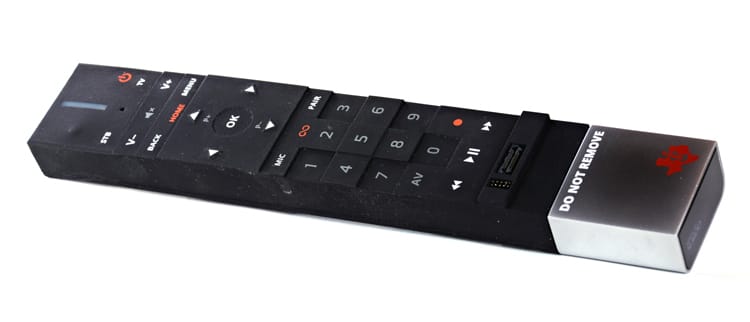
Remote controls serve as convenient and efficient means of wirelessly controlling various devices. These remote controls have revolutionized our interaction with electronics, allowing us to control devices without direct contact. Whether changing television channels, adjusting the sound system’s volume, or operating a smart home device, radio frequency (RF) and Infrared (IR) remote controls have become indispensable tools. Texas Instruments (TI) has launched the reference design of a voice remote control to simplify the design process. The CC2650 remote control reference design is a comprehensive solution for developing voice-based remote controls supporting Bluetooth low energy (BLE), ZigBee, or multi-standard protocols. The design showcases an optimized layout for decoupling and RF performance. By utilizing discrete components for the balun and filter, along with an inverted F printed circuit board (PCB) antenna, the design achieves excellent RF performance at an affordable cost. The remote control is designed to cater to various applications such as RF remote control, IR remote control, motion tracking, etc.
The design is based on the multistandard wireless microcontroller (MCU) designed for ultra-low power consumption, intended explicitly for Bluetooth Smart, ZigBee, IPv6 over Low power Wireless Personal Area Networks (6LoWPAN), and ZigBee remote control applications. The MCU has a 32-bit ARM Cortex M3 main processor running at a clock speed of 48 MHz. The design features a compact load switch with low resistance, featuring a controlled ON and OFF input turn-on. It is designed to interface directly with low-voltage general-purpose input/output (GPIO) control signals. The reference design also incorporates an 8-bit parallel-out serial-shift register specifically designed for operations with VCC ranging from 2V to 5.5V. Its broad operating range makes it compatible with various systems utilizing different logic levels. With its low propagation delay, it enables fast switching and high-speed operation. Additionally, the low-ground bounce feature stabilizes the performance of non-switching outputs while facilitating the switching of another output.
The remote control has 1MB of external flash memory, enabling data and firmware storage. The remote control also features a DevPack expansion header, allowing additional functionality and customization. The design consists of 32 metal dome buttons, a bi-coloured light-emitting diode (LED), a nine-axis micro-electrical-mechanical system (MEMS) motion sensor, a digital microphone, an infrared (IR) LED, 1MB of external flash, and a buzzer.
TI has tested this reference design. It comes with a Bill of Material (BOM), schematics, Gerber file, Printed circuit board (PCB) layout, computer-aided design/ computer-aided engineering (CAD/CAE) symbols, etc. You can find additional data about the reference design on the company’s website. To read more about this reference design, click here.