Very Simple Control Protocol, or VSCP, is a free and open protocol suitable for automation tasks. Its simplicity, reliability, and scalability make it excellent for building powerful and efficient IoT environments.

Table of Contents
The Internet of Things (IoT), as we all know, refers to the collection and exchange of data between devices embedded with sensors and connected with a network. These devices can vary from classical home appliances and industry equipment, to smart healthcare monitors and agribots.
According to a recent report, the global IoT market, valued at approximately US$595.73 billion in 2023, is estimated to be worth US$4062.34 billion by 2032. In 2023, North America dominated the smart cities market share, thanks to their cutting-edge infrastructure development. However, owing to urbanisation and industrial digitisation, the Indo-Pacific is expected to register the highest growth rate till 2032. Smart cities, healthcare, agriculture, and industrial automation are the key sectors fuelling IoT adoption, driven by favourable government policies and advancements in technology.
Applications of IoT
IoT is used widely in domains in which several appliances communicate with each other (Fig. 1).
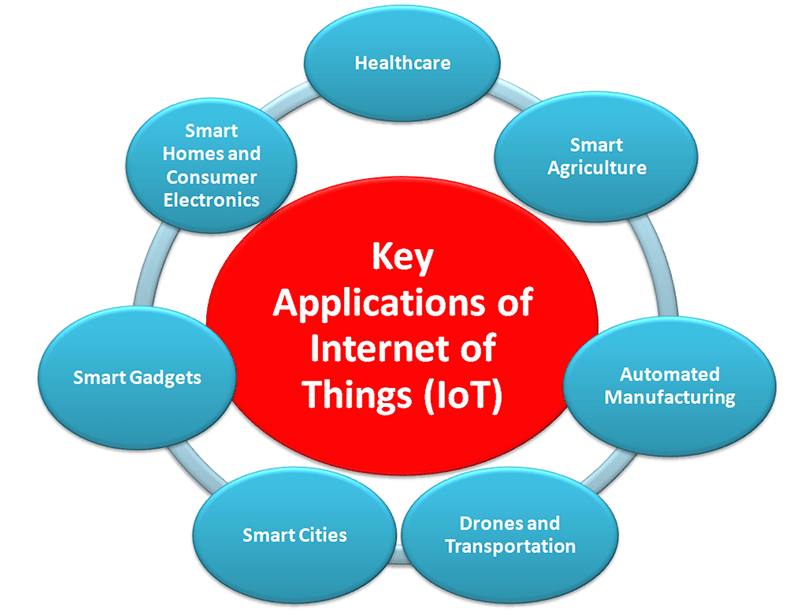
Smart homes and consumer electronics
IoT is now being integrated within the smart home to make living more comfortable and energy-efficient. Solutions such as smart thermostats adapt household temperatures according to user preferences and integrate dynamic decision-making using machine learning. IoT systems help users control lights through remote control handheld gadgets, optimising the consumption of electricity. Voice assistants like Amazon Alexa and Google Assistant manage connected home devices, answer questions, and set reminders.
Medical and healthcare
IoT has revolutionised patient care through remote monitoring, wearable health devices, and predictive analytics techniques. Wearable fitness trackers, for example, monitor parameters such as heart rate, activity levels, and sleep analysis, thus encouraging preventive healthcare. Remote health monitoring systems empower those with chronic diseases to share real-time health metrics with medical experts. Predictive analytics leverages this data to discover trends, refine therapies, and reduce hospital readmissions.
Smart agriculture and agribots
New developments in smart farming technologies enabled by IoT have revolutionised agriculture. Precision irrigation systems send water directly to the roots of crops in proper volumes to conserve resources and improve yields. Sensors on fields using agribots track information like the state of the ground, current weather conditions, and the stage of crop growth.
Automated manufacturing
IoT enhances efficiency and innovation in manufacturing through rapid data exchange, powered by Industry 4.0. It enables predictive maintenance, which helps to reduce downtime and repair costs. By processing operational data on-the-fly, IoT systems enhance production processes for faster and more effective operations. Besides, IoT enhances supply chain visibility, enabling manufacturers to monitor inventory and shipments, avoid production delays, and improve logistics.
Drones and transportation
Leveraging machine learning, a smart traffic management system utilises real-time traffic data to adjust signal timings and ease congestion to improve commute times. Fleet tracking solutions are beneficial for logistics companies to know where their vehicles are, how much fuel they consume, and the performance of their drivers. Autonomous vehicles and drones are powered by the Internet of Things (IoT) using data from sensors, cameras, and GPS.
Smart cities
IoT is a key enabler for smart city projects. Smart waste management systems use IoT sensors to track the levels in bins and help with resource optimisation. Energy-efficient streetlighting systems automatically adjust brightness depending on light conditions, reducing energy costs and enhancing public safety. IoT is also used in public transport networks to provide real-time updates to commuters, improve operational efficiency, and minimise delays.
Protocols for IoT programming and interfacing
A number of protocols are available for IoT programming that can be used with multiple programming platforms and hardware kits. Here are the key protocols for different domains:
- Very Simple Control Protocol (VSCP)
- Message Queuing Telemetry Transport (MQTT)
- Constrained Application Protocol (CoAP)
- Advanced Message Queuing Protocol (AMQP)
- Lightweight Machine to Machine (LwM2M)
An optimal IoT ecosystem is based on different communication protocols, which facilitate data transfer between connected devices. These IoT protocols include VSCP, MQTT, CoAP, LwM2M, AMQP, and many others. Of these protocols, the Very Simple Control Protocol (VSCP) offers a lightweight, event-driven framework especially suited for automation, control systems, and IoT applications. The flexibility offered by VSCP in open source platforms makes it an excellent protocol for building powerful, reliable, and competitively priced IoT environments.
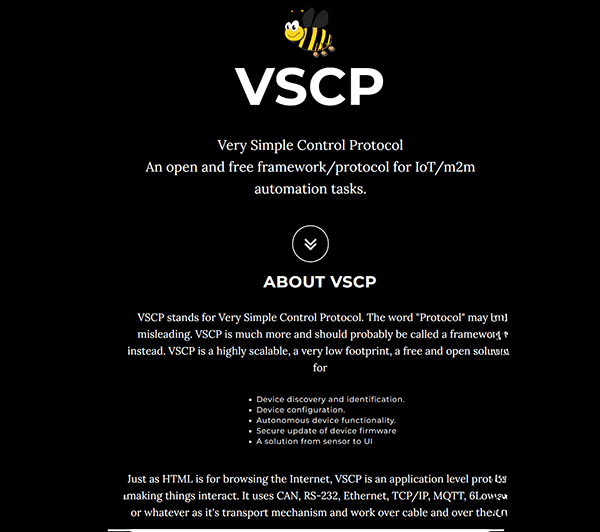
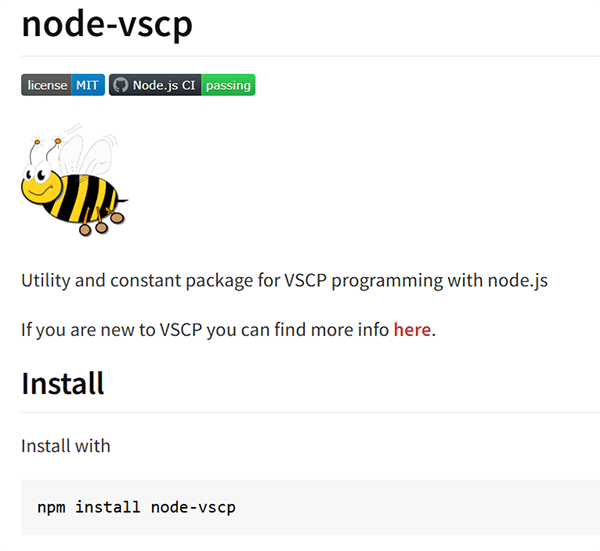
Very Simple Control Protocol (VSCP) and IoT Applications
VSCP is an open and free protocol for IoT and machine to machine (m2m) automation tasks. Its simplicity, reliability, and scalability make this protocol perfect for IoT-based solutions that range from smart homes to industrial automation. Its key features are: