




Have you ever noticed how wireless tech helps devices talk without wires, making homes, cities, and health smarter. Small signals go far and use little power. Want to build wireless devices? Discover the best modules and boards to get started!
Wireless communication is changing how we connect. Devices can communicate with one another with less additional wiring. This creates new options for remote control, consent-based proximity monitoring, and more basic arrangements in various applications like smart cities, industrial automation, and healthcare. Low-power protocols offer the ability for battery operation in a low-power scenario, such as Long Range (LoRa), Zigbee, and Narrowband Internet of Things (NB-IoT). In addition, adding more devices onto the wireless connections is straightforward as the networks expand, thereby helping to quickly collect data, analyze the data better, make smarter decisions, and automate more things.
You have probably utilized Bluetooth and WiFi without realizing it, as these wireless connections are quite ambient. Bluetooth is suitable for a short-range connection with the ability to consume low energy, such as for fitness trackers or smart home connections. WiFi provides high speeds and capacity for devices in homes and offices. RFID can passively track packages and assets without requiring a power source with a battery, through the RFID tag.
Low-Power Wide-Area Networks (LPWANs) are changing how we can connect devices over long distances while minimizing battery usage. Long-Range Wide-Area Networks (LoRaWAN) has built a wireless long-range communication technology with very low power. Long Term Evolution for Machines (LTE-M) provides faster data speeds and mobility over cellular networks. Sigfox works well for sending small amounts of data occasionally. NB-IoT supports many devices, even indoors.
The future promises even more excitement. Understanding what each wireless technology offers helps us choose the right module or board for whatever IoT project you might be working on.
Tiny Signals, Huge Reach
LoRA started out as a way to add wireless communication to utility meters but it’s much more than that now. It works in unlicensed radio bands and can send tiny bits of data over really long distances while using almost no power. What’s cool is how it uses this special Chirp Spread Spectrum technology. Imagine it like different spreading factors that let devices close to a gateway send data fast while those farther away send data more slowly but still get through without interference. So whether your device is near or far, LoRa adapts to keep things running smoothly making it perfect for low power sensors and other IoT gadgets you might want to connect. However, Dharmendra Kumar, Founder, EdgeSiTech that, “LoRa offers long-distance connectivity (over 5 to 10 km), but requires its own network infrastructure including gateways,”
Somnnath Bera, Ex. General Manager at NTPC, emphasizes LoRa’s resilience, noting: “LoRa radios working on LoRa technology can be configured so that if one node goes down, others take over, allowing data to be spread over a wider area.” This mesh-like capability makes LoRa extremely useful for extending the coverage of wireless sensor networks and ensuring reliable data delivery even with hardware failures.
Now when we talk about LoRaWAN, think of it as the smart network that ties all these devices together. It’s built on LoRa and lets thousands of devices chat with gateways which then pass messages on to servers connected to the internet. If you want to grow your network just add more gateways easy and cost effective. So if you’re looking to connect devices that need to send small amounts of info over long distances without draining batteries, LoRa and LoRaWAN have got you covered.
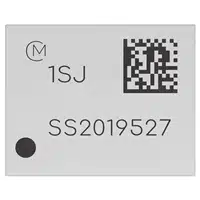
For example, the LBAA0QB1SJ-296 from Murata Electronics Integrated LoRaWAN modem offers ease of integration for LoRaWAN IoT devices and applications. It’s the smallest and highly integrated LoRaWAN modem available in the market. It simplifies RF design with only an antenna attachment needed, and makes host MCU design easier since the LoRaWAN stack is included in the modem firmware. It also supports AT-Command over UART for ease of use and features low power consumption.
When we pick our modules, we want to think about the frequency band for our region, how much power they use, their sensitivity, and even the size and certifications to make sure they fit our needs.
Bluetooth Low Energy: Tiny Wireless Tech
Bluetooth Low Energy (BLE) is a wireless technology that is designed to transmit small amounts of data over a short distance with low power consumption. BLE is mostly in sleep mode and only wakes up when it needs to connect or send data, resulting in BLE using around 100 times less power than classic Bluetooth. BLE was designed for devices like fitness bands and smart home products that can last from months to years on battery. BLE has quick connection times, authentication with strong encryption, and the ability to perform as a main controller or accessory/sensor.
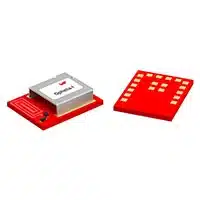
If you’re a developer, a BLE module can make your life a lot easier. The module makers have already handled all the tricky parts of the radio design, so you can just drop the module into your product and be confident it will work well. One example is the 2612011022000 Würth Elektronik Bluetooth v5.1 2.4 GHz Transceiver Module with PCB Trace Antenna, Surface-Mount, which is a tiny package that integrates all relevant components to get you up and running quickly. This means that developers can spend less time on wireless product engineering and more time on realizing the differentiating features of their product as these modules are also designed to be small and efficient using specialized package tech to package all the components compactly. BLE keeps power usage low by sending data in bursts instead of a continuous stream, which is ideal for IoT devices that are only expected to send data intermittently.
We see BLE everywhere nowadays like in our wearables, smartwatches, medical devices, cars, stores, factories, and even smart homes. It’s a popular choice because it saves power, keeps data secure, and is easy to add to almost any device. With new advancements such as mesh networking, and faster data speeds, BLE will become even more integral with all the connected devices we use every day. So whether you are creating the next smart gadget or if you are just curious about how your devices are able to stay connected without losing their batteries.
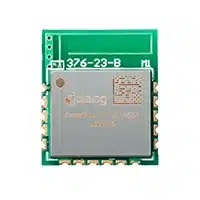
The DA14531MOD-00F01002 from Renesas Electronics is the company’s first BLE module built on the DA14531 SoC, integrating all external components, including the antenna, into a compact and affordable solution. Intended to bring BLE to applications that were limited by cost or complexity, the idea is to make every product a connected IoT node. With ultra-low power consumption, cost-effectiveness and ease of use, this module is ready for overwhelming mass market adoption including by the maker community.
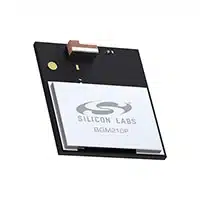
The BGM210PA32JIA2 from Silicon Labs is built for line-powered IoT products where high performance, security and reliability in Bluetooth networks are required. It supports Bluetooth Mesh connectivity, offers long RF range, low active current consumption, OTA firmware updates, advanced security, and a temperature rating for demanding environments. Target applications include smart home, connected lighting, building automation, security, and factory automation.
One Module, Many Networks
Using multiprotocol wireless modules that combine Wi-Fi, Bluetooth, Zigbee, LTE, etc. into a single module makes things much easier for us when we design IoT products. These types of modules enable our products to connect across multiple protocols without needing to have separate hardware for each protocol. That means we save on production costs, simplify the hardware design, and speed up development which helps us bring products to market faster. Plus, they improve how well our devices talk to each other across different wireless technologies which is key when we’re building IoT systems for things like smart homes, healthcare, industrial monitoring, or smart cities. “The main options in multiprotocol wireless modules currently are Bluetooth + Wi-Fi combined modules,” says Dharmendra.
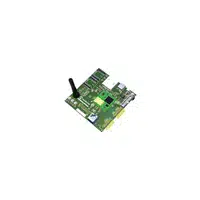
A good example of this is Microchip’s DM320117, a single-sided System-on-Module that includes both Wi-Fi and Bluetooth and its own Power-Management IC. Integrating all of these capabilities allows multiple wireless standards to reside within one small form factor, allowing devices to connect in a network scenario without requiring separate protocol-specific hardware.
But it’s not just about connectivity and cost savings. These multiprotocol modules also focus on energy which is important for battery powered IoT devices. We get power management features like low power sleep modes that help extend battery life. And when it comes to keeping our devices secure and up to date, over the air firmware updates mean we don’t have to manually intervene and we can maintain everything remotely. These modules also support many protocols and will give us the ability to easily integrate new technologies in the future without having to redesign the hardware every time new technology is developed.
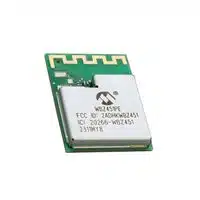
The WBZ451PE-I from Microchip Technology is part of the WBZ45 Module series, which consists of fully RF-certified wireless modules. Along with support for Bluetooth Low Energy (Bluetooth 5.2), Zigbee (Zigbee 3.0), and Thread (Thread 1.3.0) wireless protocols, the module also provides a comprehensive set of standard MCU peripherals.
868 MHz RF Modules
The 868 MHz frequency band is a primary frequency used in wireless communication in Europe and surrounding locations, particularly in low-power short-range applications. Because it operates on the unlicensed ISM band, no special permissions are required to use it. It is ideal for IoT applications, smart city applications, and industrial monitoring systems. The benefit of this frequency band is that the antenna is small (quarter-wavelength) and typically covers a distance of 800 meters. The signals also propagate through walls and other obstacles better than other higher frequency bands such as 2.4GHz. The main selling point is the longer range and lower power requirements for applications such as home automation, security, industrial control, smart agriculture, asset tracking, and environmental monitoring.
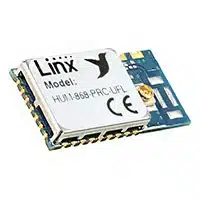
One notable product leveraging this band is the HUM-868-PRC-UFL from TE Connectivity Linx. The HumPRCTM Series offers a complete system to integrate bi-directional remote control into many different applications without requiring any programming. It enables long-range transmission at the 868 MHz band using Listen Before Talk and Adaptive Frequency Agility techniques, and provides industry standard encryption to guarantee secure and resilient communications.
When designing and working 868 MHz systems, one thing we need to consider carefully is radio frequency (RF) filters. RF filters are key to ensuring our signals are clean and strong because they can tune accurately to the 868 MHz and filter out unwanted noise. Getting these right helps us maintain reliable, stable communication, which is essential for IoT and sensor networks that run for long periods with minimal power. Thanks to the 868 MHz band, we can build smart city projects like intelligent parking systems and smart energy management that work efficiently and reliably making it a backbone for modern wireless communication across Europe.
Wireless Boards Driving IoT Innovation
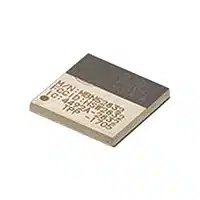
Evaluation/Development boards are utilized by embedded systems engineers designing IoT devices for medical/healthcare devices, industrial controls, automotive electronics, etc. Evaluation boards combine the entire set of components, sensors and means of communication and allows the developer to build an integrated system without the burden of developing each hardware component. Wireless boards allow developers to use Wi-Fi, Bluetooth, Zigbee and other communication and connectivity protocols without any standalone transceiver module requirement. A clear example would be the MBN52832 BLE Module from Murata Electronics, part number WSM-BL241-ADA-008 on Digikey, it is an evaluation board with MBN52832 BLE module, 2.4 GHz radio, very fast Cortex-M4 processor, memory, fast clock and built-in antenna elements all in one tiny module.
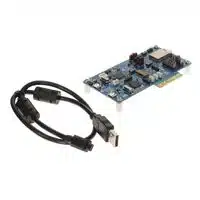
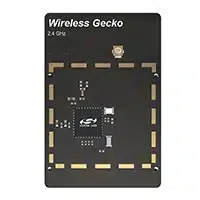
Another good example is the board from Renesas Electronics Corporation, DA16600MOD-DEVKT Evaluation board that supports 802.11 b/g/n Wi-Fi and Bluetooth 5.x (BLE) 2.4-GHz. Evaluation boards/development kits are ideal in the intelligent IoT penetration market, providing an opportunity to use sensors, wireless signal connectivity, and cloud utilities- while making it useful and scalable to heterogeneous environments like smart homes, smart buildings, industrial automation, health or wearables and ambient environmental sensing. SLWRB4183A from Silicon Labs is also a wireless evaluation board for designing and testing Bluetooth Low Energy (BLE) wireless applications.
Wireless communication is driving the future of connected devices by enabling the construction of new, more efficient, scalable, and lower power systems. Emerging technologies like Bluetooth Low Energy, LoRaWAN, Wi-Fi, and multiprotocol modules allow engineers to develop connected device solutions for smart homes, smart industries, smart healthcare, and smart cities in a shorter period of time and at less time and effort than before. With ongoing advancements in wireless technology, especially the evolution of 5G, the reliance on traditional wired infrastructure will diminish, paving the way for IoT to flourish as a rapidly growing field that brings greater intelligence, responsiveness, and seamless connectivity to smart systems in every aspect of our lives.
Comparison of Key Wireless Technologies
This table gives a quick side-by-side view of common wireless options, covering range, data rate, power use, applications, and advantages.
| Technology | Range | Data Rate | Power Consumption | Applications | Key Advantages |
| LoRa | ~10 km practical (up to 330 km LOS) | 0.3–27 kbps | Very low, years on battery | Remote sensors & rural IoT | Long range, low power, robust |
| LoRaWAN | ~2–5 km urban, ~15 km rural | 0.3–50 kbps | Ultra-low (5–10+ yr battery) | Asset tracking, smart cities, agriculture | Scalable, low-cost operation, secure |
| Bluetooth Low Energy | 15–30 m indoor, up to 100 m outdoor | 125 kbps–2 Mbps | Very low (~10 mW, <15 mA peak) | Wearables, indoor tracking, smart home | High throughput, low latency, wide support |
| 868 MHz RF | Up to ~14.5 km | 10–80 kbps (RF); faster via SPI/UART | TX ~76 mA, RX ~26 mA, Sleep ~1.5 µA | Long-range sensor networks, moderate data | Good range, flexible interfaces |
Wireless Modules and Evaluation Boards
This table lists popular wireless transceiver modules and evaluation boards with their specs, brands, and direct links for more details.
| S.NO. | Digikey Part Number | Specs | Brand | Image | More Info |
| 1. | 490-LBAA0QB1SJ-296TR-ND, 490-LBAA0QB1SJ-296CT-ND, 490-LBAA0QB1SJ-296DKR-ND | LoRa Transceiver Module 868MHz ~ 915MHz | Murata Electronics | | See Details |
| 2. | 732-2612011022000TR-ND, 732-2612011022000CT-ND, 732-2612011022000DKR-ND | Bluetooth v5.1 Transceiver Module 2.4GHz | Würth Elektronik | | See Details |
| 3. | 1695-DA14531MOD-00F01002TR-ND, 1695-DA14531MOD-00F01002CT-ND, 1695-DA14531MOD-00F01002DKR-ND | Bluetooth v5.1 Transceiver Module 2.4GHz ~ 2.4835GHz | Renesas Electronics Corporation | | See Details |
| 4. | 336-BGM210PA32JIA2-ND | Bluetooth v5.3 Transceiver Module 2.4GHz ~ 2.4835GHz | Silicon Labs | | See Details |
| 5. | 150-DM320117-ND | 5.x (BLE) 2.4GHz Evaluation Board | Microchip Technology | | See Details |
| 6. | 150-WBZ451PE-I-ND | Bluetooth v5.2, Zigbee Transceiver Module 2.4GHz | Microchip Technology | | See Details |
| 7. | HUM-868-PRC-UFL-ND | Transceiver Module 863MHz ~ 870MHz | TE Connectivity Linx | | See Details |
| 8. | 490-17329-2-ND, 490-17329-1-ND, 490-17329-6-ND | Bluetooth v5.0 Transceiver Module 2.4GHz Integrated | Murata Electronics | | See Details |
| 9. | 1564-DA16600MOD-DEVKT-ND | 5.x BLE 2.4GHz Evaluation Board | Renesas Electronics Corporation | | See Details |
| 10. | 336-SLWRB4183A-ND | 5.x BLE 2.4GHz Evaluation Board | Silicon Labs | | See Details |


