A robotic hand with grip control, tactile sensing, and hybrid actuation aims to improve humanoid robots’ object handling and performance in changing environments.
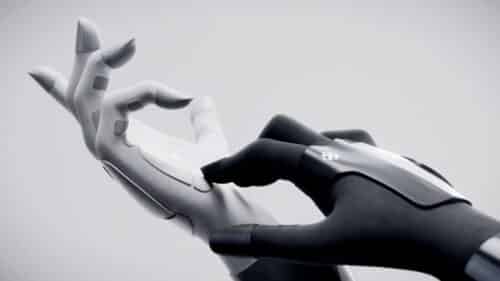
Xynova has unveiled a robotic hand designed for humanoid robots to interact with objects, focusing on control, adaptability, and performance in unstructured environments.

The system, called Flex 2, uses a hybrid actuation approach combining tendon-driven mechanics with direct-drive motors. This is intended to balance compliance and precision, allowing the hand to adjust to different object shapes and fragility levels while maintaining force and positioning during manipulation.
The hand has 23 degrees of freedom and weighs about 400 grams. It is designed for coordinated motion and can perform grasp cycles while maintaining control. Xynova reports positional repeatability of about ±0.1 mm and force control down to 0.05 newtons, targeting tasks that require handling and stable grip under load.
The system can support a one-handed grasp load of up to 12 kilograms, with a lower continuous operational load rating for sustained use. It integrates tactile sensing and proprioceptive feedback, enabling slip detection and grip adjustments during contact with objects. A control layer based on biological motor control coordinates these responses in real time.
The vision system is located on the wrist rather than the palm. This reduces occlusion during grasping and improves visual tracking of objects, which is useful for training embodied AI systems that rely on perception during manipulation tasks.
The hand includes wear-resistant materials, compact actuators, and a durability focus for long operational life under repeated stress. An open development framework allows external developers to build applications on top of the system.
Flex 2 builds on Flex 1, which had different performance trade-offs, including higher load capacity but less interaction control. The new model emphasizes precision and manipulation fidelity rather than strength.
More broadly, the design addresses challenges in robotics: achieving dexterity in environments where objects are unpredictable, contact is complex, and visual information can be partially obstructed.