Can automated design reviews catch circuit errors before a board reaches manufacturing? An AI-based verification tool checks schematics against datasheets and engineering rules.
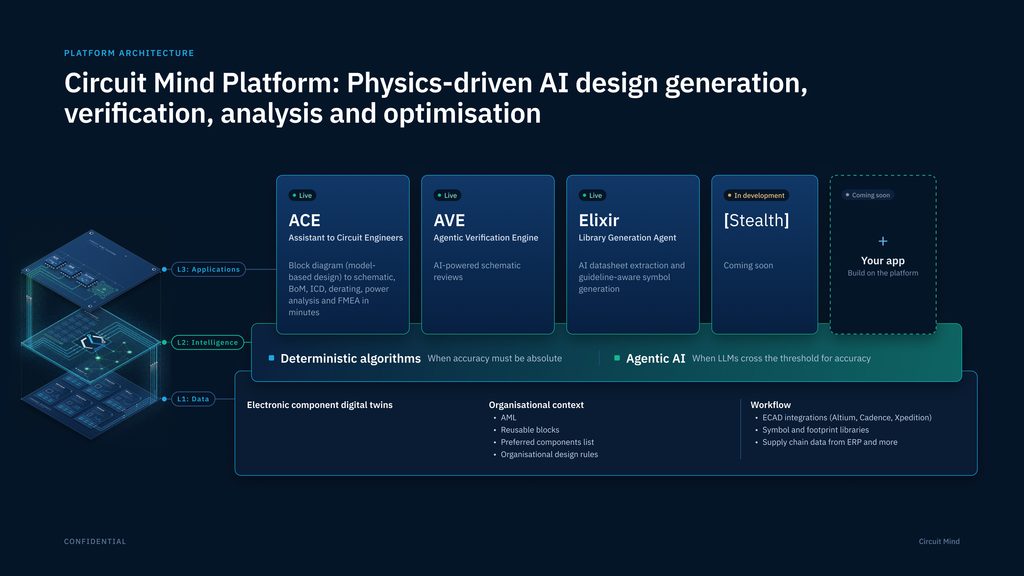
Circuit Mind has introduced the Agentic Verification Engine (AVE), an artificial intelligence application which ensures PCB schematics meet the design rules and standards from component datasheets, application notes and company specific rules. This reduces errors during the design process and prevents test failures, respins and delays throughout the project.
Design engineers often have to check component documentation manually to ensure the correct pin outs, voltages and electrical requirements are in place. If a spec is missed, or a miscalculation is made it won’t be spotted until a physical board is produced and tested.
The engine uses multiple AI agents to examine a schematic. Some analyse component datasheets for pin configurations, some for voltage limits and other constraints, while others trace connections and buses across the circuit. The system then runs a separate quality-assurance check on its findings before reporting issues to the engineer.
The tool can review schematics created manually in electronic computer-aided design (ECAD) software. It checks them against application notes and an organisation’s internal review checklists, allowing engineering teams to apply their own design requirements alongside component specifications.
The tool also uses the company’s Automated Circuit Engineering (ACE) application on the their electronic design intelligence platform. ACE generates circuit schematics, bills of materials and supporting analysis from a system architecture block diagram. It also evaluates design options against cost, size, power and supply-chain requirements. Together, the applications cover design generation and verification.
“Engineering teams are still designing hardware like it was done in the 1980s,” says Tomide Adesanmi, co-founder and CEO of Circuit Mind. “We believe electronics products can be designed 10x faster, first time right, before a single dollar is spent on physical prototypes. AVE is the next step to achieve that.”
Click here for the official announcement.