

The GPUs can support AI model training, data processing and scientific simulations, including weather forecasting and materials research.
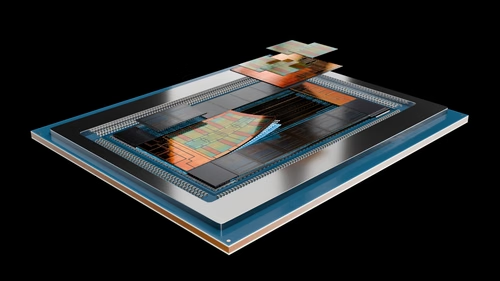
AMD is expanding its MI400 Series GPU portfolio with new options for AI computing and scientific research. The company is introducing another GPU configuration and sharing performance results for its existing hardware. The newly launched MI450X GPU offers 288GB of HBM4 memory. It gives customers another option for running AI workloads that do not require the higher memory capacity of the MI455X.

The MI430X is a data centre GPU that can be used by researchers to simulate complex processes, such as weather patterns, fluid dynamics, chemical reactions and material behaviour. It can also be used to process data, train AI models and analyse scientific results. FP64 stands for 64-bit floating-point precision, also called double precision. The GPU comes with two different levels of precision, including FP32 (uses 32 bits to represent a number) and FP64 (uses 64 bits to represent a number). Its native FP64 support, 432GB of memory and high memory bandwidth are intended to support these demanding workloads.
The company claimed to have examined 47 workload configurations across 11 scientific applications and benchmarks. The research investigates two approaches: one was FP64 emulation, in which the GPU performs double-precision calculations directly using its hardware. The other was FP64 emulation, which is a software technique used to reproduce double-precision calculations using other computing capabilities, such as lower-precision operations.
MI450X and MI455X offer the same core compute, memory bandwidth, scale-up connectivity and scale-out connectivity. The key difference is memory capacity, not the core computing or connectivity capabilities. By choosing a GPU with sufficient memory for its workload instead of using a higher-memory option unnecessarily, customers may optimise infrastructure costs.
Both MI450X and MI455X can be deployed using the same Helios architecture and ROCm software foundation. This means customers and ecosystem partners can work with a common hardware and software environment.
Click here for the original announcement.