





Optical Power
Optical power is the amount of optical energy transferred per unit time, usually expressed in watts (W), milliwatts (mW), or dBm. The transmitter launches optical power into the fiber, and the receiver detects the optical power arriving at the receiver end. Optical power can be measured using an optical power meter or photodetector. The statement that optical power and heating power are equivalent is not technically appropriate. A photodetector converts received optical power into an electrical signal; some absorbed optical energy may ultimately become heat, but this is not the basis for ordinary optical-power measurement. Strong optical signals are generally easier to measure because the detector operates well above its sensitivity/noise floor. Very low optical powers are more difficult to measure because of detector sensitivity and noise.
dBm is a logarithmic unit of power referenced to 1 mW:
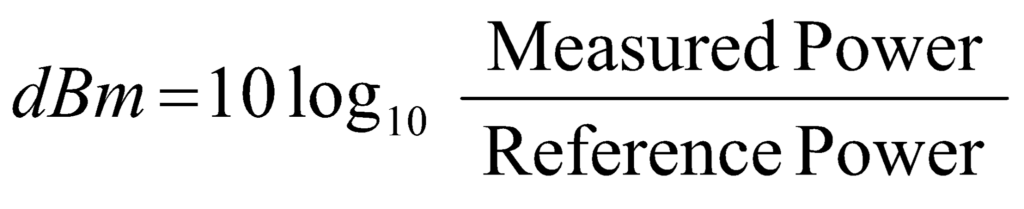
(1)
When the power being measured reaches 1 mw, the equation transforms to,

(2)

The equation changes if there is power larger than 1 mw, say 2 mw:

(3)
The equation changes if there is power less than 1 mw, say 0.5 mw:

(4)
Power more than 1 mW or less than 1 mW is indicated by positive dBm. A decent laser source for a single-mode link should be able to couple 2-4 mW of power (+3 to +6 dBm) into the fiber. A multimode link’s Vertical-Cavity Surface-Emitting Laser (VCSEL) ought to have a power of between 0 dBm and 1 mW. The usual wattage of a Light Emitting Diode (LED), which is still used in older multimode line, is -10 dBm – 0.1 mW, or 100 microwatts.
The ratio of power for dBm changes in power is shown in the table below:
| dBm | Milliwatts | dBm | Milliwatts |
| 0 | 1.000 | 0 | 1.000 |
| 0.1 | 1.023 | -0.1 | 0.977 |
| 0.2 | 1.047 | -0.2 | 0.955 |
| 0.3 | 1.072 | -0.3 | 0.933 |
| 0.4 | 1.096 | -0.4 | 0.912 |
| 0.5 | 1.122 | -0.5 | 0.891 |
| 0.6 | 1.148 | -0.6 | 0.871 |
| 0.7 | 1.175 | -0.7 | 0.851 |
| 0.8 | 1.202 | -0.8 | 0.832 |
| 0.9 | 1.230 | -0.9 | 0.813 |
| 1 | 1.259 | -1 | 0.794 |
| 2 | 1.585 | -2 | 0.631 |
| 3 | 1.995 | -3 | 0.501 |
| 4 | 2.512 | -4 | 0.398 |
| 5 | 3.162 | -5 | 0.316 |
| 6 | 3.981 | -6 | 0.251 |
| 7 | 5.012 | -7 | 0.200 |
| 8 | 6.310 | -8 | 0.158 |
| 9 | 7.943 | -9 | 0.126 |
| 10 | 10 | -10 | 0.1 |
| 20 | 100 | -20 | 0.01 |
| 30 | 1,000 | -30 | 0.001 |
| 40 | 10,000 | -40 | 0.0001 |
| 50 | 100,000 | -50 | 0.00001 |
| 60 | 1,000,000 | -60 | 0.000001 |
Optical Power Loss
During transmission through an optical fiber, the optical power decreases due to various losses such as absorption, scattering, bending, connector loss, and splice loss. These losses cause the received optical power to be lower than the power launched by the transmitter. Fiber attenuation is commonly expressed in decibels (dB) or, for fiber attenuation per unit length, in dB/km. The total optical loss of a fiber-optic link is an important parameter for ensuring reliable communication because it determines whether the received optical power remains above the receiver’s sensitivity level. It also helps determine the maximum transmission distance of the fiber link without unacceptable degradation in communication performance. The optical power loss can be calculated in decibels using the relationship:
Watts are used for determining power sources; the calculation as follows is employed to determine dB:
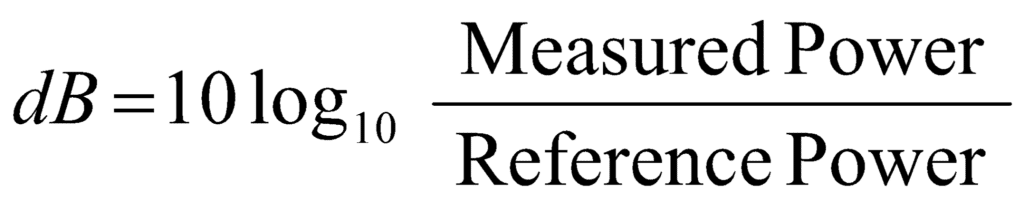
(5)
According to the calculation above, the proportion of 10 is comparable to 110 dB (either ten times more or one-tenth as large), a measurement of 100 to 20 dB, a ratio of 1000 to 30 dB, and so on.
The following table displays in relation to power for decibels variations in power:
| dB (gain) | Power ratio | dB (loss) | Power ratio |
| 0 | 1.000 | 0 | 1.000 |
| 0.1 | 1.023 | -0.1 | 0.977 |
| 0.2 | 1.047 | -0.2 | 0.955 |
| 0.3 | 1.072 | -0.3 | 0.933 |
| 0.4 | 1.096 | -0.4 | 0.912 |
| 0.5 | 1.122 | -0.5 | 0.891 |
| 0.6 | 1.148 | -0.6 | 0.871 |
| 0.7 | 1.175 | -0.7 | 0.851 |
| 0.8 | 1.202 | -0.8 | 0.832 |
| 0.9 | 1.230 | -0.9 | 0.813 |
| 1 | 1.259 | -1 | 0.794 |
| 2 | 1.585 | -2 | 0.631 |
| 3 | 1.995 | -3 | 0.501 |
| 4 | 2.512 | -4 | 0.398 |
| 5 | 3.162 | -5 | 0.316 |
| 6 | 3.981 | -6 | 0.251 |
| 7 | 5.012 | -7 | 0.200 |
| 8 | 6.310 | -8 | 0.158 |
| 9 | 7.943 | -9 | 0.126 |
| 10 | 10 | -10 | 0.1 |
| 20 | 100 | -20 | 0.01 |
| 30 | 1000 | -30 | 0.001 |
| 40 | 10000 | -40 | 0.0001 |
| 50 | 100000 | -50 | 0.00001 |
| 60 | 1000000 | -60 | 0.000001 |
Compare the rows’ positive in addition negative decibels values. The ratio of the positive decibels is the opposite of the negative dB; for example, +10 dB is a ration of ten times, whereas -10 dB is a tenth of a ratio, or 0.1. As a result, a measurement of power at +10 dB suggests that it is ten times as much the normal power since 10 decibels is a multiple of 10, while a measurement at -10 dB is one-tenth as much. A few of the numbers are simple to recall and could be helpful.
dB = 0 translates to the two optical powers being compared are equivalent. Positive values for dB indicate that the power being measured is more than the standard power, while negative values indicate that the measured power is less than the standard power. As a result, loss measures are represented by negative values.
Conclusion
Optical power is an important parameter in fiber-optic communication because it represents the amount of optical energy transmitted from the transmitter to the receiver. It is commonly measured in watts, milliwatts, or dBm. During transmission through the optical fiber, the optical power decreases due to attenuation caused by absorption, scattering, bending, connector loss, and splice loss. This reduction in power is known as optical power loss and is generally expressed in dB or dB/km. Proper estimation of optical power and power loss is essential for determining the received power, receiver sensitivity, and maximum transmission distance of a fiber-optic link. Therefore, maintaining sufficient optical power and minimising fiber losses are important for achieving reliable, high-quality, and long-distance optical communication.
By: Krishnamariselvi T, Research Scholar, Department of Electronics and Communication Engineering, K.Ramakrishnan College of Technology, Tiruchirappalli, Tamil Nadu, India


