



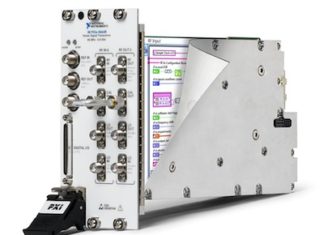
How Does the Vector Signal Transceiver Test Keep Up With Tech?
As an increasing number of design teams and firms set their crosshair on developing systems for the Internet of Things paradigm, they face the...
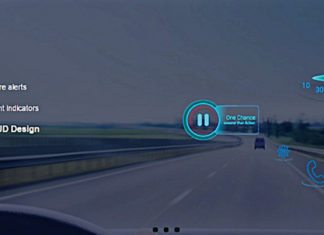
Car HUD Based Smart Infotainment System
Let us imagine a fine day when you are going with family to a picnic in a car. Music and movies keep the kids...

ADF7030-1: Low power, High Performance Radio Transceiver
Analog Devices, Inc. today introduced a low power, high performance, radio transceiver for battery powered applications. The new transceiver enables more reliable wireless radio...

Teardown: IP Camera
In this video, the author will be showing you a detailed teardown video of IP camera. He also explains various external and internal components...
IoT Framework With Tangible Benefits From Birlasoft
Birlasoft (India) Limited announced that its Reverse Osmosis Monitoring & Optimization (ROMO) 1.0 application, was certified by SAP as “Built on SAP HANA Cloud Platform and...

The First DDR Memory-Termination Linear Regulator for Space Applications
Texas Instruments today introduced the first double-data-rate (DDR) memory linear regulator for space applications. The TPS7H3301-SP is the only DDR regulator immune to single-event...

Sensor-Fusion Solutions Are Triggering Better Performance In Wearables
Convergence of physical and virtual worlds has created new opportunities across industry segments. How have these sensors evolved? Krishnananda Shenoy, AVP and principal architect,...

R-78E Series: Advantages of Standard Switching Regulators at a Lower Cost
RECOM expands its low-cost, highly-efficient R-78E switching regulator series with modules featuring 9V, 12V, and 15V output voltages. This series is designed to offer...

Real Time Ethernet Conference 2016 Concluded
The Real Time Ethernet Conference 2016, Bangalore concluded on July 7th 2016
The event was organized by Ethernet POWERLINK Standardization Group and was partnered by...

What Drives Power-Conversion Components
The need of the hour is higher speed at lower power consumption. A laptop is expected to boot-up quickly and its charge to last...