


| Title of Reference Design | Current Loop Transmitter | Wireless Power Transmitter | Wireless Transmitter | EMC/EMI Tested Transmitter | Universal Asynchronous Receiver-Transmitter |
| Image | 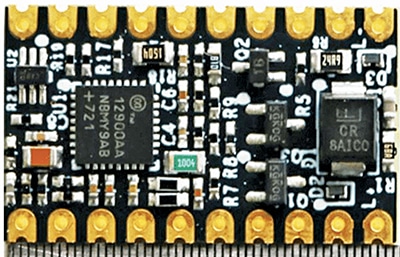 | 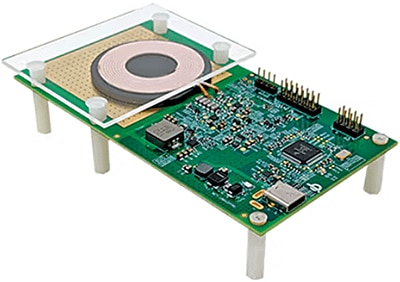 | 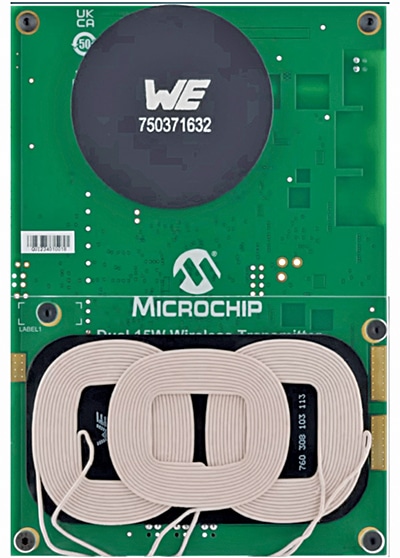 | 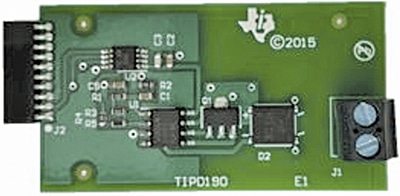 | 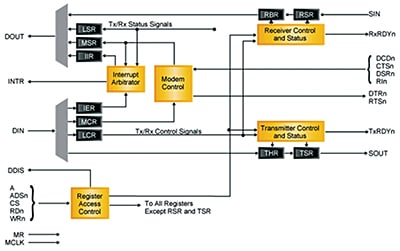 |
| Key Attractions | The reference design enables you to accurately control and measure current using just a microcontroller, eliminating the need for additional parts. It is simple, reliable, and makes building analogue output systems easier. | The 22W wireless power transmitter reference design lets engineers make safe and standard chargers. It works with Qi 1.3.2, finds metal objects, and uses NFC for secure charging in small devices. | The reference design features two charging pads, each with its own chip. It works with both power types and supports fast charging. It keeps data safe and allows users to change settings for various purposes. | This design sends 4-20mA signals. It works even if the wires are swapped. It protects against power spikes, utilises common parts, and maintains low power while keeping the signal accurate. | The reference design helps add UART communication easily. It supports full-duplex data transfer, features FIFO buffers, and provides interrupt support. You can also set the baud rate as needed. It saves time. |
| Highlights | The MAXREFDES1161 reference design from Analog Devices (ADI) uses two PWM signals from a microcontroller, one for coarse 8-bit control and the other for fine 8-bit control, to set the current loop output without a DAC. A built-in amplifier measures the loop current and sends a signal to the microcontroller’s ADC. The system is powered by a 24V loop supply, with inrush current limited by a resistor and a regulator that steps the voltage down to 3.3V, set by two external resistors. The setup allows analogue output using microcontroller I/O, with filtering handled by the multi-feedback system. Current measurement, a 2.5V reference, and comparator-based checks allow monitoring without extra circuitry. The startup sequence ensures stability before powering external components. The design supports the development of analogue output modules with fewer components and basic microcontroller integration. | The MP-A11 fixed frequency wireless power transmitter reference design from NXP Semiconductors is a 22W solution for mid-power wireless charging in automotive consoles, industrial systems, smart home products, and portable consumer electronics. Built around NXP’s MWCT1013A controller, the design supports Qi 1.3.2 compliance and includes full-bridge control, foreign object detection (FOD), and real-time receiver communication. Operating at a fixed frequency of 127.7kHz with an MP-A11 coil, it maintains a small footprint and low electromagnetic interference (EMI) for use in space-constrained designs. The design incorporates FOD, near-field communication (NFC)-based Qi authentication, and a power stage featuring N-channel metal-oxide-semiconductor field-effect transistors (MOSFETs) and gate drivers. The firmware supports over-the-air (OTA) updates and diagnostics through universal asynchronous receiver-transmitter (UART) or inter-integrated circuit (I²C) to reduce time to market. | Microchip’s Qi 2.0 dual-pad wireless power transmitter reference design uses a multi-coil system controlled by a single dsPIC33 digital signal controller (DSC), supporting both extended power profile (EPP) and magnetic power profile (MPP). The design includes CryptoAuthentication for security and combines the dsPIC33 DSC with the Trust Anchor TA100/TA010 secure storage, provisioned as a wireless power consortium (WPC) manufacturer certificate authority. Its software architecture allows one controller to manage both MPP and EPP pads, enabling fast charging and support for mixed MPP/MPAx transmitters. The software also allows customisation of magnetic power alignment (MPLA) and Q-factor-based foreign object detection (Q-FOD) tuning. This design is for electronics designers and manufacturers working on wireless charging systems in areas such as vehicles, personal devices, medical tools, industry equipment, and furniture or infrastructure. Design files and source code are available under licensing terms to support the development process. | TIPD190 is a loop-powered analogue output transmitter reference design from Texas Instruments (TI) that uses a 16-bit DAC and a voltage-to-current converter to control 4-20mA loop current through a 2-wire interface. A voltage regulator reduces the 24V loop supply to support analogue components and can be implemented using LDOs, DC/DC converters, or shunt regulators. The design achieves a total unadjusted error of under 0.15% while maintaining a supply current below 4mA, thereby meeting current loop standards. Its polarity protection prevents damage from wiring errors, and the IEC-compliant protection circuit increases durability in environments with electrical noise. Built with standard components and a known framework, TIPD190 simplifies implementation, reduces development time, and supports product rollouts. OEMs benefit from fewer support issues and long-term performance, while end users gain from system uptime, low maintenance, and analogue communication in automation and sensing applications. | Lattice Semiconductor’s UART reference design enables quick integration of UART-based serial communication across various systems without building from scratch. It supports asynchronous, full-duplex data transfer over RS-232-like interfaces with basic UART features, including 8-bit data, 1 start bit, 1 stop bit, and optional parity. The design includes transmitter and receiver blocks, FIFO buffers, dynamic baud rate control using a clock and programmable divisor, and optional interrupt support. It helps reduce data loss, manage processor load, and handle communication tasks like monitoring, debugging, and peripheral control. The UART IP core can be used for various communication tasks, including system monitoring, debugging, configuration interfaces, and controlling peripherals. In embedded and industrial systems, UART modules remain a crucial component for connecting components and enabling reliable short-range communication. |
| Applications | The reference design is suitable for industrial or embedded applications. | The reference design is suitable for wireless charging applications. | The reference design finds applications in consumer electronics and the automotive industry. | The reference design is suitable for industrial automation, process control, and sensing applications. | The reference design is well-suited for embedded systems and industrial automation applications. |
| OEM Brand | Analog Devices (ADI) | NXP Semiconductors | Microchip | Texas Instruments (TI) | Lattice Semiconductor |
| URL | Link | Link | Link | Link | Link |
Top 5 Transmitter Reference Designs


