A new ionogel combines extreme strength with skin-like softness, enabling durable wearable electronics that can withstand heavy loads while maintaining flexibility for biomedical sensing and next-generation electronic applications.
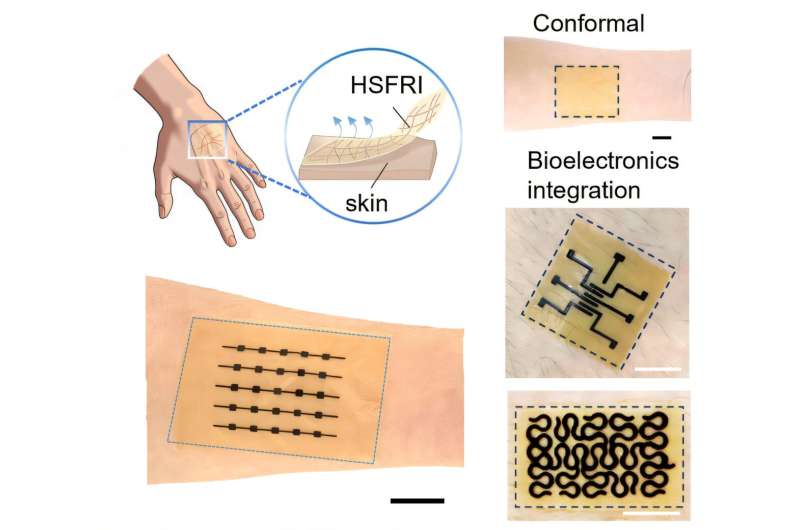
A research team led by Professor Lizhi Xu from the Department of Mechanical Engineering under the Faculty of Engineering at the University of Hong Kong (HKU) has developed a newly developed ionogel material capable of withstanding over 5,000 times its own weight while remaining soft and skin-compatible, pushing the boundaries of wearable electronics and bio-integrated devices. This advancement addresses a long-standing challenge in soft electronics—balancing mechanical durability with flexibility.
Designed for direct skin contact, the ionogel maintains a soft, conformable structure while exhibiting strength comparable to certain plastics. This combination makes it particularly suitable for next-generation wearable systems, where materials must endure repeated mechanical stress without compromising comfort or performance.
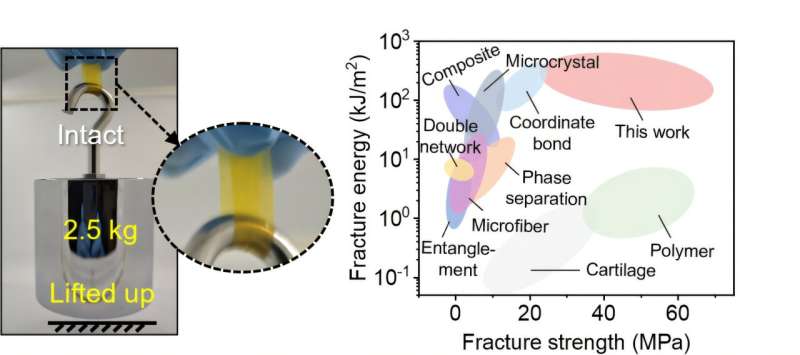
The innovation stems from advanced microstructural engineering that enhances bonding between the material’s internal components. By strengthening interfacial cohesion within a nanofibrous composite network, researchers achieved significant improvements in fracture resistance and load-bearing capability—key limitations in existing soft materials.
Beyond mechanical robustness, the ionogel demonstrates strong potential for electronic and biomedical applications. Its inherent ionic conductivity enables accurate monitoring of physiological signals such as heart and muscle activity, positioning it as a viable alternative to conventional wearable sensors. The material also offers additional functional advantages, including resistance to drying, breathability, and antibacterial properties—critical for long-term skin-contact use.

In practical demonstrations, the material was integrated into a smart electronic bandage capable of delivering medication, applying electrical stimulation, and preventing infection. Early testing indicates improved wound healing and reduced inflammation, highlighting its potential in healthcare electronics and therapeutic devices.
The development comes as demand for durable, flexible electronics continues to rise, driven by advancements in wearable health monitoring, soft robotics, and bioelectronics. Ionogels, which combine the properties of solids and liquids, are increasingly seen as promising materials for such applications due to their flexibility, conductivity, and stability.
While further validation and scaling will determine commercial viability, this ionogel sets a new benchmark for soft electronic materials—demonstrating that high strength and flexibility no longer need to be trade-offs in advanced electronic design.