





New multilayer metal power inductors shrink the footprint by up to 40% while maintaining high current-handling and DC-saturation performance for smartphones, wearables, and TWS audio devices.
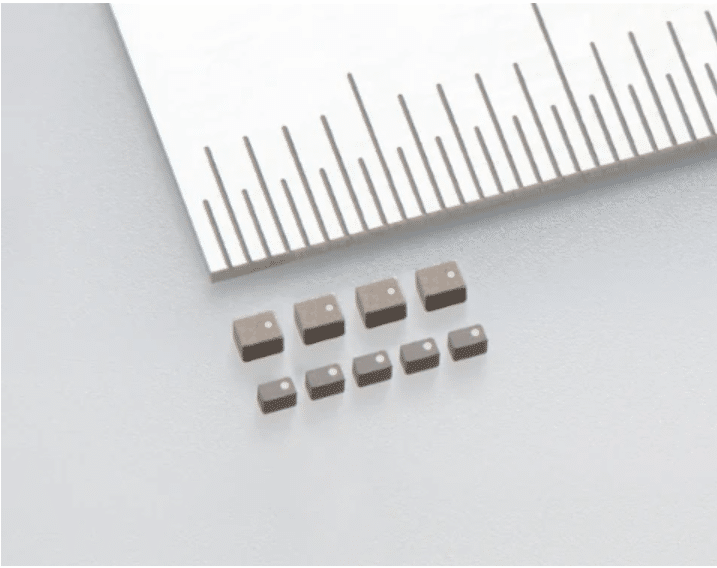
Driven by rising power demands in AI-enabled smartphones and compact wearables, new multilayer metal power inductors are pushing miniaturisation further without compromising current handling or efficiency. The latest devices by TAIYO YUDEN target space-constrained power circuits in smartwatches, TWS earbuds, and next-generation mobile electronics, where higher processing capability and longer battery life are becoming critical design requirements.
The key features are:
- Footprint reduction up to 40%
- High DC saturation performance
- Supports currents up to 7.9 A
- Package sizes down to 0.8 mm
- Designed for AI smartphones and wearables
The new inductors use metallic magnetic materials to improve DC saturation characteristics while reducing package dimensions. Among the new launches, one variant measuring 0.8 × 0.45 × 0.65 mm offers a nearly 30% smaller footprint than earlier products in the same category. Another 1.0 × 0.8 × 0.80 mm device achieves around a 40% footprint reduction while retaining the same 1.5 μH inductance and 1.2 A saturation current as its larger predecessors.
The components are designed as choke coils for DC-DC converters and power management circuits. With smartphones increasingly integrating on-device AI functions such as real-time translation, image enhancement, and video processing, power delivery networks are under pressure to deliver higher efficiency in shrinking PCB space. Wearables are also adding advanced sensing, noise cancellation, and high-resolution audio capabilities, increasing demand for compact high-current passive components.
The lineup includes nine inductors across four package sizes, supporting inductance values from 0.10 μH to 1.50 μH. Some variants support rated currents up to 7.9 A, enabling use in high-density mobile and consumer power systems. Production started in April 2026, with manufacturing handled at the company’s Wakayama facility in Japan.
Industry trends indicate an increasing preference for multilayer and metal-composite inductors in compact electronics, as they offer better miniaturisation than traditional wire-wound designs while maintaining stable electrical characteristics.
Click here for the original announcement.
