




This skin patch can track stress, glucose, and other health signals through sweat — and it keeps working for weeks without losing accuracy.
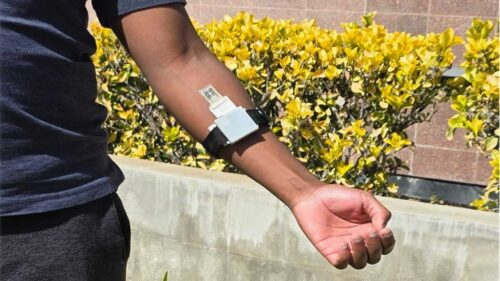
Scientists at University of California, Irvine have developed a wearable sweat sensor that operates without a battery, continuously tracks multiple health biomarkers, and can restore its own sensing surface to maintain long-term accuracy. The technology could expand continuous health monitoring beyond hospitals and clinics into everyday use.
The flexible skin patch, called IREM-W2MS3 (In-Situ Regeneratable, Environmentally Stable, Multimodal, Wireless, Wearable Molecular Sweat Sensing System), analyzes sweat in real time while wirelessly receiving power from a smartphone or external reader through near-field communication technology. Instead of using a conventional battery, the device draws energy directly from the electromagnetic field generated by the connected reader.
Researchers say the system addresses several long-standing problems in wearable biosensing, including declining sensor accuracy during extended use, poor environmental stability, and limited ability to monitor multiple biomarkers simultaneously.
A key feature of the device is its self-regenerating sensing surface. The patch applies a low electrical voltage to clear away molecular buildup that typically accumulates during repeated measurements and reduces sensor performance over time. By continuously refreshing the sensing layer, the system maintained stable operation during 21 days of continuous testing without noticeable signal degradation.
The wearable simultaneously monitors four biomarkers in sweat: cortisol, glucose, lactate, and urea. These measurements can provide insight into stress, metabolism, physical activity, and kidney function, potentially enabling continuous monitoring for conditions such as diabetes, kidney disease, metabolic disorders, and chronic stress.
Unlike many sweat-based monitoring systems that depend on exercise or external stimulation, the device can generate sweat on demand. Wireless energy transfer activates a hydrogel component within the patch, allowing measurements to be taken without physical activity.
The researchers also designed the system to remain reliable under changing environmental conditions, including variations in temperature, humidity, and pH levels. That environmental stability is considered important for real-world wearable use outside controlled laboratory settings.
Because the system relies on non-invasive sweat analysis rather than blood sampling, it could reduce the need for repeated clinical testing while enabling continuous health tracking during normal daily activities.


