




Researchers found controlled quantum randomness can improve neural network accuracy, helping recognize difficult handwritten digits while offering fresh insights into future quantum-enhanced artificial intelligence.
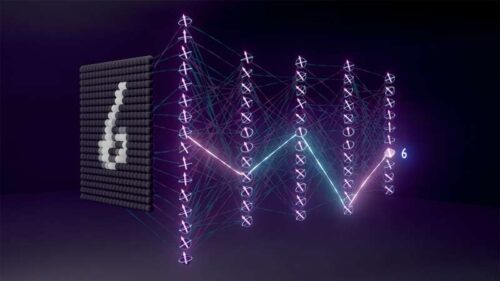
Scientists at the Joint Quantum Institute (JQI), working with researchers from the University of Maryland (UMD), the National Institute of Standards and Technology (NIST) and IBM, have demonstrated that introducing controlled quantum randomness into neural networks can improve their ability to recognise challenging handwritten digits. The findings, published in Physical Review Letters, suggest quantum effects could become valuable tools for future machine-learning systems.

The researchers designed a neural network that runs on quantum computers, using qubits as artificial neurons. Instead of attempting to outperform existing AI models, the team aimed to understand whether uniquely quantum properties, particularly randomness generated during measurements, could enhance machine-learning performance.
To evaluate the approach, the network was trained using the widely adopted MNIST handwritten-digit dataset. The architecture was designed to work across different quantum computing platforms, allowing the researchers to compare results from systems based on superconducting circuits and trapped ions.
Experiments showed that a modest amount of intentional quantum randomness consistently improved the network’s classification accuracy compared with runs containing no added randomness. However, increasing the randomness beyond an optimal level reduced performance, indicating that the benefit depends on maintaining a careful balance.
According to the researchers, a limited degree of randomness helps prevent neural networks from becoming trapped in nearly correct but ultimately inaccurate solutions. By encouraging the system to explore alternative computational paths, the approach can improve the recognition of difficult or ambiguous handwritten digits.
The study also revealed similar trends across different quantum hardware platforms, suggesting the underlying principle is not tied to a single type of quantum computer. While practical quantum AI applications remain under development, the findings provide evidence that quantum characteristics can complement established machine-learning techniques rather than replace them.
The researchers believe the work lays the foundation for future studies exploring how quantum computing and artificial intelligence can be combined to tackle increasingly complex computational challenges.


