




A sensor measures muscle force without surgery, helping prosthetic limbs, wearable robots, rehabilitation devices, and injury recovery.
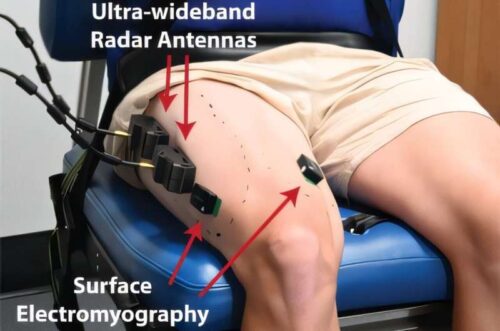
Researchers at the University of Queensland have developed a non-invasive sensor that can directly measure the force produced by muscles during movement. The technology could improve the control of prosthetic limbs, robotic exoskeletons, rehabilitation systems, and other wearable assistive devices.
Researchers have developed a non-invasive sensor that can directly measure the force produced by muscles during movement. The technology could improve the performance of prosthetic limbs, robotic exoskeletons, rehabilitation equipment, and other wearable assistive devices.
The study uses ultra-wideband radar sensors placed on the skin. These sensors send electromagnetic signals into the muscles and analyze the reflected signals to estimate the force generated as the muscles contract. This makes it possible to measure muscle force without surgery or inserting probes into the body.
Most wearable robotic devices currently estimate a user’s movement by monitoring joint motion or electrical signals from muscles. Because they cannot directly measure muscle force, accurately determining the amount of assistance required remains difficult.
The new sensing method provides a direct estimate of muscle force, which could allow assistive devices to respond more accurately to a user’s needs. This may improve support for people with reduced mobility caused by aging, injury, or neurological disorders.
The technology could also support rehabilitation and sports medicine. Doctors and therapists currently have limited ways to directly monitor the forces acting inside muscles during treatments such as electrical stimulation. Measuring these forces could help reduce muscle fatigue, lower the risk of tissue damage, and improve rehabilitation outcomes.
In sports, the sensors could help monitor muscle recovery after injuries and provide additional information to guide treatment and training plans.
Researchers are now working on enabling the system to calculate muscle force in real time. This could allow prosthetic limbs and wearable robots to use the data instantly, improving their ability to provide precise and responsive assistance during movement.


