Can AI computing move beyond Earth? An orbital data centre concept aims to process workloads in space using advanced accelerator chips.
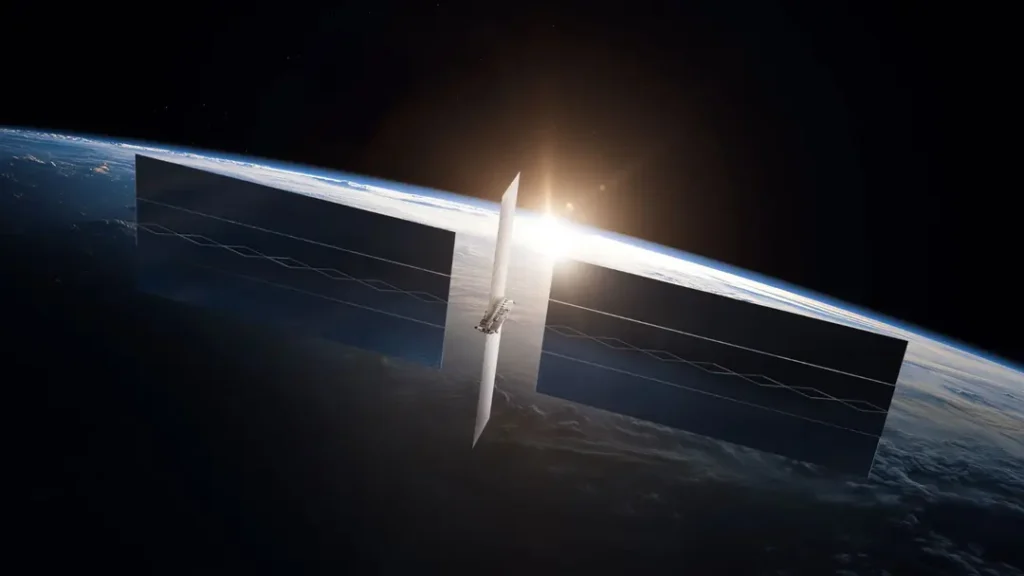
SpaceX has collaborated with Nvidia to develop the compute payload for the Starmind AI1 satellite, a platform designed to perform data centre-class artificial intelligence (AI) processing in low Earth orbit. The companies plan to equip the satellite with Nvidia’s Vera CPUs and Rubin GPUs, marking a step towards space-based AI infrastructure capable of processing workloads beyond terrestrial data centres.
The initiative is intended to address the growing computational demands of AI while exploring the advantages of orbital computing. Satellites operating in sun-synchronous orbits can harness continuous solar energy, reducing dependence on terrestrial power infrastructure. Space-based processing could also reduce the need to transmit large volumes of raw data back to Earth, enabling AI workloads to be executed closer to where data is generated.
The Starmind AI1 compute payload is based on Nvidia’s Space-1 Vera Rubin platform, which the company says delivers up to 25 times the AI processing performance of an H100 GPU. The satellite architecture is designed to support future processor upgrades without requiring a complete spacecraft redesign, allowing newer generations of compute hardware to be integrated as they become available. SpaceX also plans to interconnect satellites using high-speed optical laser links, creating a distributed computing network capable of exchanging data at petabit-scale speeds.
The announcement aligns with SpaceX’s broader proposal to deploy up to one million orbital data centre satellites between altitudes of approximately 500km and 2,000km, subject to regulatory approval. Prototype testing of the Starmind AI1 satellite is expected to begin in early 2027, with mass production planned later in the year if development progresses as scheduled.

“SpaceX has committed to using Nvidia GPUs exclusively because they are the best,” says Elon Musk, Chief Executive Officer at SpaceX.