




Why does one satellite launch matter so much for India’s space programme? EOS-05 gives ISRO its first continuous eye on the country from geosynchronous orbit.
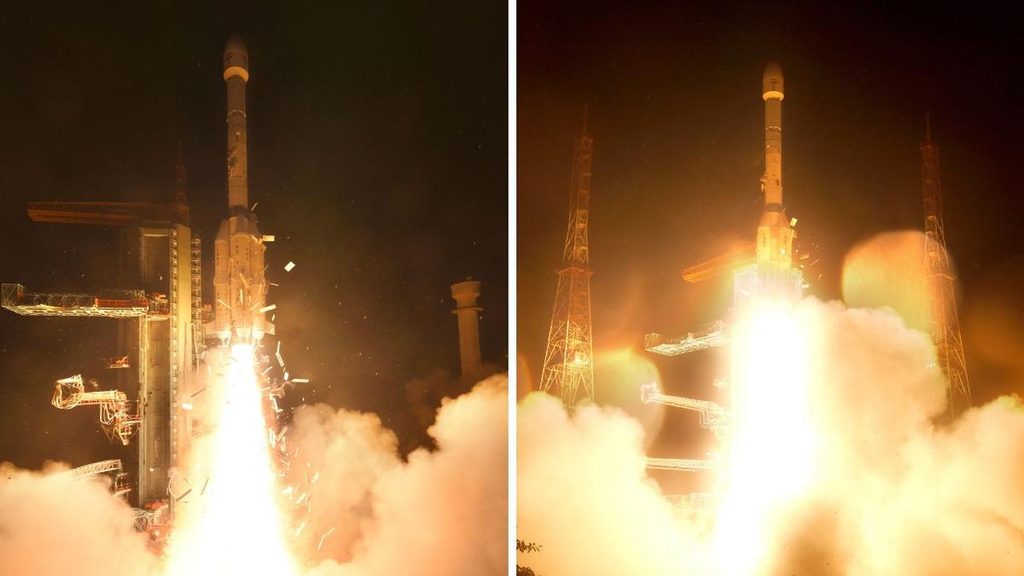
The Indian Space Research Organisation successfully launched EOS-05, also called Gisat-1A, aboard its GSLV-F17 rocket from Sriharikota early Friday morning, placing the satellite into its intended Sub-Geosynchronous Transfer Orbit within eighteen minutes of liftoff. The mission ends an eight month gap in ISRO launches and marks India’s first imaging satellite designed to operate from geosynchronous orbit, roughly 36,000 km above Earth.
For electronics and imaging engineers, the real payoff is in the sensor stack. Unlike low Earth orbit satellites that pass over a location periodically, EOS-05 stays fixed relative to Earth, enabling near continuous monitoring using visible, infrared, multispectral, and hyperspectral imaging bands. That multi-band sensor payload lets the satellite pull strategic data on weather patterns, disaster response, agriculture, and infrastructure, all from a single stationary platform rather than stitched together from repeated flybys.
At 2367 kg, EOS-05 is also the heaviest payload the GSLV has carried, a result ISRO credits to incremental gains in structural mass optimisation and propulsion system upgrades since the rocket’s first flight, which carried just 1536 kg. The mission also replaces Gisat-1, lost in a 2021 launch failure, and follows a string of recent setbacks, including a failed NVS-02 insertion and a PSLV-C61 glitch, that had put pressure on the agency to deliver.
ISRO says all systems, including its solar panels and valves, are functioning normally, with orbit raising manoeuvres planned in the coming days before the satellite reaches its final geo platform.
“I am very happy to announce that the GSLV-F17 vehicle has successfully and precisely injected the advanced Earth observation satellite EOS-05 into the intended and required orbit,” says V Narayanan, chairman, ISRO.


