

RMIT researchers have developed a low-energy neuromorphic vision prototype that senses, remembers and processes visual information locally, reducing data movement across computing systems more efficiently.
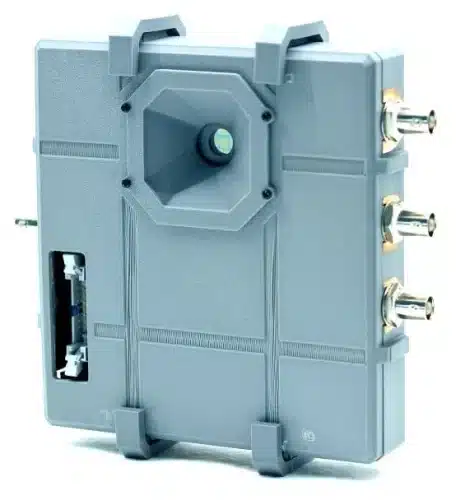
RMIT University has developed a neuromorphic vision prototype that combines sensing, memory and information processing in one system, offering a potential foundation for smarter, lower-energy bionic eyes and intelligent sensors.
Unlike conventional cameras that capture frames and transfer large amounts of data for processing elsewhere, the prototype performs much of its work where visual information is collected. This approach can reduce repeated movement of data between separate sensors, memory banks and processors.
The system uses atom-thin molybdenum disulfide (MoS₂) semiconductor material. The sensing, processing and information-storage functions are integrated within a 2 cm by 2 cm chip, housed in a larger prototype containing the electronics needed to read, process and communicate information.
Researchers trained the system to recognise patterns including numbers, shapes and movement. Laboratory tests showed that it could detect changes in visual input, store the information as memory and process it locally. This gives the prototype capabilities beyond those of a conventional image sensor.
The work is led by Professor Sumeet Walia at RMIT’s Centre for Opto-electronic Materials and Sensors. The team also developed a water-based fabrication process for transferring the atom-thin semiconductor material, addressing an important manufacturing challenge for such devices. RMIT has filed an international patent application for the invention under the Patent Cooperation Treaty.
The technology could eventually support smart bionic eyes that identify important changes, retain relevant information and rapidly process visual signals while using less energy. Potential applications also include advanced machine vision, autonomous vehicles, robotics and intelligent sensors.
Researchers say practical applications remain years away, with further development and scaling required. However, processing information closer to where it is collected could reduce the data that future AI systems need to transmit, store and analyse, improving energy efficiency.