A 4G phone lets users write software, make calls, send texts, add hardware modules, and build functions without soldering.
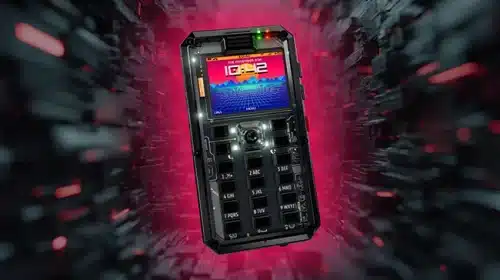
CircuitMess, a Croatian electronics kit maker, is selling the MAKERphone 2.0, a build-it-yourself 4G phone that users can program in MicroPython or Arduino C++ and extend with plug-in hardware.
The phone accepts a SIM card and can make calls and send text messages. Users can write the software themselves and add functions through an expansion port, making the device useful for people learning programming, embedded systems, and mobile hardware. CircuitMess also positions it as a first phone for children.
The MAKERphone 2.0 uses an ESP32-S3 microcontroller to run its software. The kit takes about two hours to assemble and does not require soldering. Its parts connect using plugs and screws.
The phone is available for $129 through Kickstarter, compared with a planned retail price of $169. The Kickstarter package also includes three months of VibeBoy Pro, CircuitMess’s AI coding tool.
An expansion port called UMAX supports six modules: a camera, 2-watt speaker, flashlight, environmental sensor, infrared controller, and prototyping board. The phone detects a connected module and adds its function to the menu.
The prototyping board lets users build their own hardware, such as sensors, and connect it to the same UMAX port. The phone can then recognise the board as an additional module.
CircuitMess also offers VibeBoy, an AI coding tool with four skill levels ranging from Pixel Rookie to Vibe Coder. The tool can generate code that users can run on the phone to add functions such as sending text messages and, with the camera module, taking pictures. The MAKERphone 2.0 is the second version of CircuitMess’s DIY phone.
Click here for the original announcement.