

The ESP32-P4 Hydra combines a dual-core RISC-V processor, Wi-Fi 6 connectivity and camera and display interfaces in a development board.
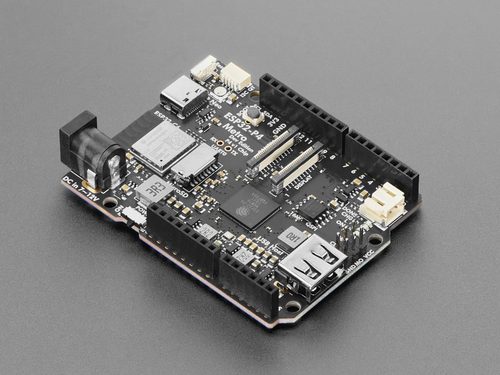
Adafruit’s new development board called Metro ESP32-P4 Hydra will make it easier to have a camera process images, connect to displays, and also send/receive wirelessly. This board uses the ESP32-P4 processor along with the ESP32-C6 wireless coprocessor, 16 MB of PSRAM and 16 MB of flash memory. This makes the board suitable for use in many types of embedded applications like Human Machine Interfaces (HMIs) or cameras with a lot of processing power needed beyond what a typical Microprocessor Development Board can provide.
The ESP32-P4 processor consists of two cores each capable of running a 32 bit RISC-V instruction set at speeds of up to 360 MHz. Also on the processor is another RISC-V core capable of running at speeds of up to 40 MHz but uses less energy. Both cores include AI instruction sets and a single precision floating point unit. Additionally, there are hardware instructions for supporting JPEG and H.264 video encoders/decoders as well as a 2-D pixel acceleration engine. The other key feature of this board is its 16 MB of PSRAM. This adds additional RAM for using graphics, processing large amounts of camera data, or creating a UI for end users.
For camera and display projects, the board provides two 22-pin connectors using the Raspberry Pi-compatible format: a two-lane MIPI CSI interface for cameras and a two-lane MIPI DSI interface for displays. Compatible devices include the 5-inch and 7-inch Raspberry Pi Touch Display 2, as well as Raspberry Pi Zero-style camera modules using the OV5647 image sensor. The newer Raspberry Pi Camera Module 3, which uses the IMX708 sensor, is not supported.
Other hardware includes a USB-C port for power, programming and debugging, a USB-A high-speed host port supporting data rates up to 480Mbps, a microSD card slot, Arduino UNO-compatible expansion headers and a STEMMA QT connector for I2C and I3C peripherals. The board also provides a separate SPI header, reset and boot buttons, user LEDs and a connector for a single-cell lithium-polymer battery with onboard charging and voltage monitoring. Power can also be supplied through USB-C or a 7V to 12V DC barrel jack.
The board supports Espressif’s ESP-IDF development framework and TinyUF2 for drag-and-drop firmware updates over USB. CircuitPython support has appeared in an alpha release, while Arduino support is under development. Developers should check the current software status before choosing a framework for a project. The board measures 72.3 × 53.3 × 14.7mm and is available from Adafruit for US$34.95. It currently ships with the original ESP32-P4 v1 chipset rather than the newer ESP32-P4X v3 revision.
For more information, click here.