




What keeps an autonomous robot working through demanding warehouse shifts? A redesigned electrical and mechanical architecture aims to reduce downtime and speed up repairs.
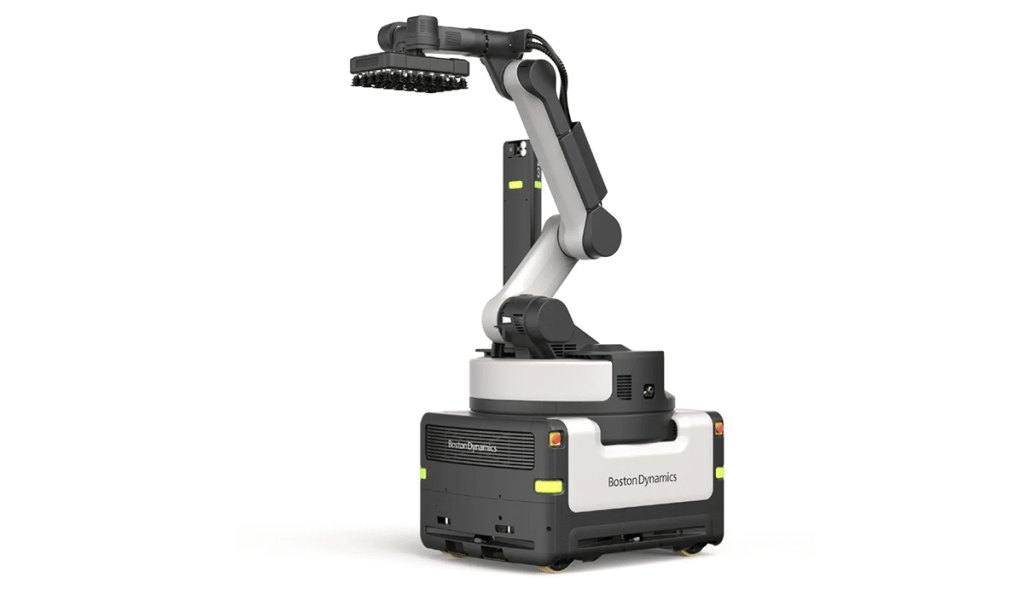
Boston Dynamics has released Stretch Gen 2, the second generation of its autonomous unloading robot for trailers. The design includes hardware and structural upgrades to reduce downtime in busy warehousing environments. The data from the first generation robots has been used to improve the design and tested with over 100,000 hours of operation and tens of millions of boxes moved.

An 81% decrease in internal wiring (approximately half a mile’s worth) has been made to help reduce issues with intermittent power issues and wear to cables. Heavy duty automotive grade connectors have also been added to help with vibration.
The robot’s grippers have been upgraded with new valves and sensors. This means that the robot can now manipulate packages with greater precision. The continuous rotation joints can rotate past 360 degrees to avoid any sudden stops causing stress to the mechanism. The robot has also received new external panels and an indented emergency stop button to avoid unintended safety stops and damage from boxes falling.
The robot also received upgrades to make it easier to maintain. The modular design means it can be repaired quickly. The swerve drive can now be completely replaced in around an hour. Diagnostic tools and maintenance functions have also been added to the robot to allow customers to perform basic maintenance.
The computer has also been redesigned to allow regular updates to help improve the robot’s case detection, path planning, pick strategies and world modelling capabilities without needing to upgrade hardware.
The robot can unload 1000 cases per hour depending on various factors such as package weight and stacking. It features a battery which can last two shifts and can be charged rapidly to 90%.
Click here for the official announcement.

