




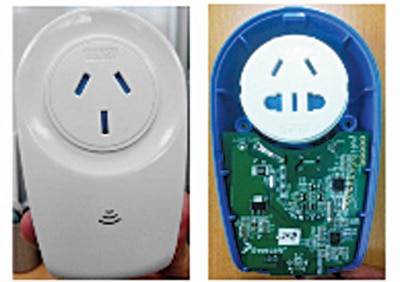
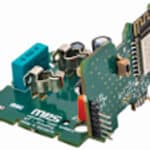
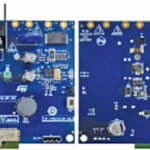
| Title of Reference Design | Reference Design of a Smart Plug Featuring Solid-State Relay | Reference Design of a Smart Plug With Grid Frequency Monitoring | Reference Design for a Non-Isolate Smart Plug | Reference Design of a Smart Plug With BLE Connectivity | Reference Design of a Smart Plug With 100m Wireless Range |
| Image | 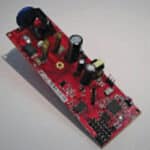 |
 |
 |
 |
 |
| Key Attractions | The reference design employs a solid-state relay for switching on/off power and utilises Wi-Fi connectivity to enable users to control the plug using a smartphone, tablet, computer, etc. | The smart plug reference design can enable IoT capabilities for any household appliance running at a load up to 10A. It can allow the user to control the appliance and monitor power consumption along with setting the switch on/off time for the future. | This reference design for a non-isolated smart plug has an efficiency of over 90%. The configuration is designed to fit into a wall socket. | This reference design for a compact smart plug, which features Bluetooth Low Energy (BLE) for communication, can take current up to 12A and enables the user to turn on/off the load along with load scheduling, dimming, and metering. | This reference design is for a smart plug that works as a power meter and wirelessly transmits data to an Android device via Bluetooth interface. The module has a BLE range of up to 100m. |
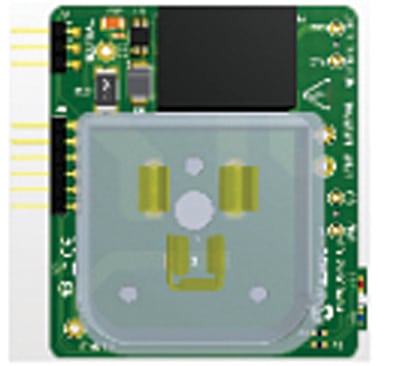
| Highlights | TIDC-SMARTPLUG-WIFI is a reference design for a smart plug with Wi-Fi connectivity. This design implements single-outlet energy measurement with remote connect/disconnect capability. The reference design is based on the MSP430i2040 microcontroller unit (MCU). The smart plug uses SimpleLink Wi-Fi to connect from any smartphone, tablet, or computer through a standard web browser. The reference design can enable designers to quickly create networked load control devices for industrial building and home automation applications. It features a solid-state relay that offers good isolation and enables the user to remotely connect/disconnect the power to the device. The circuit of this reference design includes voltage input circuit, current input circuit, and design considerations of Wi-Fi system-on-chip (SoC). The reference design features low-power components plus efficient power supply, which provides low system power consumption. The TIDC-SMARTPLUG-WIFI reference design can also be used for single-phase energy measurement that calculates RMS current, RMS voltage, active and reactive power and energies, power factor, and frequency. The system design is tested and includes firmware for energy measurement, Wi-Fi connectivity, and relay control along with Android based demo application and users’ guide. | This smart plug reference design can measure single-phase power and enable wireless control of equipment. The NXP smart plug reference design enables the user to add smart functionality to regular appliances. It enables the user to control or monitor energy usage of home appliances drawing a maximum current of 10 amps. The reference design is based on the MKM34Z64 microcontroller. The smart plug reference design can be extended to various areas, including lighting monitor, machine room power distribution, etc. The design implements measurement of grid voltage, current, frequency, active and reactive energies. With the WI-FI chip, it uses UART and predefined command protocol to implement status display and function setting from the mobile application to the socket. This reference design can be adjusted for different loads by changing the values of relay and width of power PCB. The NXP smart plug reference design also offers features such as socket on/off status display, and the user can view current active and reactive power, apparent power, and power consumption history in the application provided by the company. | The MP161 smart plug reference design is a two-board design which can be fitted into a wall socket. The first board comprises a DC/DC converter—a non-isolated buck regulator, and the second board features an ESP8266 MCU that enables wireless connectivity to the reference design. The smart plug can take wide AC inputs of 90V to 265V and provide an output voltage of 12V ±1.5% DC with a peak output current of up to 270mA. The module works at a switching frequency of 40kHz under nominal conditions, offering an efficiency higher than 90%. The reference design integrates a 700V switching regulator, a low-dropout linear regulator, and two channel relay drivers. It also has a low power standby mode to minimise standby power, which consumes just 35.4mW active input power. The reference design also offers constant voltage regulation with internal loop compensation and features an optimised light-load efficiency by frequency modulation. The smart plug reference design offers multiple safety features, including over-temperature protection, short-circuit protection, overload protection, and overvoltage protection. | The STDES-BLUEPLUG2 from STMicroelectronics is a smart plug reference design that can enable IoT connectivity to regular low-power household devices. The reference design is based on BLUENRG-M2SP Bluetooth low energy system-on-chip application processor certified module, which is compliant with Bluetooth Low Energy (BLE) specification 5.2 to allow secure communication of metering data from specific electrical loads to a smartphone with BLE support. The reference design also features an NFC interface to configure the design and store the logs. The STDES-BLUEPLUG2 can enable a user to switch on/off load. It can also add extra functionalities, such as scheduling, dimming, and metering the power. The company also provides an Android app that enables the user to track instantaneous and averaged power along with RMS and instantaneous voltage and current. The reference design is suitable for low-power applications with current up to 12A and a small form factor. The plug works from a range of 120 to 240V AC with a maximum power consumption of up to 0.7 watts | The MCP39F511 is a reference design of a smart plug from Microchip that allows the user to integrate remote control and monitoring of their devices. The reference design consists of three PCBs and includes a plug board as the base for the other two boards—the power board and the Bluetooth Low Energy (BLE) microcontroller unit (MCU) board, which are mounted vertically. The smart plug design runs on the nominal input voltage of 120V/230V at a frequency of 50Hz to 60Hz. The module can be controlled from a distance of over 100 metres using BLE. The smart plug can monitor and display parameters such as RMS current, RMS voltage, frequency, active and reactive power, power consumption, etc. The plug uses a latching type relay that consumes power only during the state transition (while switching on/off) and not during the on or off state. The smart plug also features LEDs to show the on and off status of the relay and a push button to turn on/off the wireless module. The power board houses the AC-to-DC converter, providing power for the whole system. |
| Application | The module is suitable for switching on and off a device or for monitoring power consumption of any household appliance. | The NXP smart plug is suitable for regular home appliances, such as fans, lights, television, etc. | The MPS smart plug reference design is suitable for use in devices such as lamps, televisions, coffee makers, fans, and other small appliances that can be plugged into a standard electrical outlet. | The reference design is ideal for the applications requiring low current, such as fans or other home appliances. The reference design can be connected with LED lights to control the intensity of the light. | The reference design is suitable for controlling and monitoring low-power home appliances. It enables the user to securely control a device from a long range of 100 metres. |
| OEM Brand | Texas Instruments | NXP | Monolithic Power Systems | STMicroelectronics | Microchip |
| URL | Link | Link | Link | Link | Link |
The author, Sharad Bhowmick, works as a Technology Journalist at EFY. He is passionate about power electronics and energy storage technologies. He wants to help achieve the goal of a carbon neutral world
