





Researchers at Rice University have converted petroleum coke into battery graphite with a single electrical pulse. Laboratory cells charged at the equivalent of four minutes.
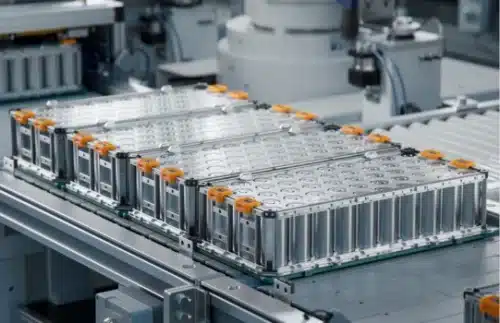
Graphite is an important anode material in lithium-ion batteries. Researchers at Rice University have devised a process that can turn the petroleum coke (a by-product of oil refining) into graphite in just 0.2 seconds. The charging rates compared to a four-minute charge were obtained in laboratory cells.
Ordinary graphite production needs long time heating at high temperatures. “Usually, creating graphite requires prolonged heating at extremely high temperatures for long periods,” said Haojie Zhu, postdoctoral associate and first author of the study. The new process involves the mixing of petroleum coke with a small amount of nickel compounds followed by passing electrical pulses that heat it around 2,500°C.
Nickel assists in ordering carbon into graphite layers and slightly widens the spacing, which makes the lithium ions flow freely. Temperature must be controlled since the excessive heat will cause the removal of nickel early. While insufficient heat causes graphite to be less organised. “We identified the Goldilocks region for graphite preparation,” said James Tour, who led the research.
From the results of the experiments carried out, it can be seen that the cells charged at a faster rate than those made of graphite, and retained 80 per cent of capacity after 1,000 cycles. Over 99 per cent of the left-out nickel has been removed without any effects on the improvement in performance. From the team’s analysis, they suggest that the process could cut energy use and emission of greenhouse gases by more than 80 per cent. This is an estimate and not an industrial-scale measurement.
The process is at the laboratory stage. No production partner has been announced yet, nor has any timeline for commercialisation. The amount of graphite produced per pulse is still yet to be determined. The research has been supported by the US government research agencies and the Welch Foundation.
For more information, click here.
