The system comprisng of various sensors improves surgery accuracy, detects infection early and enhances rehabilitation
Due to sedentary lifestyles, our bodies are not getting enough physical activity, especially moving from one place to another on feet.
According to estimates by the Center for Orthopedic & Neurosurgical Care & Research, U.S., knee-implants will increase by 673 per cent by 2030.
That is 3.5 million operations.
While some people can reverse this with more exercise, others can’t. For them, only intensive medical care can bring about a change.
Therefore, CEA-Leti, a CEA microelectronics research institute, has now developed a smart, multi-sensor system for knee implants, thus allowing surgeons to position the implant with high accuracy, significantly reduce the risk of follow-up surgery, and enhance rehabilitation.
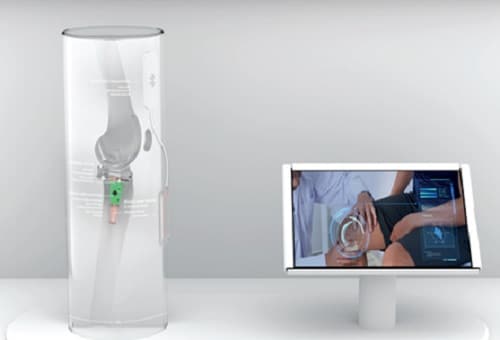
Called FollowKnee, it integrates a deformation sensor, a pH sensor, a temperature sensor and an accelerometer in a titanium tibial baseplate. A tablet displays data collected by the sensors.
Accurate implantation is achieved with the help of a deformation sensor and accelerometer that guide the surgeon during the operation.
The pH and temperature sensors detect infection early, while the deformation sensor and accelerometer trigger an alert on detecting mechanical problems, including implant loosening. They also boost rehabilitation by helping physiotherapists adapt therapy for knee-implant recipients.
“Accuracy is vital in knee-implant surgery,” said Dr Eric Stindel, an orthopaedic surgeon at Brest Hospital, France. “By integrating the deformation sensor and the accelerometer, this innovative architecture gives both the surgeon and the patient peace of mind for a successful operation and follow-up.”
The technology can also be adapted for hip and shoulder replacements.
Developed with CEA-Leti’s expertise in sensor and integration technologies, the system also includes a low-power deformation sensor that is biocompatible with extremely compact electronics powered via inductive coupling.
The technology will be showcased at CES 2022, Las Vegas from January 5-8.