




The development has resulted in the creation of fabrics with which various display systems can be operated using stored energy
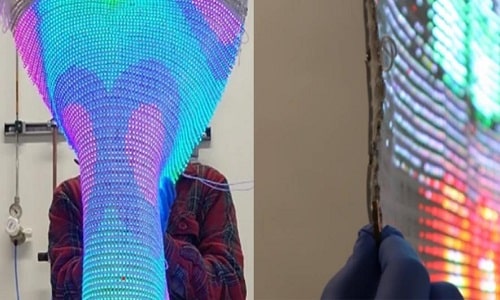
Now elements of science fiction such as flexible display systems that also act as energy-harvesting, self-powered clothing and fabrics can be devised in reality, thanks to an international team of scientists led by the University of Cambridge. The electronics embedded into the fibres and yarns are manufactured using textile-based industrial processes. This is the first time a scalable large-area complex system has been integrated into textiles using an entirely fibre-based manufacturing approach.
To simplify the compatibility of the different electronics systems with the fabrics, each fibre component was coated with materials to withstand stretching. The research team also braided some fibre-based components that improved their reliability and durability. Upon connecting multiple fibre components using conductive adhesives and laser welding techniques, multiple functionalities were possible in a large piece of fabric woven with standard, scalable textile manufacturing processes.
This resulted in the creation of fabrics with which various display systems operated using stored energy. They also detected radiofrequency signals for touch, light and temperature.
“Our approach is built on the convergence of micro and nanotechnology, advanced displays, sensors, energy and technical textile manufacturing,” said Jong min Kim, professor at Cambridge’s Department of Engineering. “This is a step towards the full exploitation of sustainable, convenient e-fibres and e-textiles in daily applications. And it’s only the beginning.”
“By integrating fibre-based electronics, photonics, sensing and energy functionalities, we can achieve a whole new class of smart devices and systems,” said Dr Luigi Occhipinti, also from Cambridge’s Department of Engineering. “By unleashing the full potential of textile manufacturing, we could soon see smart and energy-autonomous Internet of Things devices that are seamlessly integrated into everyday objects and many other sector applications.”
The development also paves the way for next-generation e-textile applications in sectors such as smart and energy-efficient buildings that can generate and store their energy.
As of now, the manufacturing of these fibres has been restricted in size due to the technological limitations of the weaving process. The researchers are working to make the technology sustainable and useable for everyday objects. They are also working to integrate sustainable materials as fibre components, providing a new class of energy textile systems. Their flexible and functional smart fabric could eventually be made into batteries, supercapacitors, solar panels and other devices.
Read here for more

