





| Title of Reference Design | 100W LED Commercial Power Supply | 100W Flyback LED Ballast | 100W LED Driver | 100W Dimmable DC-DC LED Driver | 100W High-Efficiency LED Driver |
| Image | 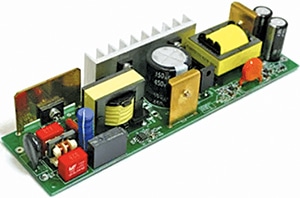 | 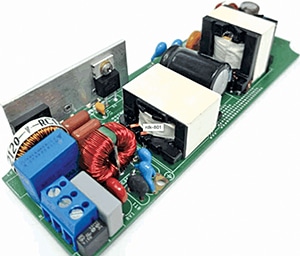 | 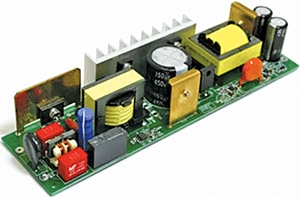 | 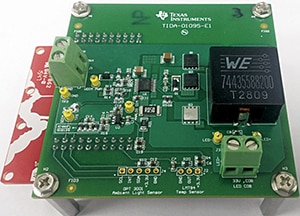 | 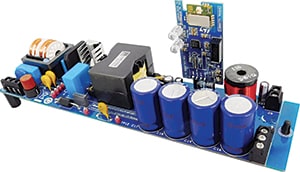 |
| Key Attractions | The reference design lets lights dim in different ways, such as using analogue signals, PWM, or wireless control. It also works with light sensors to save power by reducing brightness when there is enough natural light. | The reference design works with different input voltages and supports 3-way dimming. It saves energy, reduces heat, and helps lower the overall cost. Built-in safety features protect the system from damage, and the design supports smooth lighting with low signal noise. | The reference design works with a wide input voltage range and runs at a high frequency to make the transformer smaller and lighter. It gives good power quality with low signal noise and high power factor. It supports smooth dimming from full brightness to very low levels. | The reference design lets lights dim in different ways such as using analogue signals, PWM, or wireless control. It also works with light sensors to save power by reducing brightness when there is enough natural light. | The reference design combines a two-stage power supply with wireless control to manage street lighting. The system enables remote operation, energy savings, and easy connection of multiple lighting nodes through a central unit. |
| Highlights | This Toshiba reference design outlines a 100W power supply for commercial lighting systems, focusing on electrical performance, heat handling, and EMI control. Commercial setups use separate power units, making space and thermal management easier. The design uses a through-hole insulated package for direct heat sink mounting without extra insulation. It includes two stages: a power factor correction (PFC) circuit that raises AC input to about 390V DC, and a flyback converter that lowers it to 110V DC at 1.04A. MOSFETs are selected for voltage and thermal handling. For protection and EMI control, the design uses a ceramic varistor, X capacitors, a common mode choke, and discharge resistors—adjustable based on PCB layout and case. A bridge diode handles rectification and inrush currents. At 90% efficiency under 230V input and full load, the design reduces energy loss and heat. With a size of 180mm×57mm×40mm, it supports a range of lighting uses. It also offers guidance on part selection, noise control, and heat management for LED systems. | RDK-801 is a 100W reference design from Power Integrations for an LED ballast with 3-way dimming. It delivers constant current for LED strings from 36V to 48V and supports output currents from 0mA to 2080mA. The PFC stage integrates a CCM controller, gate driver, and 600V MOSFET in one package, removing the need for external current-sense resistors and adjusting switching frequency based on input and load. The flyback stage includes the primary switch, control logic, and synchronous rectification, and uses FluxLink to transmit signals across the isolation barrier without an optocoupler. The input section includes a fuse, varistor, NTC thermistor, EMI filter, and bridge rectifier to support low THD and high power factor. Integrated ICs reduce the need for separate components, lowering PCB size and improving reliability. The PFC stage maintains efficiency across all loads, meeting power factor and THD targets without extra circuitry. Built-in protections such as over-voltage and over-current simplify compliance and improve fault handling. The design reduces cost and development time for manufacturers and lowers energy use and maintenance for end users. | The REF_ICL5102_U100W_LCC is a 100W constant-current LED power supply reference design using the ICL5102 half-bridge driver and CoolMOS P7 switches. It operates at 180-450kHz, enabling the use of an LCC transformer with built-in series inductance, reducing volume and weight. This allows higher power density for use where space and thermal control are limited. The design achieves a power factor over 0.9 at 30% load and keeps THD below 10% at 20% load (measured at 267V RMS). It supports 90-267V AC input and delivers up to 93% efficiency at 230V RMS (91.5% at 120V RMS). The ICL5102 combines boost PFC and resonant half-bridge stages and includes a coreless transformer driver for operation up to 500kHz, lowering part count and improving switching performance. The design supports analogue dimming from 100% to 1%, output voltage from 20-55V DC, and current from 0.018A to 1.82A, with start-up time under 500ms at 90V AC. It meets EN61000-3-2 Class-C and EN55015 EMI limits and includes protection features for safe operation. | The TIDA-01095 is a 100W dimmable DC-DC LED driver reference design from Texas Instruments for industrial, commercial, and smart lighting. It uses a wireless system-on-chip to enable dimming via analogue, PWM, or Bluetooth Low Energy and supports daylight harvesting through ambient light sensors to cut power use by up to 50%. It suits indoor high-bay and low-bay fixtures, outdoor area lights, and centralised DC lighting systems. The design uses DC-DC power conversion and supports manual and automatic dimming. At its core are TPS92640 and TPS92641 NFET controllers in buck-current regulator mode, using valley current-mode control and controlled on-time for constant switching frequency. These controllers handle 7V to 85V input and switch up to 1MHz with set deadtime. Dimming is managed through analogue and PWM inputs, a low-offset error amplifier, and logic that lets LED current drop to zero. Protection features include current limiting, overvoltage protection, and thermal shutdown. The system combines sensor input and wireless control to manage lighting while reducing power use. | The SL-LLL008V1 lighting solution from STMicroelectronics combines a dual-stage power supply with wireless control. The first stage is a power factor flyback AC/DC converter that uses the STF23N80K5 MOSFET and HVLED001B controller to provide constant voltage with primary-side feedback, avoiding the need for optocouplers. The second stage is an inverse buck converter using the STL4N10F7 MOSFET and HVLED002 controller, which responds to external dimming inputs by adjusting current to control light brightness. An STM32L071KZ microcontroller manages digital control and communicates through the SPSGRFC sub-1GHz transceiver. Users can operate the system through the ST 6LowPAN Smart Streetlight app, which connects to lighting nodes via a data concentrator unit using Bluetooth. Key components include the HVLED001B for power factor correction and monitoring, the STF23N80K5 for switching, the HVLED002 for current regulation, and the STL4N10F7 for reducing power loss. These elements form a lighting system that supports energy use control, remote operation, and system expansion for street lighting. |
| Applications | The reference design is suitable for a wide range of commercial lighting applications. | The reference design is suitable for global applications like street lighting and commercial lighting. | The reference design is suitable for high-bay fixtures, office lighting, street lighting, and outdoor lamps where space, efficiency, and uptime matter. | The reference design is suitable for both indoor and outdoor lighting setups where power is managed from a central source. | The reference design is suitable for LED street and zone lighting applications. |
| OEM Brand | Toshiba | Power Integration | Infineon Technologies | Texas Instruments (TI) | STMicroelectronics |
| URL | Link | Link | Link | Link | Link |
Nidhi Agarwal is a Senior Technology Journalist at EFY with a deep interest in embedded systems, development boards, and IoT cloud solutions.
