






| Title of Reference Design | Dual USB Port Charger | USB Power Delivery Battery Charger | 45-Watt USB Charger | USB BC 1.2 Compliant Charger | Smartphone Fast Charger Reference Design |
| Image | 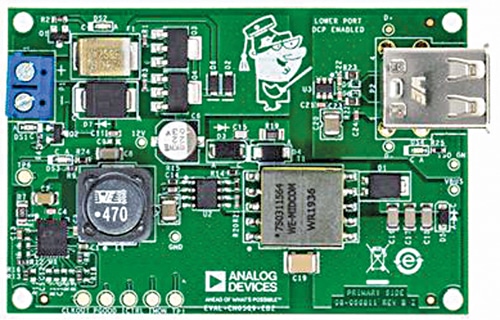 | 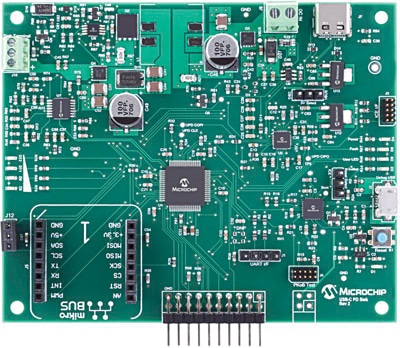 | 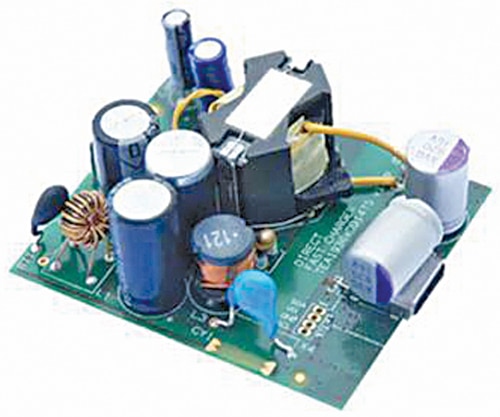 | 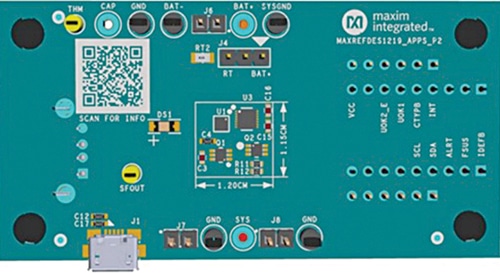 | 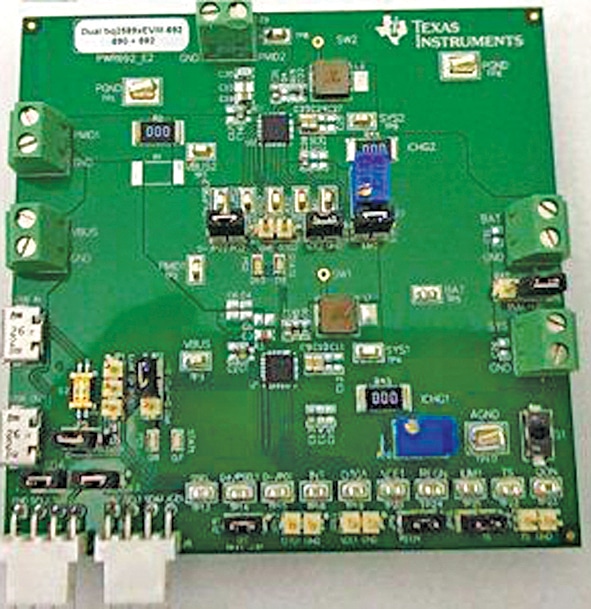 |
| Key Attractions | The reference design for dual USB port charger can supply 2A at 5V from various direct current (DC) power sources. The design can handle reverse input up to 100V and operate safely up to 150°C. | The USB power delivery (PD) battery charger reference design includes a single-ended primary inductor converter (SEPIC) power supply, which complies with the 20V/5A 100W USB PD specification. The charger automatically shuts off when the charge current reaches a specified cutoff limit. | This reference design is for a USB power delivery (PD) 45W mobile charger that can cater to rechargeable devices with power requirements of up to 100W. The USB PD charger functions with an AC mains voltage ranging from 90V (AC) to 264V (AC). | Reference design for a USB battery charging (BC) 1.2 compliant charger that provides up to 2A of charging current. The charger is capable of detecting different battery charging methods, including Standard Downstream Port (SDP), Charging Downstream Port (CDP), and Dedicated Charging Port (DCP). | The reference design is for a single-cell Li-ion charger that supports a charging current of up to 5A when powered by an optimal 12V source. The design demonstrates a maximum efficiency of up to 94%. The device is compliant with USB 2.0 and USB 3.0 power specifications. |
| Highlights | The dual USB port charger CN0509 is a reference design by Analog Devices (ADI). The design supports a 2A, 5V output from different DC power sources and has a wide input voltage range. The circuit incorporates two USB charging ports, with one featuring a dedicated charging port (DCP) controller. The reference design can convert various DC power sources within the range of 5V to 100V into a regulated 5V, 2A power supply. Additionally, the design includes reverse voltage protection to safeguard against reverse voltage conditions. The design features two output ports that enable simultaneous use. The charger is based on an isolated flyback converter combined with a step-down (buck) DC-to-DC converter. The buck converter effectively converts higher DC voltages to lower voltages with minimal power loss and high power density. The design supports fast charging up to 2A and maintains consistent operation across input voltages ranging from 12V to 100V due to the constant 12V input of the isolated converter. The dual USB port charger is capable of handling reverse input connections of up to 100V. The design can operate safely at temperatures up to a maximum of 150°C. | The reference design of the USB power delivery battery charger by Microchip offers a simple solution to incorporate multi-cell Lithium-ion battery charging into existing applications. The reference design utilises the ATSAMD21J18A microcontroller, which is a 64-pin, low-power device equipped with a general-purpose ARM Cortex M0+ core. The design incorporates a Pro Kit on Board (PKoB) for USB programming and debugging purposes. The battery charger integrates a single-ended primary inductor converter (SEPIC) power supply, meeting the 20V/5A 100W USB PD specification. The charger employs a constant current/constant voltage charge algorithm, functioning through three main states: pre-conditioning, constant current charging, and constant voltage charging. The charger maintains constant current until near maximum battery voltage, then switches to constant voltage. The design periodically checks the battery voltage and adjusts the current, if necessary, to keep it at or slightly below the maximum voltage threshold. Once the charge current drops below a specified cutoff level, the charger will shut off but will remain active to monitor the battery. | The TEA1936xDB1533 is a reference design by NXP, that provides a maximum output power of 45 W, with a maximum current of 3A. The design incorporates the quasi-resonant controller, synchronous rectifier controller, and controllers for USB-PD Type-C and Quick Charge (QC) 4.0. The design caters to power supplies for mobile and notebook devices, supporting up to 100W power requirements. It offers the flexibility to select output voltages ranging from 5V to 20V. The design supports multiple protocols, including USB Power Delivery (USB-PD) 2.0 and 3.0, as well as Quick Charge 4.0. It incorporates features such as low no-load power, minimal audible noise, and low output voltage ripple, ensuring excellent performance for the USB PD charger. The USB PD charger functions with an AC mains voltage of 90V (AC) to 264V (AC) and delivers a maximum power output of 45 watts. With an ambient temperature range of -40°C to 85°C inside the casing, the design operates efficiently within an input frequency range of 47Hz to 63Hz, achieving remarkable efficiency exceeding 92%. | The reference design of a single cell Li-ion battery charger by Maxim Integrated provides up to 2A of charging current. The reference design adheres to USB Battery charging Rev1.2* standards. The charger can detect various battery charging methods such as Standard Downstream Port (SDP), Charging Downstream Port (CDP), and Dedicated Charging Port (DCP). Additionally, the reference design can identify common proprietary charge adaptors, including those from Apple1. The reference design utilises the ModelGauge m5 algorithm, known for its accurate estimation and low power consumption. It is suitable for a wide range of applications, including portable consumer devices, digital imaging (DSC, DVC), portable industrial devices, and USB 1-cell pack equipment, among others. The design provides a user-friendly graphical user interface (GUI) for effortless monitoring and control of the parameters. The software is compatible with Windows 10, facilitating easy integration and operation. The design also includes an I2C serial interface for convenient communication and connectivity. | TIDA00590 is the reference design for a dual battery charger by Texas Instruments (TI), which uses a dual charging IC configuration to achieve a fast charge with low heat dissipation. When powered by an optimal 12V source, the charger can deliver a charging current of up to 5A while maintaining a low thermal budget. The reference design has an efficiency of up to 94%. The dual chargers surpass their 5A maximum charge currents, ensuring an efficient distribution of heat loss across the board. The module incorporates a low impedance power path to enhance efficiency, resulting in reduced battery charging time and extended battery life during the discharging phase. The design exhibits an efficiency exceeding 90%, with a maximum efficiency of over 94%. The device is compatible with various input sources, including a standard USB host port, USB charging port, and USB-compliant adjustable high voltage adaptor. The design is compliant with USB 2.0 and USB 3.0 power specifications, incorporating input current and voltage regulation. |
| Applications | The reference design is suitable for charging critical USB-powered devices such as mobile devices and portable gaming consoles. | The reference design can be used to develop high-quality USB power delivery chargers for smartphones, tablets, laptops, etc. | The reference design meets the power supply needs of mobile and notebook devices, supporting power requirements of up to 100W. | The reference design can be used for various applications, including portable consumer devices, digital imaging devices, portable industrial devices, USB 1-cell pack equipment, etc. | The reference design is suitable for portable electronic devices, mobile accessories, industrial equipment, medical devices, automotive systems, energy storage, and IoT devices, etc. |
| OEM Brand | Analog Devices (ADI) | Microchip | NXP | Maxim Integrated | Texas Instruments (TI) |
| URL | Link | Link | Link | Link | Link |
The author, Nidhi Agarwal, works as a Technology Journalist at EFY

