A conductive polymer design that can deliver higher energy density, wider temperature tolerance and improved safety in lithium ion cells.
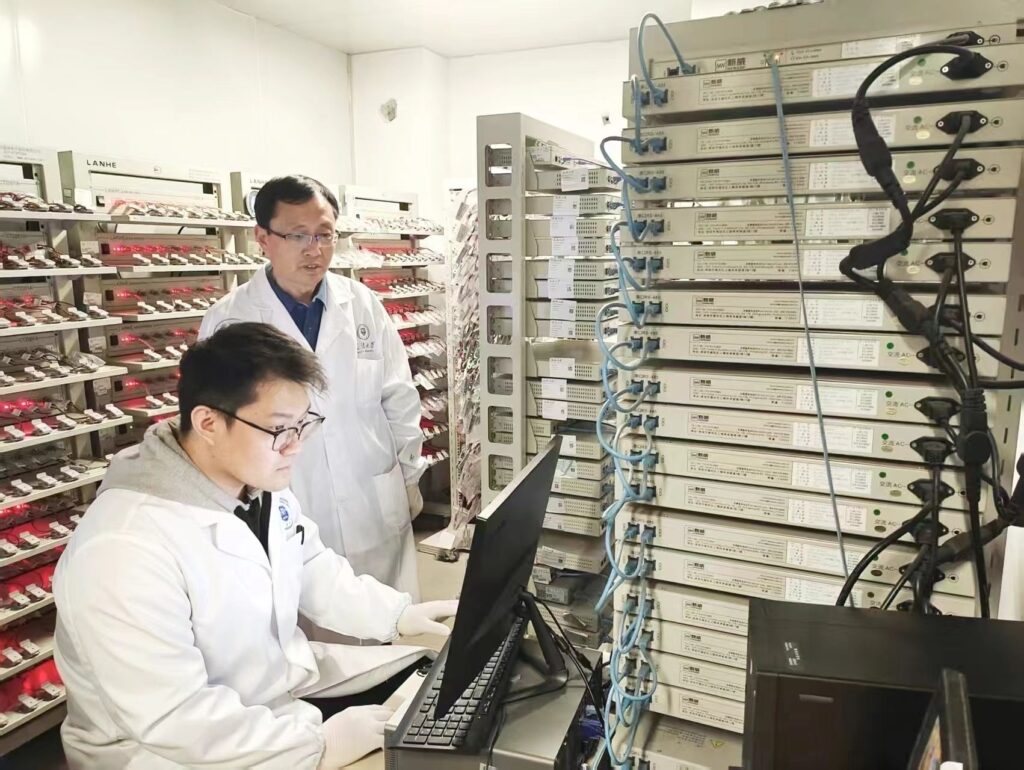
Researchers from Tianjin University and South China University of Technology have developed an organic lithium ion battery built around an engineered cathode material. The study describes a conductive polymer electrode designed to address long standing limitations in organic battery performance.
Conventional lithium ion batteries rely on inorganic cathodes containing metals such as cobalt and nickel, raising concerns around resource availability, safety and mechanical rigidity. Organic electrode materials, by contrast, are derived from more abundant sources and can be structurally tailored, but have historically faced challenges in achieving high energy density and fast lithium ion transport.
The research team developed an n type conductive polymer known as poly benzofuran dione, or PBFDO, as the cathode material. The polymer demonstrates high electronic conductivity, rapid lithium ion transport and stable structural behavior under varied conditions. Using this material, the team assembled a pouch cell that achieved energy density above 250 watt hours per kilogram. For comparison, lithium iron phosphate batteries typically range between 160 and 200 watt hours per kilogram.
The battery operated across a temperature window from minus 70 degrees Celsius to 80 degrees Celsius. In mechanical tests, the organic cathode maintained structure and capacity after bending and compression. An ampere hour level pouch cell also passed a puncture test without fire or explosion.

“This research breaks through the traditional constraints of battery technology in terms of resource dependence and environmental impact,” said Professor Xu Yunhua, the lead researcher. “It not only matches the energy density of commercial batteries but also offers superior safety and a much wider operational temperature range.”
Researchers are working toward pilot scale production and exploring applications in flexible electronics, wearable devices and lightweight energy storage systems where safety, adaptability and temperature resilience are critical.