




A new surgical robot could make brain implants faster and scalable, but questions remain about safety, access, and long-term brain response.
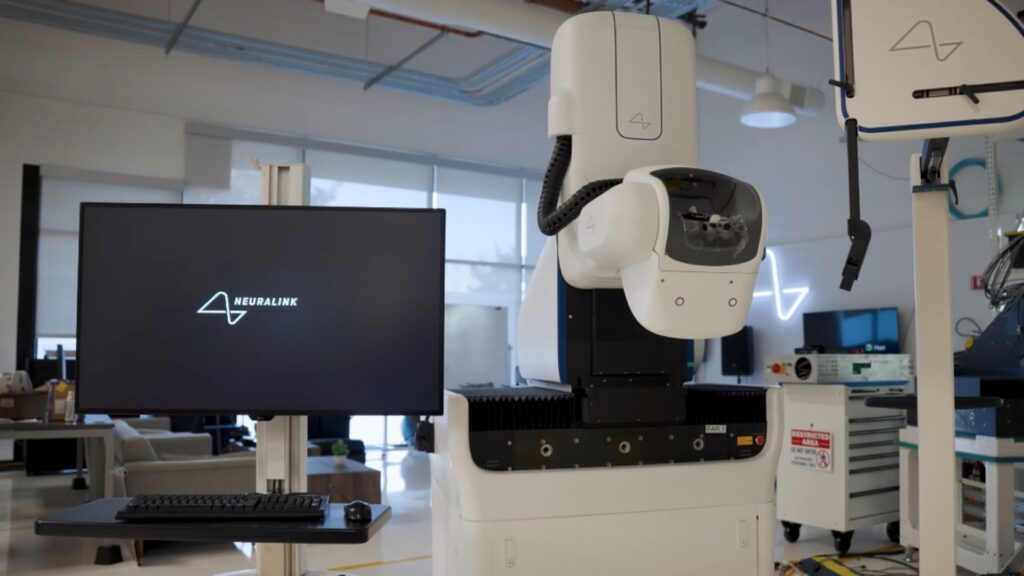
Neuralink has introduced a specialised surgical robot designed to automate critical steps in brain computer interface implantation, focusing on precision, consistency, and reduced invasiveness. The system targets one of the most complex challenges in neurotechnology: inserting ultra thin electrode threads into brain tissue without causing damage.
The robot combines eight high resolution cameras, optical coherence tomography scanners, and a five axis positioning system to map and navigate the brain in real time. This allows it to avoid blood vessels while placing threads with micron level accuracy. A key design shift is its ability to insert these flexible threads without removing the dura mater, the brain’s protective outer layer, reducing surgical complexity and potential complications.
The system is built around a compact robotic arm and custom needle architecture capable of handling threads far thinner than a human hair. By automating insertion, the platform reduces reliance on manual neurosurgical precision and enables repeatable outcomes across procedures.
Early clinical use of Neuralink’s brain computer interface highlights how such precision translates into functionality. Implanted users have demonstrated the ability to control digital interfaces and external devices directly through neural signals, indicating stable signal acquisition from the implanted threads.
However, the long term performance of implanted electrodes remains a key technical challenge. Biological responses such as glial scarring can affect signal quality over time, making durability and biocompatibility central to future iterations.
By integrating advanced imaging, robotics, and neural interface engineering into a single platform, the system represents a shift toward automated, high precision neurosurgical procedures tailored for next generation brain computer interfaces.
Click here for the official announcement.


