

Micrometer-scale sensors embedded in chips enable ultrafast, real-time monitoring of processor temperatures to improve thermal management in advanced electronics.
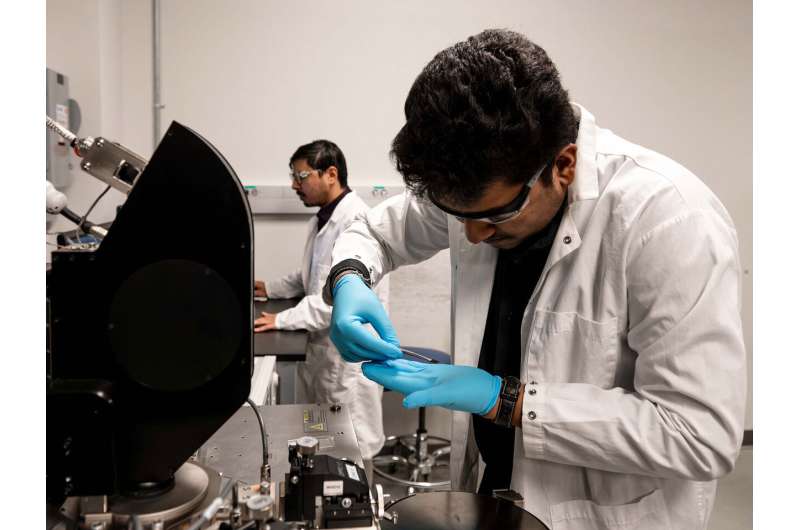
Researchers at Pennsylvania State University have developed microscopic thermometers that can be embedded directly into semiconductor chips, enabling rapid and precise monitoring of processor temperatures at the transistor level. The breakthrough could help engineers better manage heat in high-performance computing systems and improve chip reliability.
A research team led by scientists at Pennsylvania State University created a temperature sensor smaller than an ant’s antenna. The device measures about one square micrometer and is designed to be integrated directly into computer chips, where conventional temperature sensors cannot fit. The sensors are built using atomically thin two-dimensional (2D) materials known as bimetallic thiophosphates. These materials exhibit strong temperature-dependent electrical behavior, allowing the device to detect tiny thermal changes even at extremely small dimensions.
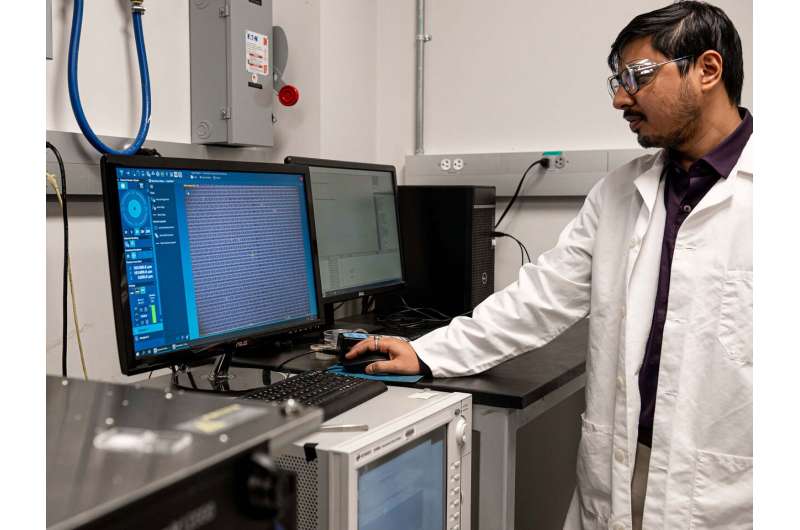
According to the researchers, the thermometer can detect temperature fluctuations in as little as 100 nanoseconds. This ultra-fast response enables near-real-time thermal monitoring of active transistors during processor operation. Modern processors contain billions of transistors that generate heat as they switch electrical signals. When localized hotspots form, chip performance can drop and long-term reliability may suffer. Existing thermal monitoring systems typically rely on sensors placed outside the active circuitry, which can limit accuracy and response time.
Embedding these miniature thermometers directly on the chip allows engineers to track temperature variations at much finer spatial scales. Because the sensors are extremely compact, large arrays of them could be distributed across a processor to create detailed thermal maps during operation. The sensors are also designed to consume very little power, making them suitable for integration in dense semiconductor architectures without adding significant energy overhead. This capability is particularly important as processors continue to shrink and operate at higher power densities.
Precise temperature sensing at the microscale is becoming increasingly critical for electronics, since overheating can degrade device performance and lifespan. Advanced nanothermometry techniques are being explored to measure temperature variations in regions smaller than a micrometer where traditional methods are ineffective. Researchers believe the technology could support next-generation processors, artificial intelligence hardware and other high-performance electronics by enabling smarter thermal management strategies within chips themselves.