





What if logistics systems could automatically identify, measure, track, and sort parcels with minimal human intervention while improving accuracy and throughput?
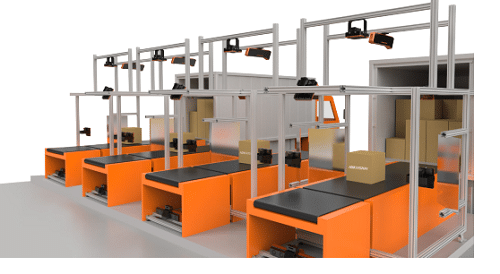
Hikrobot has introduced an expanded machine vision and AI automation portfolio for logistics applications, combining industrial cameras, smart code readers, 3D vision systems, and robotic platforms to improve efficiency in warehousing and parcel handling operations.
The portfolio includes the ID2000, ID3000, and ID5000 series smart code readers for high speed barcode and OCR based parcel identification, along with MV DL2000 3D dimensioning camera systems for automated measurement and freight calculation. For inspection and quality control, MV SC series smart cameras enable AI based detection of damaged packaging, labelling errors, and empty parcels, while MV CL line scan cameras support high speed multi side scanning in conveyor based environments.
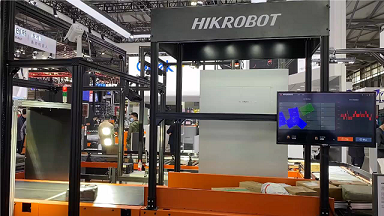
Together, these systems are designed to reduce common logistics bottlenecks such as manual sorting errors, inaccurate dimensional weighing, slow peak season throughput, and limited traceability across warehouse operations. The vision systems combine barcode recognition, OCR decoding, 3D structured light measurement, and AI inspection to automate data capture directly from moving parcels.
In high speed sorting environments, the platforms can process parcels at conveyor speeds of up to 3 m/s for code reading and up to 120 m/min for visual inspection tasks, while enabling automated routing decisions based on size, weight, and destination data.
To further enhance warehouse automation, the company integrates its vision systems with autonomous mobile robots and AI driven control software, enabling real time decision making for sorting, palletizing, and material movement. This supports higher throughput operations while reducing dependency on manual handling during peak logistics demand.
The system also enables end to end traceability by storing parcel images, measurement data, and barcode records, which can be used for shipment verification, dispute resolution, and operational analytics across logistics networks.


