




Researchers have developed a robotic system with an artificial ear that can listen to and respond to live musical performances in real time, opening new possibilities for adaptive electronics and human-machine collaboration.
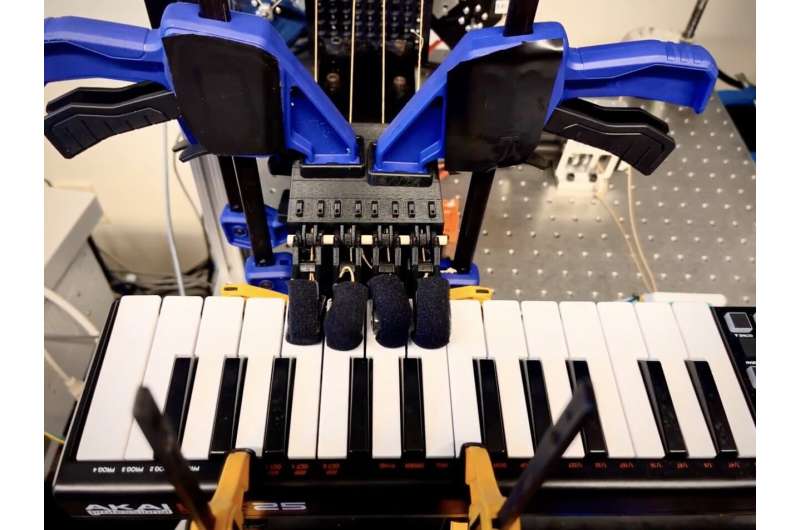
A research team at the University of Southern California has unveiled a music-playing robot equipped with an electronic ear that can detect, interpret and respond to live musical performances in real time, marking a significant step toward more adaptive robotic systems and interactive electronics.
The robot combines advanced audio sensors, machine learning algorithms and motion control systems to perform alongside human musicians while dynamically adjusting its timing and rhythm. Unlike conventional automated instruments that follow pre-programmed sequences, the new system actively listens to surrounding sounds and modifies its actions during a performance.
Researchers said the project demonstrates how robotic electronics can interact more naturally with humans by processing complex audio environments instantly. The artificial ear system analyses pitch, tempo and tonal variations, allowing the robot to synchronise with live performers without external control.
The development could influence future designs in collaborative robotics, especially in environments requiring machines to react quickly to unpredictable human behavior. Engineers believe the same sensing technology could eventually support applications beyond music, including healthcare devices, smart assistants and industrial robotics.

According to the research team, one of the main challenges involved enabling the robot to distinguish musical elements in noisy environments while maintaining precise mechanical movements. The system uses multiple microphones and signal-processing electronics to improve sound localization and response accuracy.
The project also highlights growing interest in embedding sensory intelligence into robotic platforms. By integrating auditory perception directly into the machine’s control architecture, the researchers created a system capable of making split-second adjustments similar to human performers.
Industry analysts say adaptive listening technologies are becoming increasingly important as electronics manufacturers push toward more intuitive human-machine interaction. Real-time audio interpretation is expected to play a larger role in next-generation robotics, wearable devices and interactive consumer electronics.
While the robot remains primarily a research prototype, the underlying electronic sensing and response technologies may eventually contribute to broader commercial applications where machines must cooperate seamlessly with people in dynamic settings.

