





A compact Edge AI platform combining onboard vision processing and gesture recognition aims to speed up development of touchless interfaces for smart homes, factories, healthcare systems, and security devices.
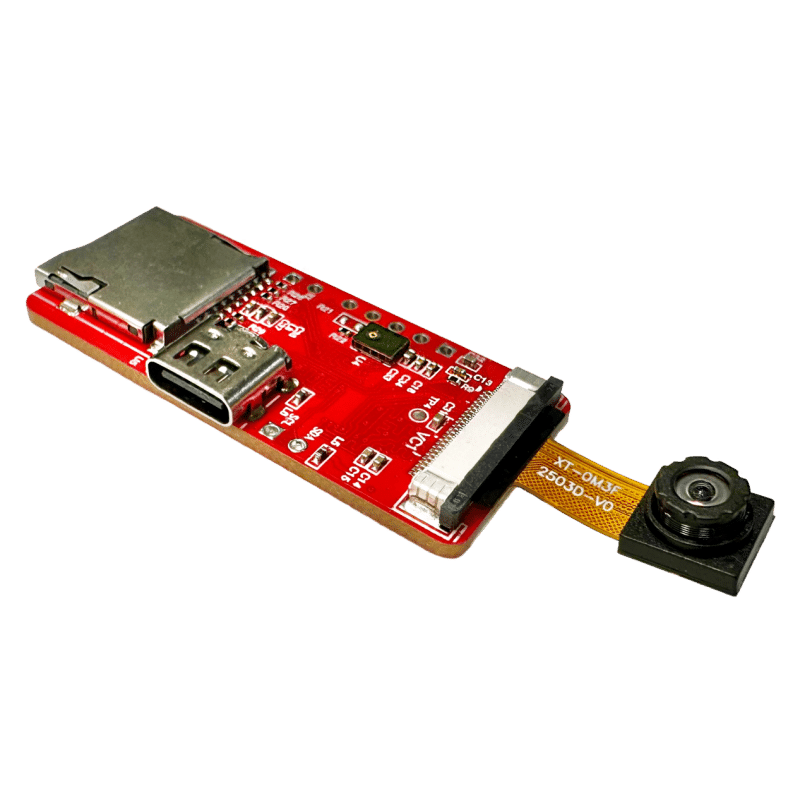
A new Edge AI development module by Nuvoton Technology Corporation designed for gesture recognition and visual sensing is targeting faster deployment of touchless human-machine interfaces across consumer and industrial applications. The compact platform integrates AI acceleration, onboard memory, and preloaded gesture-recognition software to reduce development time for OEMs building smart appliances, factory automation systems, medical devices, and security products.
The key features:
- Arm Cortex-M55 processor with Ethos-U55 NPU
- 220 MHz operation for Edge AI workloads
- 2 MB Flash and 1.5 MB SRAM onboard
- Supports 10+ built-in hand gestures
- TensorFlow Lite Micro model deployment support
The module is built around a microcontroller featuring an Arm Cortex-M55 CPU paired with an Ethos-U55 neural processing unit, enabling low-power AI inference directly at the edge. Running at 220 MHz, the platform is designed to process computer vision and gesture workloads without relying on cloud connectivity, helping developers create responsive and privacy-focused systems.
The hardware includes 2 MB of Flash memory and 1.5 MB of SRAM, allowing support for larger AI models used in gesture detection, person tracking, and visual recognition tasks. Developers can also deploy custom AI models using TensorFlow Lite Micro through integrated AI development tools.
The platform ships with built-in gesture-recognition software capable of identifying more than 10 hand gestures, including commands such as Call, Like, OK, and Stop. It also supports human detection and positional tracking, with data output available through a UART interface for integration into embedded systems.
The release reflects the growing demand for touchless interfaces in environments where hygiene, safety, or convenience are critical. In smart home deployments, the module can enable gesture-based control of televisions, lighting, air-conditioning systems, and other connected appliances. Industrial applications include hands-free machine operation in clean or hazardous environments, while healthcare deployments could support contact-free control of medical equipment.
The module is positioned as a ready-to-integrate solution aimed at shortening the path from prototyping to commercial production. By combining AI hardware acceleration with preconfigured software tools, the platform is intended to lower the barrier for developers adopting Edge AI vision capabilities in embedded products.

