






What if doctors could track a baby’s blood flow continuously instead of relying on occasional scans? A new wearable ultrasound patch aims to make that possible.
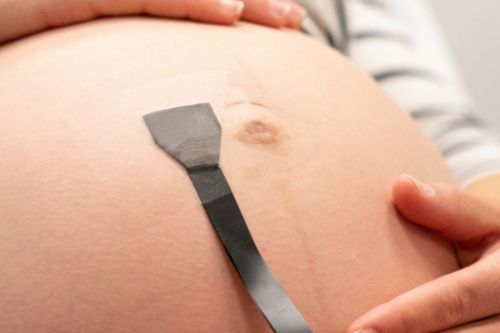
A wearable ultrasound patch developed by researchers at Stanford Medicine, University of California San Diego, and University of Oxford could provide monitoring of fetal blood flow during high-risk pregnancies, addressing limitations of existing fetal monitoring methods.
The patch attaches to a pregnant patient’s abdomen and tracks blood flow in the fetus and umbilical cord. The technology is designed to help physicians detect conditions such as intrauterine growth restriction (IUGR), which affects about 10% of pregnancies and occurs when a fetus does not receive enough oxygen and nutrients through the placenta.
Current monitoring methods, including Doppler ultrasound scans and cardiotocography, provide data at specific points in time and often require technicians, equipment, and repeat examinations. The new system is intended to provide data over longer periods without repeated scanning sessions.
The development required the researchers to solve several technical challenges. Unlike most wearable health devices that measure signals near the skin, the patch must capture information from inside the uterus while accounting for movement from both the mother and the fetus. The researchers focused on the area where the umbilical cord connects to the placenta and developed an image-segmentation algorithm that tracks the location in real time.
The adhesive patch connects to a computer that processes ultrasound data. During validation studies involving 62 pregnant women, the device produced results comparable to those obtained from Doppler ultrasound systems. Researchers reported that the patch monitored the three blood vessels in the umbilical cord and measured fetal parameters including head circumference, abdominal circumference, femur length, and estimated fetal weight.
The system also identified a complication during testing. Researchers observed abnormal blood-flow patterns in one participant despite a normal fetal heart-rate reading. Follow-up evaluation confirmed placental dysfunction, allowing physicians to monitor the pregnancy and perform an early delivery when required.
The research team is now developing a wireless version of the device and plans to expand testing to patients with other pregnancy-related conditions linked to reduced blood flow, including congenital heart disease and chronic hypertension. The technology could support hospital-based monitoring and remote pregnancy care, allowing physicians to track fetal health outside clinical settings.


