

Ultra-transparent metal mesh electrodes for OLEDs, enabling brighter, more efficient transparent displays that could accelerate adoption in augmented reality glasses, automotive interfaces, and smart window technologies.
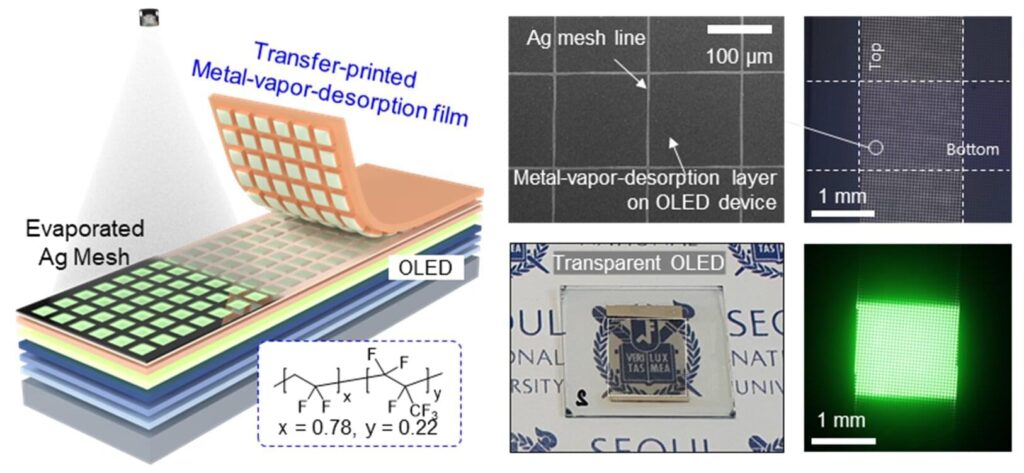
A research team at Seoul National University has developed a new transparent OLED architecture that could significantly improve display performance for augmented reality devices, automotive screens, and smart windows. The advance centers on a highly conductive transparent metal mesh electrode that delivers both exceptional transparency and strong electrical performance.
Transparent OLEDs have long been viewed as a promising technology for next-generation electronics because they allow light to pass through the display while simultaneously producing images. However, manufacturers have struggled to integrate transparent electrodes without damaging the delicate organic layers that generate light, limiting commercial adoption.
To address the challenge, the researchers created a high-resolution metal-patterning process based on a metal-vapor-desorption layer and transfer-printing technique. The method enables microscopic metal mesh structures to be deposited directly onto OLED devices without the chemical processing steps that often degrade underlying materials. The resulting electrodes achieved transparency levels between 93% and 99% while maintaining sheet resistance as low as 1.1–4.0 ohms per square. The team also reported a figure of merit exceeding 10,000, placing the technology among the highest-performing transparent electrode systems demonstrated to date.
When integrated into transparent OLED prototypes, the electrodes delivered strong electroluminescent performance without harming the organic layers beneath. Researchers said the process combines high transparency, conductivity, and scalability, making it suitable for future mass-production environments. The development arrives as transparent OLED technology gains momentum across the electronics industry. Manufacturers are increasingly targeting applications such as AR smart glasses, vehicle displays, and next-generation XR devices that require lightweight, highly transparent display components. If commercialized, the new electrode platform could help accelerate the deployment of transparent displays in consumer electronics, creating more practical AR wearables and intelligent glass surfaces that seamlessly blend digital information with the physical world.