From high-speed humanoids to warehouse robots and robotic dogs, Chinese companies are demonstrating robots built for specialised tasks.
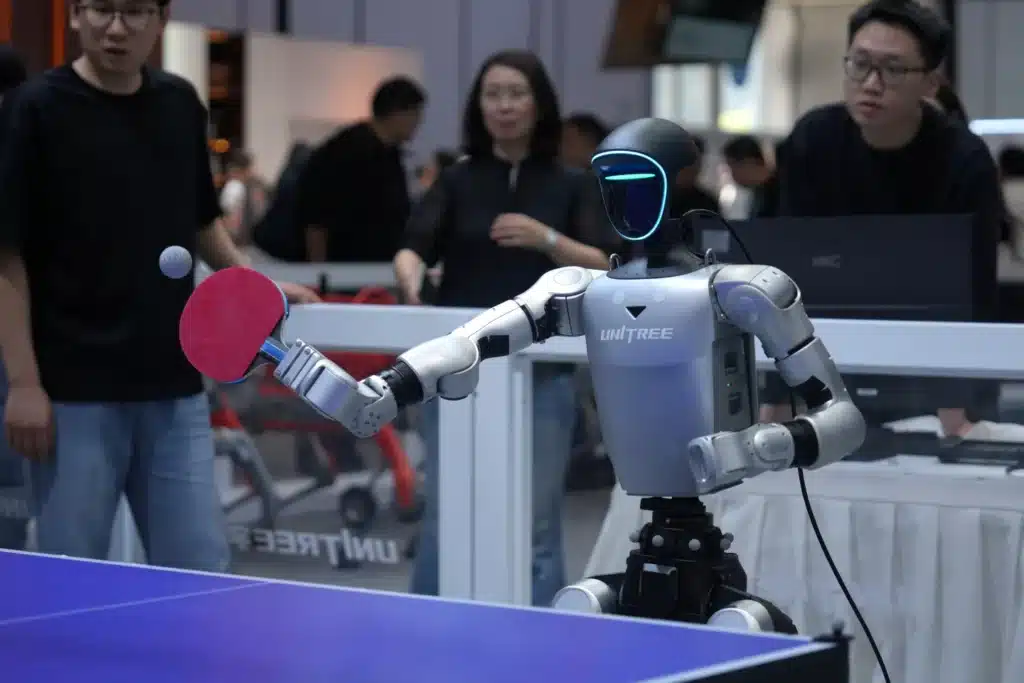
The 2026 World Robot Conference in Beijing is showcasing how robotic systems are moving beyond basic factory automation, with humanoids, quadrupeds, warehouse robots, and service machines demonstrating different approaches to mobility and task execution.
More than 300 exhibitors are participating in the event, with several Chinese robotics companies displaying systems designed for industrial, logistics, inspection, public-service, and human-interaction applications.
Humanoids push mobility and interaction
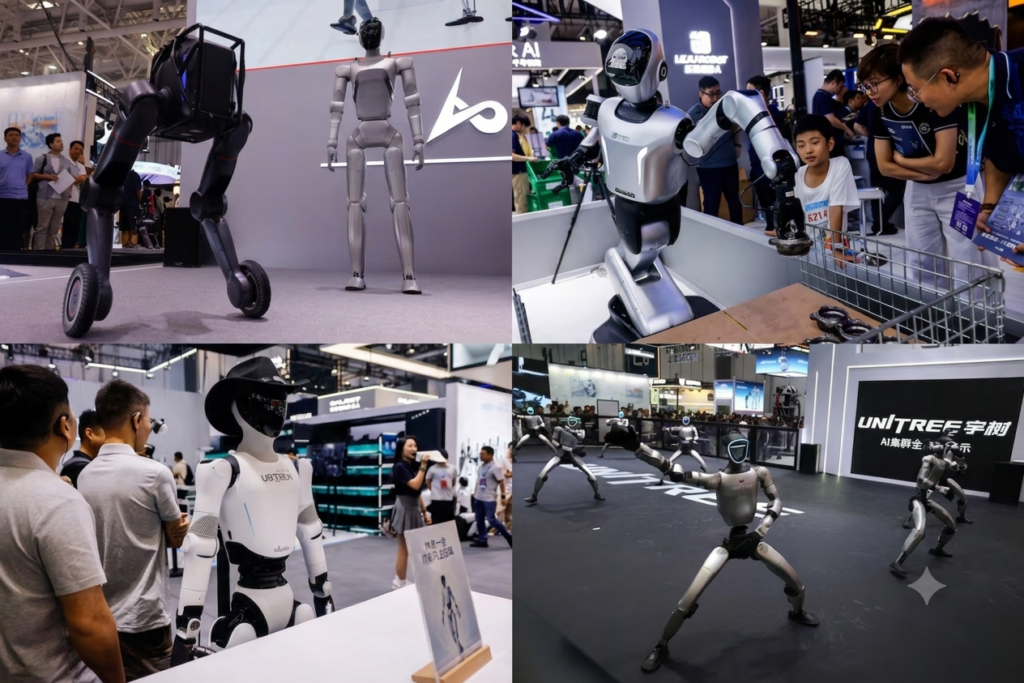
Humanoid development showed a clear focus on making robots more capable of moving through and interacting with human environments. Unitree Robotics demonstrated its R1 and H1 humanoid platforms alongside the Superman humanoid, which was shown performing a 2-metre standing jump and reaching a top speed of 12.66 metres per second.
Moving beyond dynamic movement, UBTECH Robotics presented the Walker C1, a full-size humanoid designed for service and interaction rather than conventional factory operations. Its target environments included reception areas and other public-facing settings where interaction with people was a central requirement.

The focus on combining physical movement with AI was also visible in Leju Robotics’s KUAVO 5-W humanoid. Designed for industrial and service applications, the bipedal robot could be paired with Huawei’s Pangu embodied-AI model, linking physical actions with AI-based task execution.
Fourier Intelligence took a different approach to humanoid design with its GR-3. The 165-cm robot was built around human interaction, with vision and touch capabilities and a softer exterior aimed at applications such as education, public services and eldercare.
Rather than focusing only on humanoid form, LimX Dynamics demonstrated how embodied AI could be used to make robots learn and reproduce physical movements. Its Luna humanoid was designed for public environments such as malls, museums and theme parks, and could learn movements from video before performing synchronised routines.
Robot dogs move into field operations
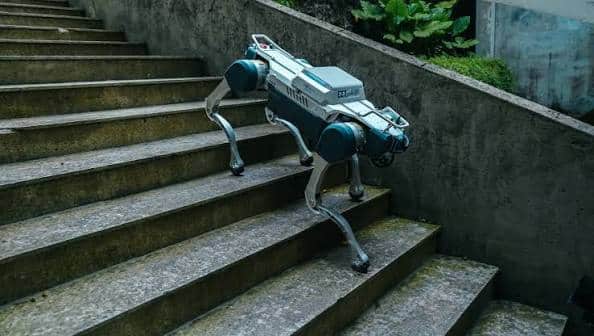
Robotic mobility was not limited to humanoids. Quadruped platforms demonstrated how legged robots could be used in environments where conventional wheeled systems face limitations. Deep Robotics showcased its X30 robot dog, which had already been deployed for inspection, search and emergency rescue applications in China.
The four-legged design allowed the robot to operate across uneven terrain while carrying sensors and other equipment. This positioned quadruped robots less as demonstrations of human-like movement and more as mobile platforms for tasks that can be difficult or unsafe for people.
Robots take on warehouse tasks
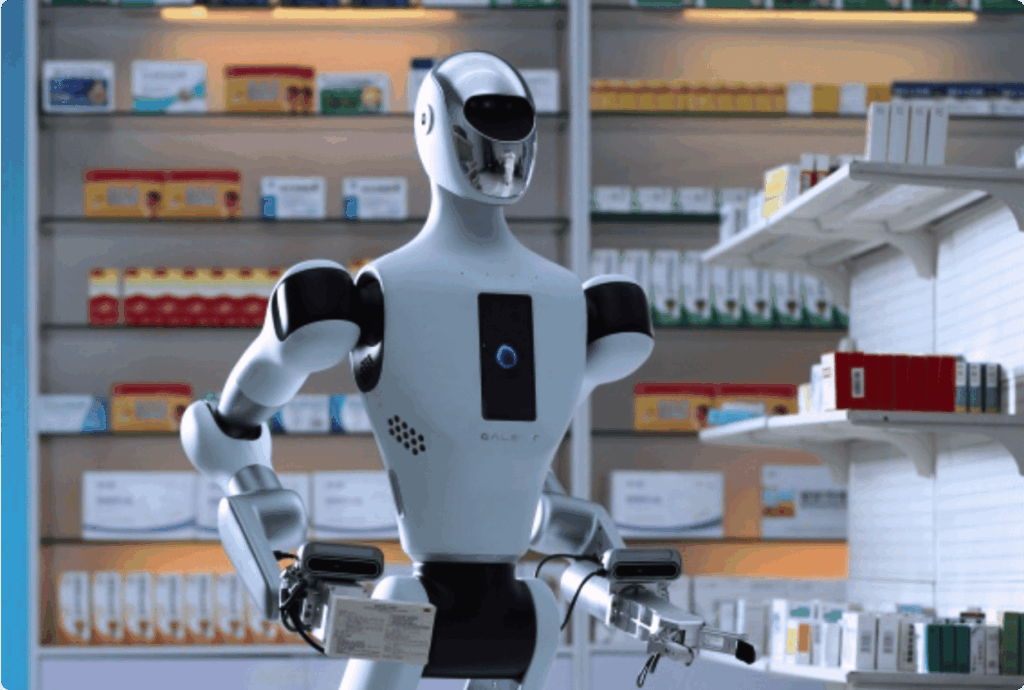
The conference also highlighted a shift from general-purpose humanoids towards robots designed around specific industrial workflows. Galbot’s G1 used wheels instead of legs and combined a lifting torso with two arms. This configuration allowed it to reach shelves, retrieve items and move goods in warehouse environments.
The approach showed how a robot did not necessarily need a human-like lower body to perform tasks associated with human workers. A wheeled base could provide simpler movement while the lifting mechanism and arms handled operations that required reach and manipulation.
AI moves closer to physical tasks
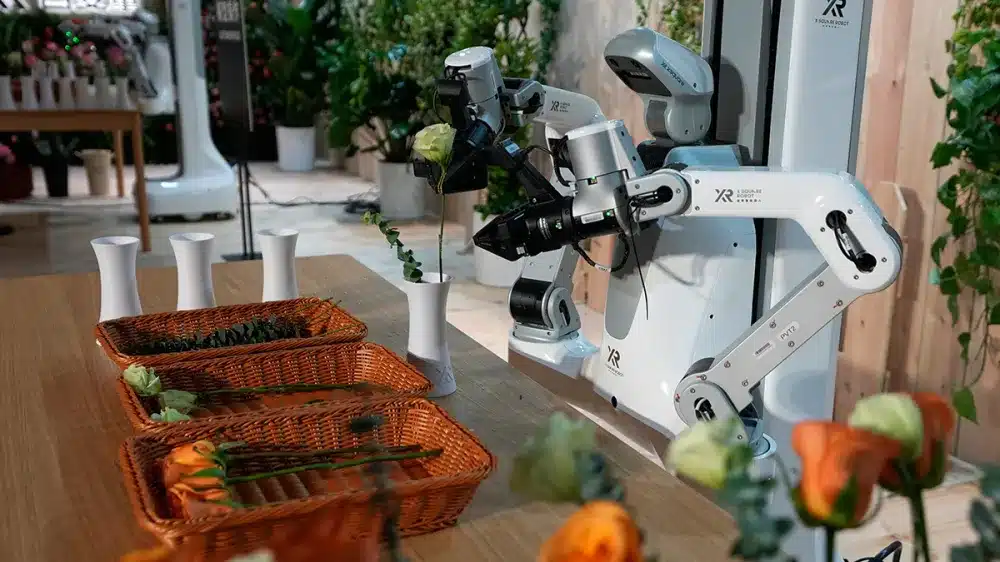
Another demonstration focused on the role of software in robotic manipulation. X Square showcased its WALL-B system, which used AI to identify, pick and reorient randomly arranged parcels before placing them onto a conveyor.
These demonstrations pointed to a broader shift in robotics, where machines were being designed not only to repeat fixed movements but also to interpret objects and adjust their actions according to changing conditions. In a livestreamed test,