
A new PCB relay family is designed for single-phase EV charging systems, combining a compact footprint, high switching capability and compliance with upcoming European safety standards.
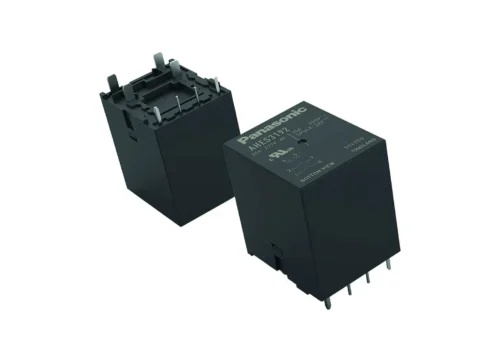
Panasonic has introduced its compact HE-S SC 2a and HE-S SC 2a1b PCB relay series for single-phase electric vehicle(EV) charging systems and wallbox applications. Designed to meet future European safety requirements, the new relay family combines a compact footprint, high switching capability and compliance with the forthcoming IEC 62955 short-circuit test standard, which is scheduled to become mandatory in the fourth quarter of 2028.
The relays serve as the primary switching element in single-phase charging equipment and feature two normally open contacts capable of switching currents of up to 40A at ambient temperatures of up to 70°C. Their short-circuit capability of 1.85kA peak current and 4.5kA²s I²t helps designers meet demanding safety requirements while ensuring reliable operation.
To improve energy efficiency, the relays use a thermal design with a coil holding power of 400mW, reducing power consumption without compromising switching performance. A variant intended for applications requiring contact monitoring also integrates an additional normally closed mirror contact compliant with IEC 60947-4-1. This supports low-level switching loads down to 10mA at 6V DC, enabling dependable status monitoring and simplifying compliance with functional safety and diagnostic requirements.
The compact footprint allows the complete switching function to be integrated directly onto the printed circuit board, eliminating the need for larger external switching assemblies. This reduces system size, simplifies manufacturing and lowers material costs for wallbox developers while improving overall design flexibility.
According to the manufacturer, the relay family is intended to help designers prepare for upcoming short-circuit testing requirements while optimising system size, energy efficiency and overall charging performance, making it suitable for next-generation single-phase EV charging solutions.
Click here for original announcement.