

A data centre system combines power, air and liquid cooling, monitoring, and fire protection to run AI servers and reduce energy use.
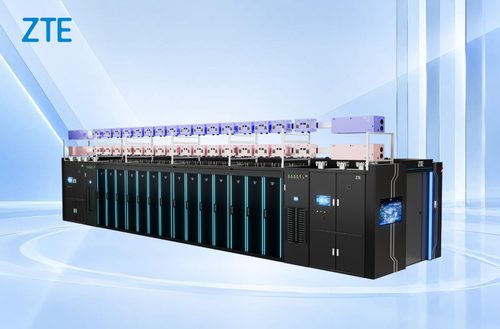
ZTE Corporation has launched the ZXEDC M8000 Intelligent Computing Micro-Module for AI data centres. It supports rack power densities of 20–60kW and power capacity of up to 250kW per rack. The system combines power distribution, air and liquid cooling, monitoring, cabling and fire protection. It uses 800V high-voltage direct current (HVDC) power distribution, with a claimed power supply efficiency of up to 98%.
The M8000 combines enclosed cold aisles, liquid-cooled racks, network racks, coolant distribution units (CDUs), secondary-side piping, intelligent busbars, thin-sheet air walls, lighting and fire-safety systems. It supports general-purpose computing and artificial intelligence (AI) workloads. Its modular design allows operators to expand capacity, upgrade IT hardware and convert from air cooling to liquid cooling without replacing the entire infrastructure.
The system uses a shared air- and liquid-cooling architecture. The CDU works with thin-sheet air walls to adjust the cooling ratio according to system requirements. The design uses free cooling and targets a power usage effectiveness (PUE) as low as 1.15 across different regions.
For power distribution, the module uses 800V HVDC and intelligent busbars to supply power to racks along a row. ZTE states that its power supply system can achieve up to 98% efficiency.
Rack power capacity ranges from 20kW to 60kW, with a maximum of 250kW per rack. The rack design is separate from the supporting frame and supports standard and special-form-factor racks. Existing installations can be converted to liquid cooling. Standardised components support on-site assembly and reduce installation time.
The M8000 has received UL system-level leak-proof certification, which ZTE describes as an industry first. Its leak protection covers the CDU, liquid-cooled racks, servers and network switches. The system also includes leak detection and automatic liquid replenishment to manage coolant leakage.
The system coordinates air and liquid cooling and integrates cooling and power management. Artificial intelligence algorithms optimise operations, reducing cooling-related energy consumption by more than 10%, according to ZTE. The iDCIM management platform provides information on power and cooling systems for monitoring and maintenance.
The architecture supports three generations of IT hardware upgrades, allowing data centre operators to expand computing capacity without large-scale infrastructure changes. Its cooling and power management systems are designed to support AI clusters while reducing energy consumption.
Click here for the original announcement.