


Can AI recover metals from used batteries? A new system is being tested to find better ways to recycle battery waste.
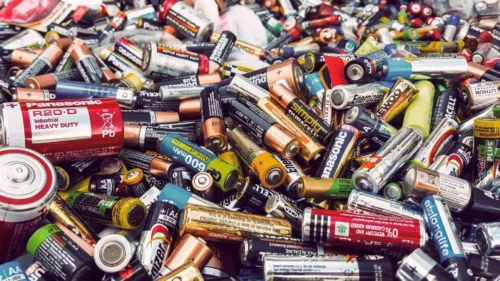
Researchers at the US Department of Energy’s SLAC National Accelerator Laboratory are developing a multi-agent artificial intelligence (AI) system to improve the recovery of critical metals from discarded lithium-ion batteries. The project aims to recover cobalt, nickel, and manganese with at least 80% purity, while reducing the trial-and-error involved in conventional recycling methods.

The nine-month project, being carried out with the University of Southern California, will compare AI-generated recovery strategies with existing metal extraction techniques to determine whether AI can identify more efficient chemical processes.
Instead of using a single AI model, the researchers are deploying multiple AI agents, each responsible for a specific task. The agents will draw on knowledge from chemistry, biochemistry, and geology to suggest recovery methods, evaluate different approaches, and improve their recommendations based on laboratory results.
Recovering metals from spent lithium-ion batteries is often a complex process that requires large quantities of chemicals and repeated experiments to determine suitable extraction and separation methods. A single electric vehicle battery can contain significant amounts of valuable metals, making efficient recycling increasingly important as battery use grows.

Alongside the battery recycling effort, SLAC is participating in ten other Genesis Mission Phase I projects covering areas such as biotechnology, fusion energy, electronics and sensors, particle physics, cosmology, and accelerator technology.
The researchers will evaluate whether the multi-agent AI approach can discover better metal recovery pathways than conventional methods based on literature reviews and existing recycling practices. If successful, the approach could also be applied to other scientific problems that involve complex chemical discovery and materials processing.