


AI analyses shrimp and water samples to detect disease risks before visible signs appear, giving farmers time to prevent losses.
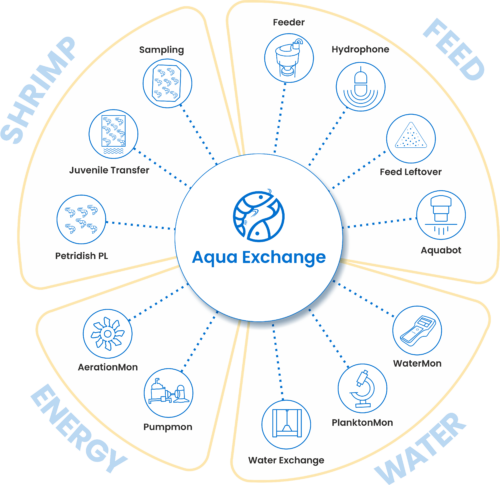
Indian agritech startup AquaExchange has developed an AI-based shrimp health monitoring system that can detect disease risks three to four days before visible symptoms appear, giving farmers time to take corrective action and reduce crop losses.
In a recent conversation, Pawan Kosaraju, Co-founder and CEO of AquaExchange, explained that the company’s system combines artificial intelligence with microscopic image analysis to detect shrimp health issues early. Rather than waiting for dead shrimp to float to the surface—a sign that disease has already spread—the platform identifies stress indicators and disease risks several days before symptoms become visible.

The company captures microscopic images of shrimp organs such as the hepatopancreas and gut, along with water samples, and analyses them using AI models developed in-house. The system studies biological indicators, including nutrient absorption and stress markers, to determine whether the shrimp are likely to develop disease.
“By predicting stress and disease tendencies three to four days before visible symptoms appear, our AI system helps farmers intervene early, reducing mortality losses by 40–50% before the disease spreads across an entire pond,” said Pawan.
To make the technology practical for farmers, AquaExchange uses readily available equipment instead of expensive laboratory instruments. It uses standard microscopes and smartphone cameras fitted with custom-designed adaptors to capture diagnostic images. According to the company, a standard 10-megapixel smartphone camera is sufficient for AI analysis, significantly lowering deployment costs compared to digital microscopes.
The AI models are trained using one of the company’s key assets—a large repository of real farm data. AquaExchange says it has collected more than 500,000 contextual images for shrimp health monitoring. Unlike standalone images, each dataset includes information such as farm location, crop age, pond conditions, and water parameters, enabling the AI models to improve prediction accuracy.
The company claims its disease prediction models achieve around 98% accuracy, while its shrimp counting system achieves approximately 99.6% accuracy.
As shrimp farming becomes increasingly dependent on data-driven decision-making, AquaExchange’s approach demonstrates how AI can support predictive farm management rather than simple monitoring. By combining affordable hardware with large-scale field data and early disease detection, the company says it can help farmers reduce losses, improve productivity, and make aquaculture more sustainable without requiring costly laboratory infrastructure.