


It enables efficient power transfer between 12V and 48V automotive networks, helping engineers simplify EV architectures, improve efficiency, and accelerate development.
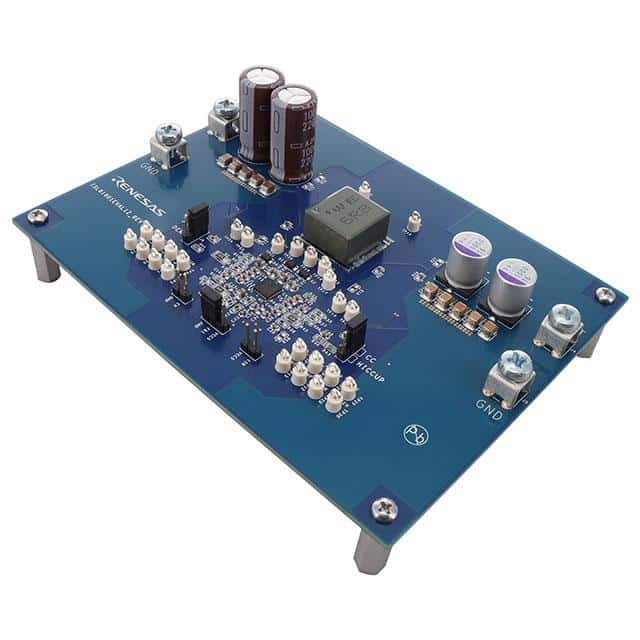
The shift towards 48V electrical architectures in electric vehicles (EVs), hybrid electric vehicles (HEVs), and mild hybrid electric vehicles (MHEVs) has created a growing need for efficient bidirectional power conversion between traditional 12V systems and emerging 48V battery networks. While high-power loads such as electric turbochargers, electric power steering, active suspension, and starter-generators benefit from a 48V supply, legacy automotive electronics including lighting, infotainment, ECUs, sensors, and safety systems continue to operate on 12V. Bridging these two voltage domains efficiently is therefore a critical design challenge.
Renesas addresses this requirement with its bidirectional 12V/48V DC-DC converter reference design, offering a compact, automotive-grade platform capable of transferring more than 3kW of power with conversion efficiency exceeding 95%. Designed around the LV148 48V automotive power-supply standard adopted by several European automakers, the reference design enables energy to flow in both directions. During normal operation, it can step down power from the 48V battery to support the conventional 12V electrical network. Conversely, it can boost energy from the 12V side to the 48V battery whenever operating conditions require it, ensuring optimal energy utilisation across the vehicle.

This bidirectional capability improves regenerative braking efficiency, battery management and load balancing, making it particularly suitable for modern dual-voltage vehicle platforms and electric two-wheelers. A key advantage of the design is its simplified control architecture. Instead of relying on a digital signal processor (DSP) running complex firmware alongside separate buck and boost controllers, Renesas employs a bidirectional analog controller that manages power flow using a single control scheme. Eliminating dedicated DSP-based control reduces software development effort, lowers bill-of-materials (BOM) cost, simplifies PCB design, and shortens development cycles without compromising performance.
This makes the platform attractive for engineers looking to accelerate automotive power electronics development while maintaining design flexibility. The reference design adopts a multi-phase synchronous DC-DC topology to deliver high power density while distributing current across multiple phases. This approach reduces thermal stress on individual power components, lowers ripple current, improves transient response, and enables scalable output power. The design incorporates automotive-grade MOSFETs, half-bridge gate drivers, microcontrollers, regulators, and protection circuitry selected for harsh automotive environments. It also supports ASIL-B functional safety requirements under ISO 26262 through the use of a Renesas automotive MCU and power-management devices, helping engineers meet stringent automotive safety standards.

For engineers developing next-generation EVs, HEVs, electric motorcycles, or 48V auxiliary power systems, this reference design serves as a practical starting point for building efficient dual-voltage power architectures. By combining high efficiency, simplified control, automotive safety compliance, and scalable multi-phase power conversion, it reduces design complexity while delivering the performance required for increasingly electrified vehicles. The availability of system documentation, block diagrams, and component recommendations further helps shorten prototype development and speeds the transition from concept to production.
For more information, click here.