

The earbud reference design helps manufacturers develop wireless earbuds while reducing development time and simplifying hardware and software integration.
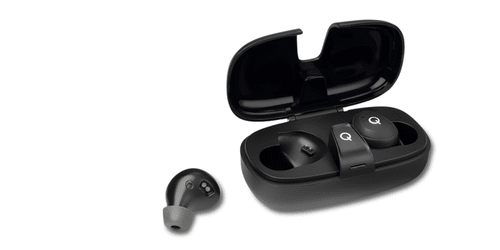
Developing truly wireless earbuds (TWS) that are small, affordable, consume less power and offer many features is not easy for manufacturers. They need to include several features while keeping the manufacturing cost low and ensuring that the earbuds’ batteries last long. The Qualcomm QCC3020 reference design is intended to make this process easier. The design is low-cost and supports Qualcomm TrueWireless Stereo technology, which allows the two earbuds to connect and work together to deliver stereo sound. The company claims that this reference design helps reduce development time and also provides a proof of concept for manufacturers.
The company provides manufacturers with both the hardware design and software needed to develop the earbuds. Manufacturers do not need separate ADK or Qualcomm BlueLab SDK licences to use this development package, reducing some of the effort involved in getting started.

The design uses Qualcomm cVc technology to reduce background noise and echo during calls. The left and right earbuds can switch their roles when they are outside the charging case. This allows either earbud to take the primary connection role.
The Bluetooth audio SoC combines several functions into one chip, including Bluetooth connectivity, power management, audio processing, control functions and audio input/output. This reduces the need for multiple separate chips. Users can operate the earbuds using a physical button. An LED light provides visual indications of their status.

Each earbud has a 6mm speaker that produces sound across different audio frequencies. Small, medium and large rubber ear tips are included so people can pick the size that feels best in their ears. The earbuds can provide voice instructions or information, such as letting users know when they are turned on or connected. The earbuds are designed using a four-layer printed circuit board (PCB). This helps keep the circuit board design and manufacturing costs low.
Each earbud has a 40mAh battery to supply power during use. The charging case has a 280mAh battery. It stores energy that can be used to recharge the earbuds when they are placed inside it. Manufacturers can update the earbud software wirelessly without requiring users to connect the earbuds to a computer using a cable.
Qualcomm has tested this reference design. It comes with a bill of materials (BOM), schematics, an assembly drawing, a printed circuit board (PCB) layout and more. The company’s website has additional data about the reference design. To read more about this reference design, click here.