


A wearable patch detects harmful substances and alerts users through different vibration patterns, helping them identify hazards without using a screen or an alarm.
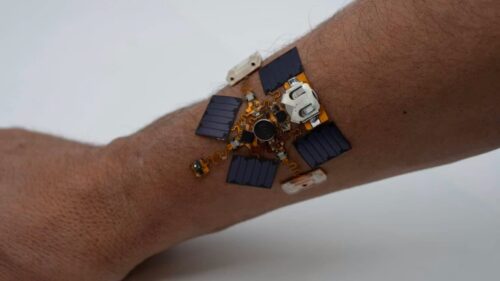
Researchers at North Carolina State University have developed a wearable patch that detects environmental hazards and immediately alerts the wearer through distinct vibration patterns on the skin. The system is designed to identify toxic gases, airborne aerosols, and heavy metals in water without relying on smartphone notifications, audible alarms, or display screens.
The proof-of-concept device assigns a different vibration pattern to each type of hazard, allowing users to recognise the threat through touch alone. This approach could help workers respond more quickly in situations where looking at a phone or hearing an alarm is difficult.
The patch is slightly smaller than a driver’s licence and combines a microcontroller, battery, environmental sensors, and a miniature haptic actuator in a single wearable device. The current prototype can monitor six environmental hazards. Thin-film photovoltaic cells on its surface harvest solar energy during use, helping extend battery life. Together with low-power sensors, the system can operate for about 24 hours.
To make the alerts easier to notice, the researchers modified how the vibrations reach the skin. Instead of placing the actuator directly against the wearer, they created textured interfaces with microscopic bump patterns. By changing the size and spacing of these structures, they altered how the vibrations are felt, making the alerts more noticeable than those produced by a standard vibration motor.
According to the researchers, using unique vibration sequences allows users to identify the detected hazard without requiring visual attention or sound. This could be useful in noisy industrial environments or when workers need to stay focused on their tasks.
The team also demonstrated the same concept in robotics by developing an electronic skin (e-skin). In this version, the actuator presses against a piezoelectric layer instead of human skin. The resulting vibrations generate electrical signals that the robot interprets to identify hazards.
During proof-of-concept demonstrations, quadrupedal robots equipped with the e-skin detected chemical hazards and automatically changed their routes to avoid contaminated areas based on the tactile signals.
The researchers built most of the platform using commercially available components and designed it with a modular architecture, allowing sensors to be added or replaced depending on the application. They suggest the technology could be adapted for industrial safety, environmental monitoring, and search-and-rescue robots.