




A processor will run two instruction sets on the same cores, allowing Arm applications to run on mainframe systems with existing workloads.
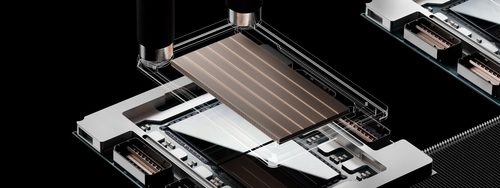
IBM has announced a new mainframe processor that supports both IBM Z and Arm architectures, allowing enterprises to run Arm-based applications alongside existing IBM Z workloads on future IBM Z and LinuxONE systems.

Built on a 2-nanometer process, the processor will feature 11 high-performance cores running at more than 5.7 GHz. It will also include AI inference accelerators for fraud detection during transactions, a dedicated on-chip data processing unit for I/O acceleration, and a large cache for enterprise workloads.
The processor is designed so that each core can execute Arm and IBM Z instructions concurrently. Instead of using separate Arm and IBM cores, the same cores will support Arm, IBM Z, and LinuxONE workloads while maintaining the performance, security, encryption, and availability features of IBM’s mainframe platforms.
The new processor will enable enterprises to run Arm-native Linux environments alongside z/OS and Linux on IBM Z systems. This allows organisations to use Arm-based applications while continuing to run their existing IBM Z software.
Arm workloads will also have access to IBM’s enterprise computing capabilities, including hardware-level fault detection and recovery, encryption, secure key management, reliability features, and AI acceleration.
The Arm ecosystem has more than 22 million developers worldwide and supports applications across cloud and edge computing. It also includes cloud-native and AI software used in modern infrastructure.
Future IBM Z and LinuxONE systems using the processor will be able to scale to hundreds of cores and tens of terabytes of memory.
Click here for the original announcement.


