

A new chip design could bring energy-efficient AI computing to phones and laptops by processing models locally, reducing data movement, latency, and power demands overall.
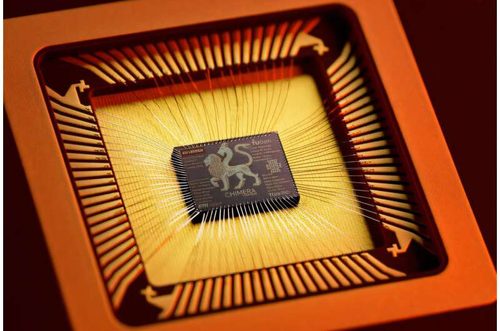
TU/e researchers and their partners have developed the Chimera chip as part of the CONVOLVE project, aiming to bring powerful, energy-efficient AI computing closer to users on smartphones, laptops and other edge devices.
The chip is designed to execute selected AI calculations locally rather than sending data to remote cloud data centres. This approach could reduce the amount of information that needs to be transmitted, while lowering energy consumption and improving responsiveness for applications that require on-device intelligence.
A key part of the development is a cross-layer chip design methodology. Instead of designing the AI algorithm, processor architecture, memory system and circuits independently, the CONVOLVE team optimised these elements together. This allows factors such as accuracy, programmability, processing speed, silicon area and energy consumption to be considered throughout the design process.
The researchers combined programmable RISC-V processors with specialised AI accelerators, including memory-centric and neuromorphic computing techniques. The architecture is intended to reduce data movement between memory and processing units, which can otherwise become a significant source of energy consumption in AI hardware.
Researchers fabricated prototype chips and evaluated them using realistic AI workloads rather than relying only on simulations. Measurements covered energy efficiency, throughput, latency, silicon area and application accuracy, with results compared against relevant existing designs.
The technology addresses growing demand for computing power as more AI-enabled devices operate at the edge. Smart-home systems, solar panels, electric vehicles, heat pumps and energy-storage systems could benefit from local processing when rapid decisions are required.
The CONVOLVE project brings together researchers and industrial partners across Europe. Its developers see the technology as a potential route towards smaller, greener AI hardware that can deliver substantial computing capability without depending entirely on large, power-hungry data centres.