





A sensor detects phosphine gas for leak checks, worker safety, and gas monitoring in semiconductor, fumigation, and grain storage operations.
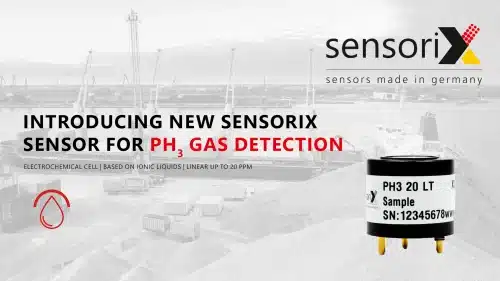
Sensorix has introduced the PH3 20 LT, an electrochemical sensor for detecting phosphine (PH₃) in concentrations from 0 to 20 parts per million (ppm). The sensor is designed for use in portable and fixed gas detection instruments for applications such as leak monitoring, worker protection, and industrial safety.
The sensor uses three-electrode electrochemical technology with an ionic-liquid-based electrolyte. Sensorix says the electrolyte’s low volatility helps reduce drying and supports a stable baseline over the sensor’s operating life.
The PH3 20 LT is intended for phosphine monitoring in applications including semiconductor manufacturing, fumigation, and grain storage. Phosphine is used in several industrial processes and is toxic and flammable, making gas detection important for leak monitoring, personnel protection, and safe re-entry after fumigation.
The sensor has a measurement range of 0–20 ppm and an expected operating life of more than 18 months in air. Its specified sensitivity is 1,100 ± 500 nA/ppm, while its T90 response time is 45 seconds or less at two minutes of gas exposure.
Other specifications include a clean-air baseline of less than ±0.02 ppm at midpoint sensitivity, linearity of less than 10% of full scale, repeatability of less than 2%, and long-term output drift of less than 10% over six months.
The PH3 20 LT is available in different formats for integration into gas detection equipment. Sensor manufacturers can choose from 4S, 7S, Mini, Classic 4-pin, Classic 8-pin-compatible, and Smart 8p with EPROM versions.
These formats are intended to support different mechanical and electrical requirements in portable detectors and fixed gas detection systems.
The company also offers other phosphine sensors for different detection requirements, including versions designed for measurements from 0 to 1 ppm and a version with no cross-sensitivity to hydrogen. This allows instrument manufacturers to select a sensor according to the required measurement range and system design.
Click here for the original announcement.

