





A lightweight electric drone demonstrates how carbon-fibre structures, high-power propulsion, and careful battery-weight management can push payload capacity far beyond conventional multirotor designs.
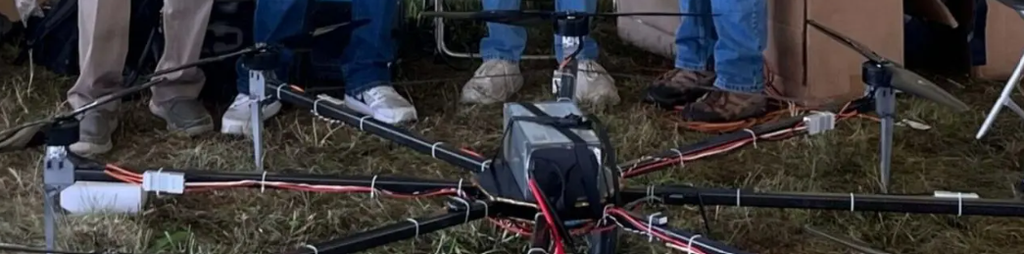
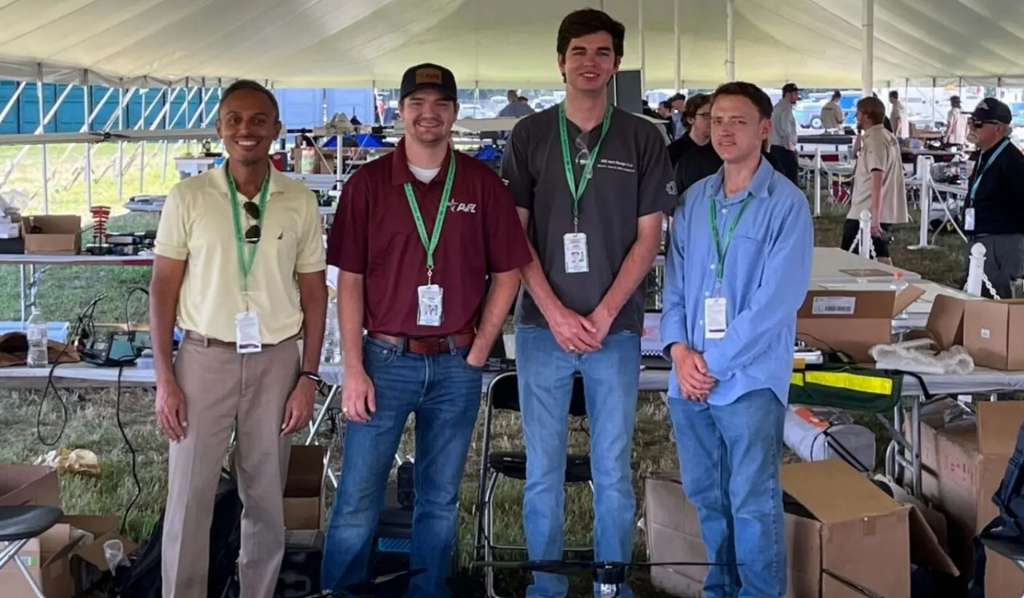
A lightweight electric drone developed by aerospace engineering students at Texas A&M University has demonstrated an unusually high payload-to-aircraft weight ratio, carrying a 110-pound payload while weighing about 50 pounds itself. The prototype completed a four-nautical-mile flight in 12 minutes during the DARPA Lift Challenge, highlighting how structural engineering, electric propulsion, and weight optimisation can work together in heavy-lift unmanned aircraft.
The key engineering achievement is the drone’s lightweight airframe. Its carbon-fibre frame weighs only about six pounds without the battery, while providing the structural support required for eight propulsion arms and the payload. Instead of relying extensively on conventional nuts and bolts, the team bonded structural components to reduce hardware weight and simplify the overall architecture. This approach leaves more of the aircraft’s mass budget available for the battery, motors, electronics, and payload.
Battery weight was another major design constraint. The electric power source accounted for more than half of the drone’s overall weight. Unlike a fuel-powered aircraft, whose mass decreases as fuel is consumed, a battery-powered drone carries essentially the same battery mass throughout its flight. This means the propulsion system, frame, and power electronics must be sized to lift the battery continuously while still generating sufficient thrust for the payload.
The architecture uses a central battery with eight arms extending to the motors and propellers. This distributed propulsion arrangement provides multiple lifting points while keeping the structure relatively compact. For electronics engineers, the design illustrates the importance of optimising not only motor and propeller performance but also the complete power chain, including battery capacity, power delivery, wiring, motor controllers, and structural mass.
The team reportedly developed five prototypes in about eight months, using iterative design and simulation before physical testing. The resulting prototype cost approximately $10,000 in materials.
The wider DARPA Lift Challenge targeted aircraft capable of carrying at least four times their own weight. While the competition’s leading aircraft reached a 3.84:1 payload-to-weight ratio, the Texas A&M prototype demonstrated the potential of lightweight electric multirotor architectures for applications requiring high payload capacity.
